

Wellcome Collection via Wikimedia Commons
By Stephen Beech
The "highly lethal" oldest strains of plague were killing people thousands of years before the Black Death, according to new research.
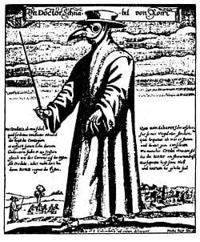
Plague is usually associated with rats, crowded medieval cities, and the epidemics that swept across Europe during the Middle Ages.
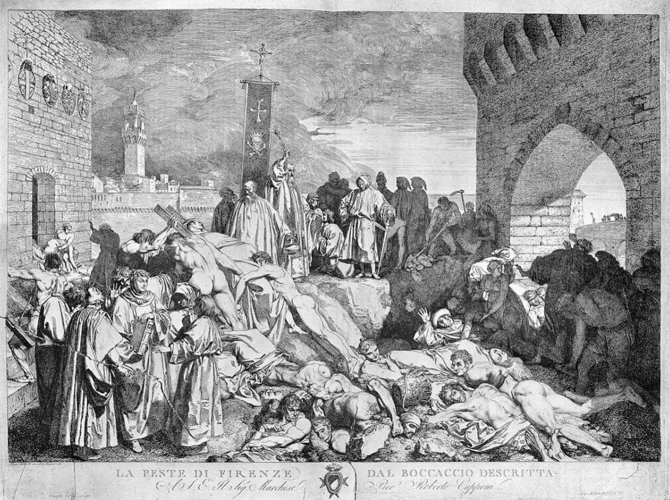
The Black Death, which peaked between 1347 and 1353, was the most devastating pandemic in human history, leading to the death of up to 50 million people — around half of Europe's 14th-century population.
But a new study, published in the journal Nature, shows that the disease was already lethal 5,500 years ago, killing humans in small hunter-gatherer communities.
An international team of researchers analyzed ancient DNA from human remains found at four hunter-gatherer cemeteries in the Lake Baikal region of East Siberia.
Using advanced DNA sequencing techniques, the researchers reconstructed ancient bacterial genomes preserved in teeth, revealing previously unknown early strains of plague.
Study senior author Professor Eske Willerslev, of the University of Cambridge and the University of Copenhagen in Denmark, said: “Whether the earliest forms of plague were mild or virulent has been a matter of debate, but our findings demonstrate that these ancient strains were already highly lethal."

Photographic Collection via Wikimedia Commons
The study combines genetic, archaeological and radiocarbon evidence to reconstruct how the outbreaks unfolded within the prehistoric groups.
Lead author Dr. Ruairidh Macleod, a research fellow at the University of Oxford, said: “Based on the plague DNA, the genetic relationships between the victims, the archaeological analysis and the radiocarbon dating, we’ve built a really clear, complete picture of what happened during these outbreaks."
In total, DNA from Yersinia pestis — the bacterium that causes plague — was detected in 18 of 46 individuals.
At 39%, the figure is higher than the detection rate reported from some medieval plague pits.
Previous studies showed that early strains of Yersinia pestis lacked some of the genetic traits that later enabled bubonic plague to spread via fleas and rodent hosts.
That led many scientists to believe that the earliest forms of plague were unlikely to have caused major outbreaks.





However, the new study challenges that assumption.
The mortality profiles at the two largest cemeteries show an "exceptionally" high number of children and young teenagers among the dead — something that had puzzled archaeologists for decades.
Dr. Andrzej Weber, of the University of Alberta and principal investigator of the Baikal Archaeology Project, said: “The unusually high number of children and the short timespan was a real puzzle that we’ve been trying to solve since the 1990s.
"Finding out that plague was the cause is extraordinary, but it makes so much sense,”
Radiocarbon dating showed that many of the burials occurred within a "very short" time span.
In several cases, siblings or parents and children appear to have died and been buried together.
The ancient plague strains also carried a unique "superantigen" — a toxin-producing genetic factor not seen in historic plague strains.
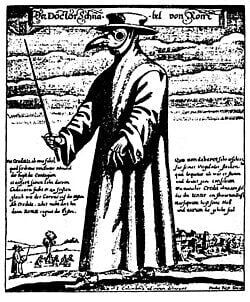
Columbina/ Paul Fürst via Wikimedia Commons
The research team explained that superantigens can trigger extreme immune responses and are associated with severe inflammatory complications, likely increasing the severity of infection.
Study senior author Professor Martin Sikora, from the University of Copenhagen, said: “This finding changes our understanding of the earliest plague outbreaks.
"Even before the bacterium evolved efficient flea-borne transmission, these ancient strains appear to have carried a potent combination of virulence factors that could make infection highly lethal.”
He says the findings suggest that the earliest known outbreaks may already have been as deadly as later historical forms of the plague, especially for children, even without flea-borne transmission.
Sikora added: "The study also supports the idea that plague may have originated in Central or North-East Asia before later spreading across Eurasia through wild rodent reservoirs.
"Archaeological evidence suggests these hunter-gatherers interacted closely with marmots — large burrowing rodents that still carry plague today."
The researchers believe the outbreaks may have spread directly from infected marmots into humans.

(0) comments
Welcome to the discussion.
Log In
Keep it Clean. Please avoid obscene, vulgar, lewd, racist or sexually-oriented language.
PLEASE TURN OFF YOUR CAPS LOCK.
Don't Threaten. Threats of harming another person will not be tolerated.
Be Truthful. Don't knowingly lie about anyone or anything.
Be Nice. No racism, sexism or any sort of -ism that is degrading to another person.
Be Proactive. Use the 'Report' link on each comment to let us know of abusive posts.
Share with Us. We'd love to hear eyewitness accounts, the history behind an article.