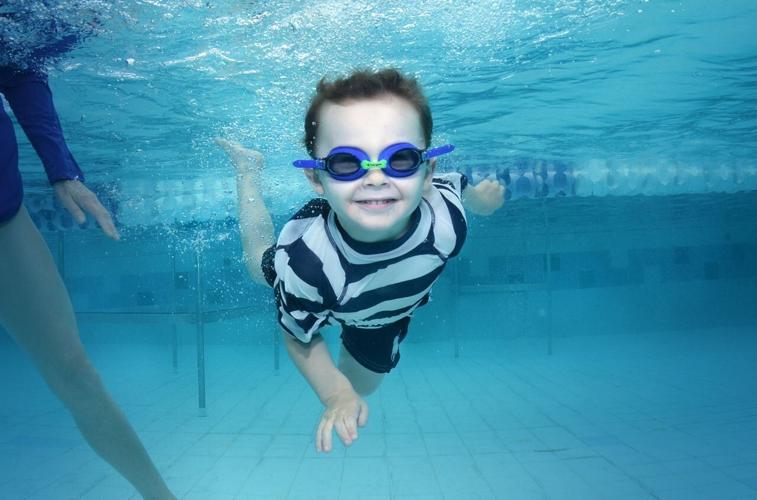
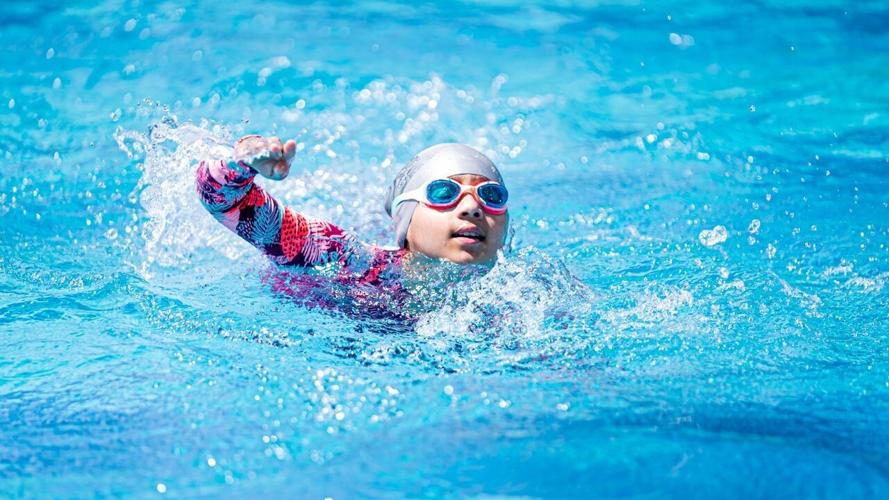

(Photo by Sunshine Design via Pexels)
By Stephen Beech
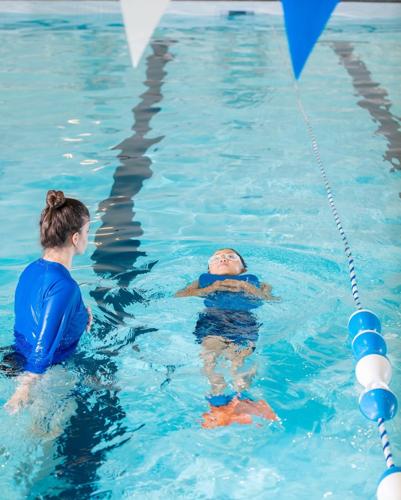
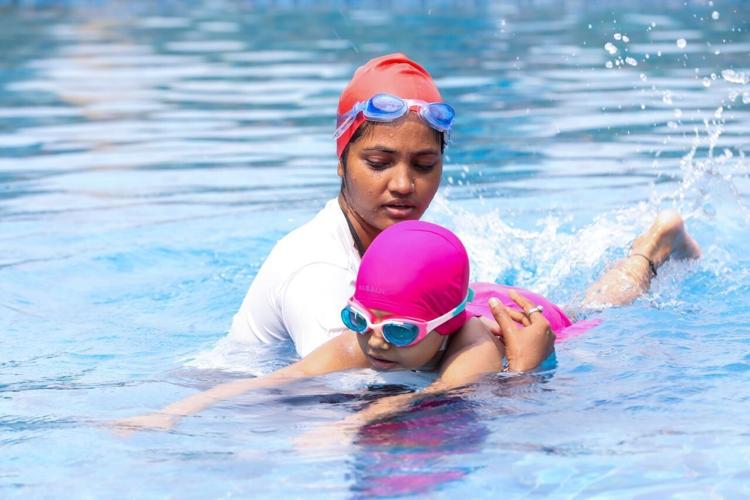
Swimming provides children with academic and social benefits as well as boosting safety and fitness, reveals new research.
Learning how to swim at a young age helps them not just physically but developmentally too, according to the findings.
But with family budgets stretched ever-tighter, experts are calling for greater government subsidies for swimming lessons for young children as they can be one of the first expenses to be slashed.
The four-year study suggests that children who learn to swim early don’t just become safer in the water and fitter, but they become more academically successful and more sociable than their peers.
The findings of the research, spanning nearly 7,000 survey respondents and 177 individually tested children, have been analyzed by Robyn Jorgensen in her new book, “Why Young Children Should Learn to Swim.”
The project began with a conversation between Jorgensen and Laurie Lawrence, an Olympic swim coach inducted into both the Australian and US Swimming Halls of Fame.
He felt that children who learned to swim early were generally more “school-ready.”
Jorgensen, emeritus professor at the University of Canberra, Australia, said: “There was no formal evidence to support this observation, but it was one that Laurie felt he and many others in the swim industry observed.”

(Photo by Anil Sharma via Pexels)
Jorgensen and her colleagues decided to verify the “industry hunch” through rigorous academic investigation using internationally recognized testing tools.
The results surprised even Jorgensen.
She said: “My early observations of the young learners piqued my interest while retaining some sense of skepticism about what could be achieved.
“I am not from a swimming background, so had no vested interest in the ‘proving’ or otherwise of Laurie’s hunch.
“My only interest in swimming was as a grandparent and around water safety for my children and grandchildren, and as a recreational activity.”
On measures of literacy, numeracy and following instructions, the study found that children who participated in swimming before five years of age, regardless of socioeconomic background, could be five to 18 months ahead of milestones in literacy, numeracy and being able to follow instruction.
Jorgensen said that doesn’t mean youngsters who have been learning to swim are innately “smarter.”
Instead, she argues swimming lessons build transferable skills and dispositions.







(Photo by Jacob Yavin via Pexels)
For example, a child counting kicks from one to 10 with an instructor absorbs number sequencing and “one-to-one correspondence” — skills with direct value in a classroom.
While many parents enroll children in swimming for safety reasons, Jorgensen’s study suggests participants gain “measurable advantages” in cognitive development, language skills and emotional regulation.
She said: “It is reasonable to claim that swimming prepares children for the schooling years, particularly the early years and the transition into schooling.”
But many swimming schools operate as commercial businesses, and cost is consistently identified as the single biggest barrier to participation.
According to Jorgensen’s analysis, the biggest equity barrier is faced in the United States and China, where only very affluent families can afford regular swimming lessons.
The findings show Australia, Brazil, Singapore and South Africa also face “notable” geographic and economic barriers to swimming.
One respondent from Zimbabwe said: “Swimming is still seen in Africa in general as elite.
“Basically, if you are a working-level person well below average, swimming lessons will not be a priority; what will be a priority is feeding your family.”

(Photo by Anil Sharma via Pexels)
Geography is also a problem when it comes to swimming lessons for many youngsters.
In Australia, families on remote farming properties can face journeys of hundreds of miles to reach the nearest pool.
That creates what the study calls a “double whammy” as children from low-income and rural communities are simultaneously the least likely to access lessons and the most at risk of drowning.
Jorgensen says governments around the world have both a moral and financial incentive to intervene.
She said: “What this study has shown is that even when socio-economic backgrounds are accounted for, children who participate in quality lessons achieve better than the general population.
“It would make sense for the government to consider investing in providing or subsidising early years swimming for families who would otherwise be excluded from participation in early years swimming lessons.”
She added: “Investing in quality swimming lessons would make a politically wise move.
“The cost of lessons can be quite high, but if policies were created to offer subsidies for parents or to create swim programs for disadvantaged families, there is considerable potential for adding capital to these cohorts of learners.”
(0) comments
Welcome to the discussion.
Log In
Keep it Clean. Please avoid obscene, vulgar, lewd, racist or sexually-oriented language.
PLEASE TURN OFF YOUR CAPS LOCK.
Don't Threaten. Threats of harming another person will not be tolerated.
Be Truthful. Don't knowingly lie about anyone or anything.
Be Nice. No racism, sexism or any sort of -ism that is degrading to another person.
Be Proactive. Use the 'Report' link on each comment to let us know of abusive posts.
Share with Us. We'd love to hear eyewitness accounts, the history behind an article.