



(Photo by Towfiqu barbhuiya via Pexels)
By Stephen Beech
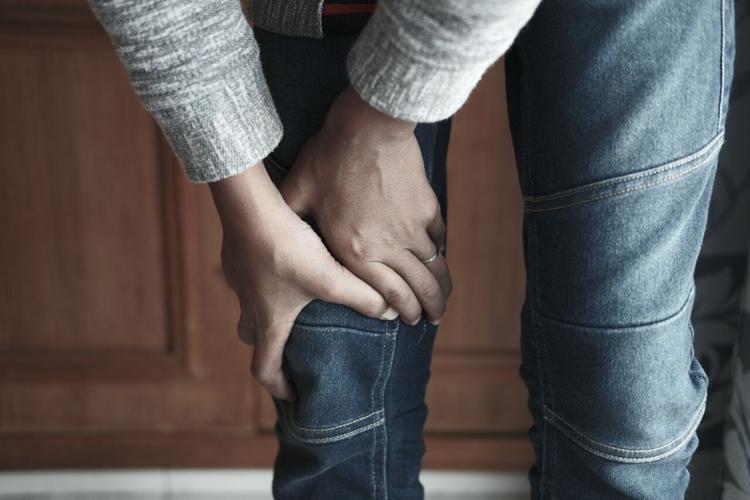
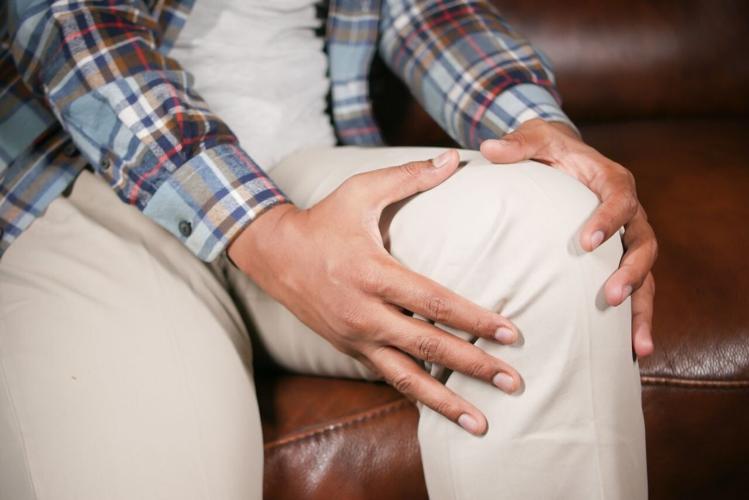
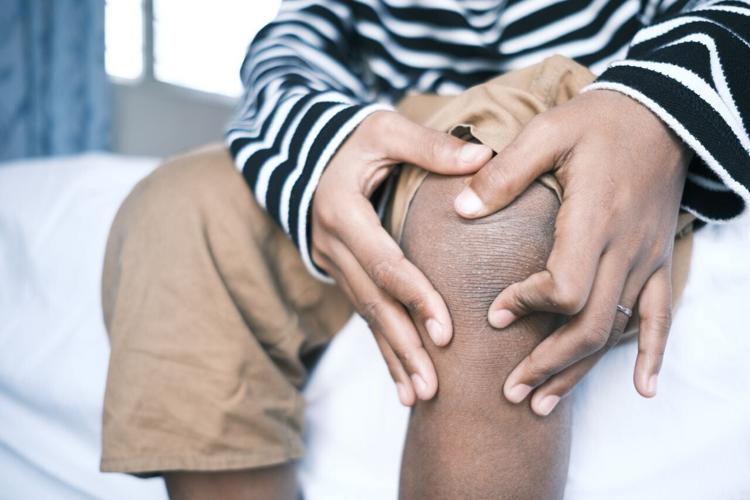
Knee pain suffered by millions of people can be eased for at least 12 months using a non-surgical procedure, according to new research.
Genicular artery embolization, or GAE, is an emerging minimally invasive treatment that targets abnormal blood vessels in osteoarthritis patients.
Research in Germany shows that embolization of abnormal blood vessels is "safe" and provides "significant, lasting pain relief" and functional improvement for people with osteoarthritis-related knee pain.
Osteoarthritis, the most common form of arthritis, causes inflammation, stiffness, reduced mobility and sensory nerve pain.
Knee osteoarthritis affects more than 365 million adults worldwide and is one of the leading contributors to disability, according to the World Health Organization.

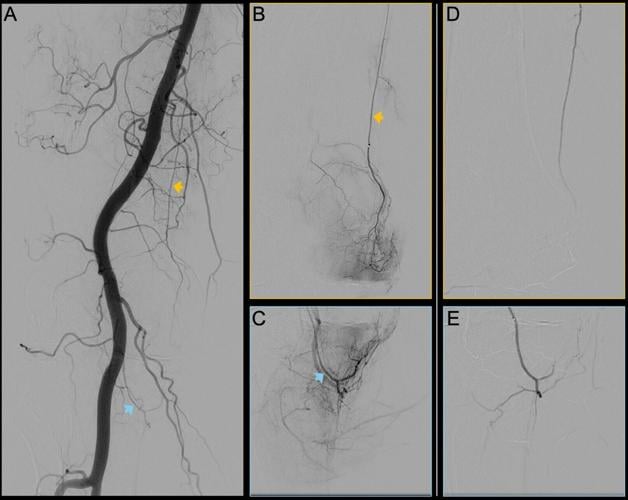
Digital subtraction angiography images of the right knee joint of a 62-year-old participant with predominantly medial knee osteoarthritis (OA). (A) Periinterventional image of the popliteal artery. Yellow arrow indicates the descending genicular artery, and blue arrow indicates the medial inferior genicular artery. (B, C) Selective preinterventional images show hypervascularity of two branches of the genicular artery: the (B) descending genicular artery (arrow) and the (C) medial inferior genicular artery (arrow). (D, E) Selective postinterventional images obtained after embolization with rapidly resorbable gelatin-based microspheres. Knee pain suffered by millions of people can be eased for at least 12 months using a non-surgical procedure, according to new research.Genicular artery embolisation, or GAE, is an emerging minimally invasive treatment that targets abnormal blood vessels in osteoarthritis patients. (Radiological Society of North Am via SWNS)
Study leader Florian Fleckenstein said: "For many patients with knee osteoarthritis, there is a real treatment gap today.
"Conservative measures such as intra-articular injections no longer provide sufficient relief, but joint replacement is not an option for medical or personal reasons."
He explained that GAE targets abnormal blood vessels using "superselective embolization."
In an osteoarthritic knee, abnormal vessels build up around the joint and drive inflammation and pain.
During GAE, a radiologist guides a thin catheter directly to each affected vessel and injects tiny particles to block it, calming the inflammation and easing the pain without surgery.
The research team hypothesized that GAE using rapidly resorbable, gelatin-based microspheres could integrate the favorable characteristics of temporary embolic agents and permanent microspheres while eliminating their limitations.
Rapidly resorbable, gelatin-based microspheres are size-calibrated, spherical particles designed to dissolve within hours.
Fleckenstein said: "GAE is a whole new treatment regimen that targets abnormal hypervascularity around the joint and, in turn, modulates the pathological neurovascular environment.

(Photo by Towfiqu barbhuiya via Pexels)
"By reducing both inflammation and pain, GAE with resorbable microspheres may be the first procedure that alters the course of the disease, slowing its progression."
The study included 114 women and 80 men, average age 69, with osteoarthritis-related knee pain who did not respond to at least three months of regular treatment, including physical therapy, anti-inflammatory drugs and intra-articular injections.
Fleckenstein, of Charité – Universitätsmedizin medical school and hospital, Berlin, said: "We believe these results carry real weight because they come from real-world data.






"With this broad, inclusive study design, our participants are exactly the patients that physicians encounter every day in their practices."
All participants underwent GAE with the resorbable microspheres between July and November 2024.
Around one in four participants (23%) underwent two GAE procedures for bilateral knee osteoarthritis, with the second GAE conducted within four weeks of the first procedure.
In total, the patients underwent 239 GAE procedures using the resorbable microspheres.
Embolization was performed under image guidance.
All the procedures were technically successful with no moderate or severe adverse events and only mild, self-limited reactions in 6.7% of the study group.
Outcomes were analyzed six weeks, three months, six months and 12 months following the procedure.
The six-month assessment was performed in person by an orthopedic surgeon.

(Photo by Towfiqu barbhuiya via Pexels)
Fleckenstein said: "In our cohort, we saw a significant drop in pain and a significant increase in function, including sports and recreation and daily activity.
"Most importantly, their quality of life significantly increased."
Pain scores fell quickly and kept improving, according to the findings published in the journal Radiology.
Scores dropped from seven out of 10 at the outset to four at six weeks and to three at the six- and 12-month follow-ups — a sustained reduction maintained throughout the year.
Osteoarthritis-related symptoms also improved.
At the 12-month follow-up point, 80% of the participants achieved improvements exceeding the minimum clinically important difference.
Fleckenstein said: "Our study demonstrates that GAE using rapidly resorbable gelatin-based microspheres is a safe, minimally invasive therapy that provides meaningful pain relief and functional improvement in participants with osteoarthritis-related knee symptoms for at least 12 months.
"By embolizing the pathological vessels, we're able to normalize the vessel structure — and, in turn, the neuronal structure of the knee."
Fleckenstein noted that with almost 200 patients, the study is the largest body of evidence yet for GAE using rapidly resorbable microspheres.
He added: "This lets us speak about safety and efficacy with real confidence.
"For the right patient, it can mean lasting relief from a single, minimally invasive procedure — a meaningful new option between injections and joint replacement."

(0) comments
Welcome to the discussion.
Log In
Keep it Clean. Please avoid obscene, vulgar, lewd, racist or sexually-oriented language.
PLEASE TURN OFF YOUR CAPS LOCK.
Don't Threaten. Threats of harming another person will not be tolerated.
Be Truthful. Don't knowingly lie about anyone or anything.
Be Nice. No racism, sexism or any sort of -ism that is degrading to another person.
Be Proactive. Use the 'Report' link on each comment to let us know of abusive posts.
Share with Us. We'd love to hear eyewitness accounts, the history behind an article.