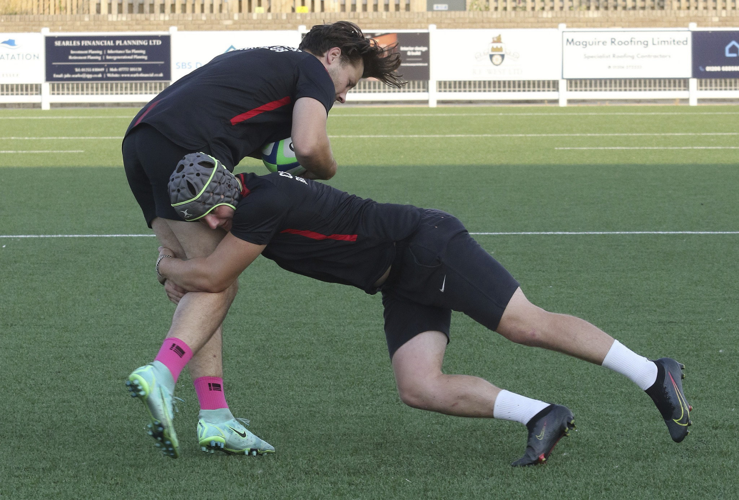

Photo by Patrick Case via Pexels
By Robert White
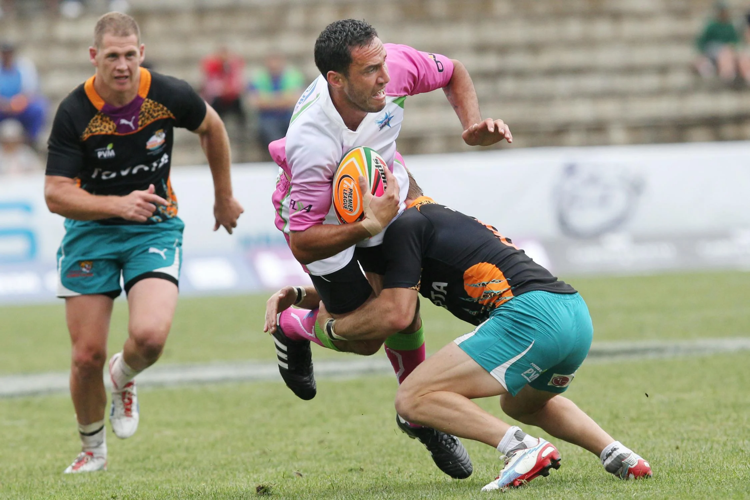
Amateur rugby union players who suffer concussion injuries should spend more time on the sidelines than currently required, a study suggests.
RFU rules state players should only return to any form of training or competitive matches after a minimum stand-down period of 21 days.
But new research carried out by the University of Essex suggests that this time period should be extended to nearly a month for some players at a grassroots level.
The study analyzed players at amateur rugby union club Colchester RFC over the course of a 22-game season, registering eight concussion injuries across the 41 player squad.
Using brain imaging technology, researchers found seven of them still had abnormal brain responses 25 days after injury - despite feeling well enough to return to the field under Rugby Football Union clearance protocols.
The findings suggests some players should wait close to a month before returning to contact rugby matches.
Dr. Ben Jones, a senior lecturer at the University of Essex's School of Sport, Rehabilitation and Exercise Sciences, led the research.

(University of Essex via SWNS)
He suggests individualized responses to concussion symptoms is the best way to manage players at grassroots level.
Dr Jones - a former England 7’s international, who also played for Northampton Saints and Worcester Warriors - said: "The findings really highlight the individual nature of concussion recovery and response.
"For some individuals, the time frame could be shorter and others longer, but currently we have a set time frame for all players.
"This needs changing to account for the individual responses to concussion injuries.
"The study shows that the current protocols are limited and may not be enough on its own for effective concussion recovery."






Dr Jones also suggested the findings would likely be similar in rugby league, despite the impact profiles and types of tackle differing between the codes.
The study assessed players within a 25-day time frame from their concussion injuries, and dysregulation - impairment in the regulation of a metabolic, physiological, or psychological process - was still present in most players.
Players were assessed again at the end of the season with four players still showing continued alterations - although players had gone back to play and this may have accounted for the alteration.
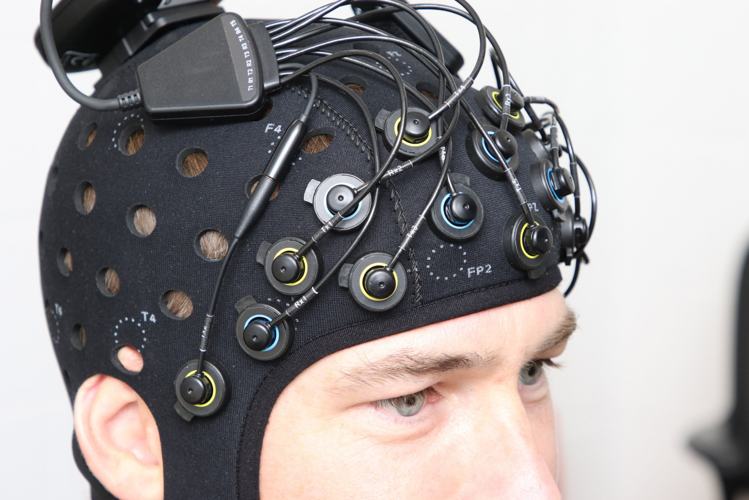
Dr Jones and his team used functional near-infrared spectroscopy (fNIRS) to study the brain activity.

(University of Essex via SWNS)
He said: “Our research suggests more individualized approaches utilizing personalized concussion monitoring using tools like fNIRS could improve player safety.
“Rugby has given me so much and this research is not about ruining the game for the millions of players worldwide.
“This research should ensure the long-term safety of the grassroots players – who are rugby’s lifeblood.”
Baseline fNIRS tests of all participants were taken at the beginning, middle, and end of the season.
As they recovered, their brains were monitored whilst they completed simple cognitive tasks like Where’s Wally puzzles.
Dr Jones hopes brain imaging could be incorporated into concussion protocols to help protect players.
Colchester Rugby Club is continuing to work with Dr Jones and his team – with the study being expanded to the women’s team.
Club chairman, Karl O'Brien, said: "It has been great to work with Dr Jones on this ground-breaking study and has been a real learning experience for the players and the club.
“The lessons learnt are something that the club and the club’s medical team have benefited from and will continue to do so over the coming seasons.”
(0) comments
Welcome to the discussion.
Log In
Keep it Clean. Please avoid obscene, vulgar, lewd, racist or sexually-oriented language.
PLEASE TURN OFF YOUR CAPS LOCK.
Don't Threaten. Threats of harming another person will not be tolerated.
Be Truthful. Don't knowingly lie about anyone or anything.
Be Nice. No racism, sexism or any sort of -ism that is degrading to another person.
Be Proactive. Use the 'Report' link on each comment to let us know of abusive posts.
Share with Us. We'd love to hear eyewitness accounts, the history behind an article.