
Key Takeaways
New guidelines now allow self-swab HPV testing, including one test that can be done at home and mailed in
HPV self-collected screening is recommended every 3 years if the test result is negative
Women may stop screening at age 65 only if they have 10 years of negative results
FRIDAY, Dec. 5, 2025 (HealthDay News) — Routine cervical cancer screening is getting a new option: Self-swab HPV tests, according to updated guidance released Dec. 4 by the American Cancer Society (ACS).
Experts say offering a test that women can collect themselves — sans speculum exam — could make screening less stressful in general.
"Screening for HPV is screening for cervical cancer," Jane Montealegre, an associate professor of behavioral science at the The University of Texas MD Anderson Cancer Center in Houston, told NBC News. "This gives more options to women."
HPV, or human papillomavirus, is responsible for most cervical cancers.
Because the virus is such a strong predictor of disease, HPV testing has now become the preferred screening method over the traditional Pap test.
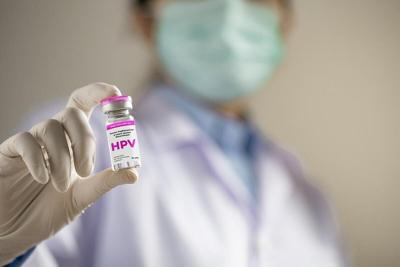
Since 2024, the U.S. Food and Drug Administration (FDA) has approved three self-collected HPV tests: Two are done in medical settings using a vaginal swab, and one test can be done at home and mailed to a lab.
In the United States, cervical cancer rates have been falling for decades thanks to screening and the HPV vaccine. Still, more than 20% of women are not up to date, according to a 2022 study published in JAMA Network Open.
Robert Smith, an epidemiologist and senior vice president for early cancer detection at the ACS and senior author of the update, explained to NBC News "a woman would be given a kit and could go some place, either the exam room or bathroom, and collect her own sample."
Both the ACS and the U.S. Preventive Services Task Force (USPSTF) recommend screening with HPV testing every 5 years if clinicans collect the sample, with follow-up testing if results are positive.
ACS endorses self-collected HPV screening with FDA approved methods every 3 years for average-risk individuals if results are negative.
The HPV test may be combined with a traditional pap test as well, every 3 or 5 years.




Where the two groups differ is when to begin testing:
American Cancer Society: 25
U.S. Preventive Services Task Force: 30, with pap-only screening every three years between ages 21 and 29.
Insurance coverage is expected to continue under the Affordable Care Act, and experts say self-collected samples done in clinical settings should also be included.
The updated ACS guidance also clarifies when screening can stop: Women may end screening at age 65, but only if they have had at least 10 years of consistent negative results.
"Despite clear recommendations on the importance of women being up to date with screening up to 65, very few women are," Smith stated.
"It’s important for women to understand that there is a record they will want to have by the time they are 65 that will basically tell them it’s safe to stop screening for cervical cancer."
Looking ahead, some researchers believe screening intervals may eventually stretch even longer.
"We have data showing now that in a highly vaccinated population, you can screen every 10 years, but we in the U.S. are lagging behind," Dr. Diane Harper, a professor of obstetrics and gynecology and family medicine at the University of Michigan, told NBC News.
More information
The U.S. Centers for Disease Control and Prevention has more on cervical cancer screening.
SOURCE: NBC News, Dec. 4, 2025
What This Means For You
Self-swab HPV testing may make cervical cancer screening easier and more comfortable.


(0) comments
Welcome to the discussion.
Log In
Keep it Clean. Please avoid obscene, vulgar, lewd, racist or sexually-oriented language.
PLEASE TURN OFF YOUR CAPS LOCK.
Don't Threaten. Threats of harming another person will not be tolerated.
Be Truthful. Don't knowingly lie about anyone or anything.
Be Nice. No racism, sexism or any sort of -ism that is degrading to another person.
Be Proactive. Use the 'Report' link on each comment to let us know of abusive posts.
Share with Us. We'd love to hear eyewitness accounts, the history behind an article.