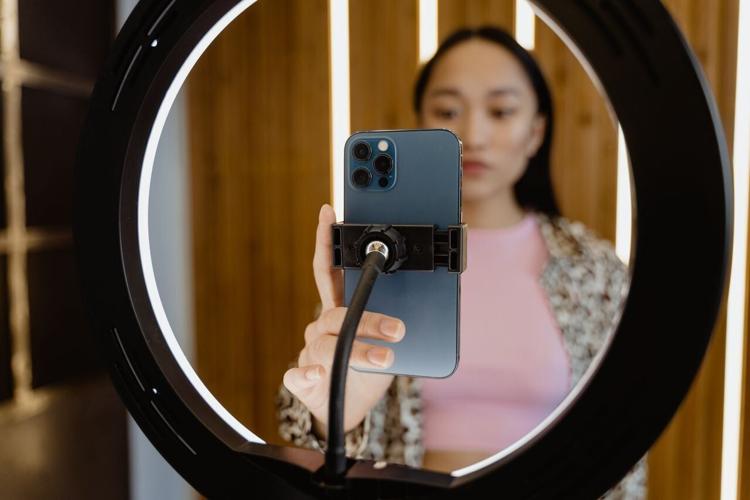






(Photo by MART PRODUCTION via Pexels)
By Stephen Beech
Watching "thinspiration" videos on TikTok increases self-objectification and worsens the mood of young women, according to new research.
Viewing body-positive content on the social media platform also increases self-objectification — but is linked to more positive moods, suggests the Canadian study.
The research team explained that self-objectification occurs when people feel their value is determined by their appearance, viewing themselves and their bodies as objects.
Appearance-focused social media content includes "thinspiration" — which idealizes thinness and promotes weight loss; "fitspiration" — containing fat-loss promotion messages; and "body positivity" content, promoting body acceptance and challenging thin or fit ideals.
Experts have questioned the beneficial nature of body positivity content, as well as the overall associations between self-objectification and mood.

(Photo by Ron Lach via Pexels)
For the new study, researchers recruited 323 women and feminine-identifying people who reported their general disposition to self-objectify before watching a randomized set of 20 TikTok videos.
The videos spanned five categories: thinspiration, fitspiration, body positivity, general positive and neutral.
After each video, participants reported their self-objectification and mood levels.
The findings, published in the journal PLOS One, showed that, compared with watching positive videos, self-objectification was highest after viewing thinspiration, followed by body positive and fitspiration content.
Thinspiration and fitspiration were both associated with increased negative mood and decreased positive mood compared with neutral videos.





Body positive content, on the other hand, was associated with increased positive mood.
Greater self-objectification after viewing body positive content strengthened the positive mood effect.

(Photo by Miriam Alonso via Pexels)
The research team pointed out that the study measured only momentary effects of viewing videos, so can't determine longer-term effects, and participants did not complete an initial mood or self-objectification measure before viewing videos.
The sample was young and consisted largely of women of average body size, limiting generalisability.
But the researchers concluded that appearance-focused social media content "broadly increases" self-objectification, although it is not always associated with negative outcomes.
Study author Samantha Jones of Western University, Ontario, said: "We found that women experienced negative emotions when viewing social media videos that idealize thinness.
"Women who tend to value their appearance over their other qualities were especially vulnerable to negative mood after viewing thin-ideal videos.
"However, in the moment, these same appearance-focused thoughts may serve to boost mood when women engage with body positive videos."
She added: "Presenting videos to participants in a randomized order and investigating each video's impact on mood allowed us to disentangle the effect that different forms of content have on women's mood while viewing videos from TikTok.
"Unpredictable exposure to a variety of TikTok videos can elicit shifts in both thinking and feeling in the moment."
The research team said future studies could look at how to lessen the impacts of thinspiration and fitspiration on mood, especially among those with a high tendency to self-objectify.
(0) comments
Welcome to the discussion.
Log In
Keep it Clean. Please avoid obscene, vulgar, lewd, racist or sexually-oriented language.
PLEASE TURN OFF YOUR CAPS LOCK.
Don't Threaten. Threats of harming another person will not be tolerated.
Be Truthful. Don't knowingly lie about anyone or anything.
Be Nice. No racism, sexism or any sort of -ism that is degrading to another person.
Be Proactive. Use the 'Report' link on each comment to let us know of abusive posts.
Share with Us. We'd love to hear eyewitness accounts, the history behind an article.