

What is the cost of in-home dementia care?
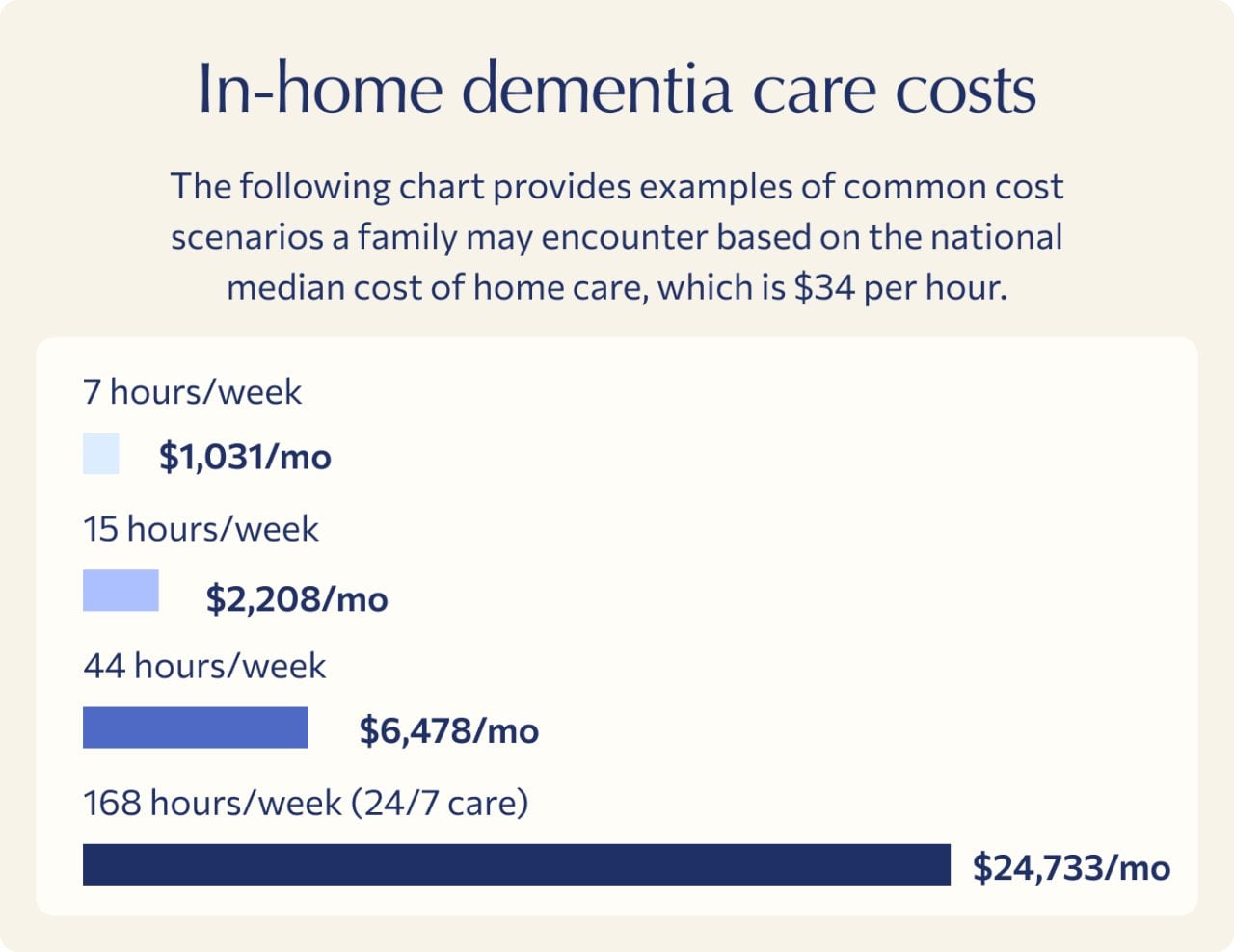
The cost of in-home dementia care typically starts at about $34 per hour, with monthly costs ranging from roughly $2,145 to more than $24,000 depending on how many hours of care are needed. Families often pay more as dementia progresses and supervision increases. In addition to caregiver wages, costs may include home safety modifications, medical supplies, and lost income. Comparing in-home dementia care with memory care and other senior care options can help families understand when care at home is affordable and when another option may make more financial sense.
A Place for Mom provides this overview of costs for in-home dementia care and other alternatives.
Key Takeaways
- The national median cost of in-home dementia care is $34 per hour, with monthly costs increasing as care hours and supervision needs grow.
- Full-time in-home dementia care can cost nearly as much as memory care, while round-the-clock care is often far more expensive.
- In-home dementia care costs extend beyond caregiving and may include home modifications, medical supplies, and emotional and financial strain on family caregivers.
- In-home dementia care can work long term for some families, but many eventually need memory care as dementia progresses and care needs intensify.
Factors that affect the costs of dementia care
The cost of in-home dementia care depends on how much care a senior needs and where they live, as well as the caregiver’s level of experience and training.
Seniors and their family members often begin their search for long-term care by asking “What’s the average cost?” However, understanding the median cost is more meaningful, as average costs are affected by extremely high or low prices. Median costs are more reflective of the actual cost because they simply represent the middle of a range of numbers.
Level of dementia care needed
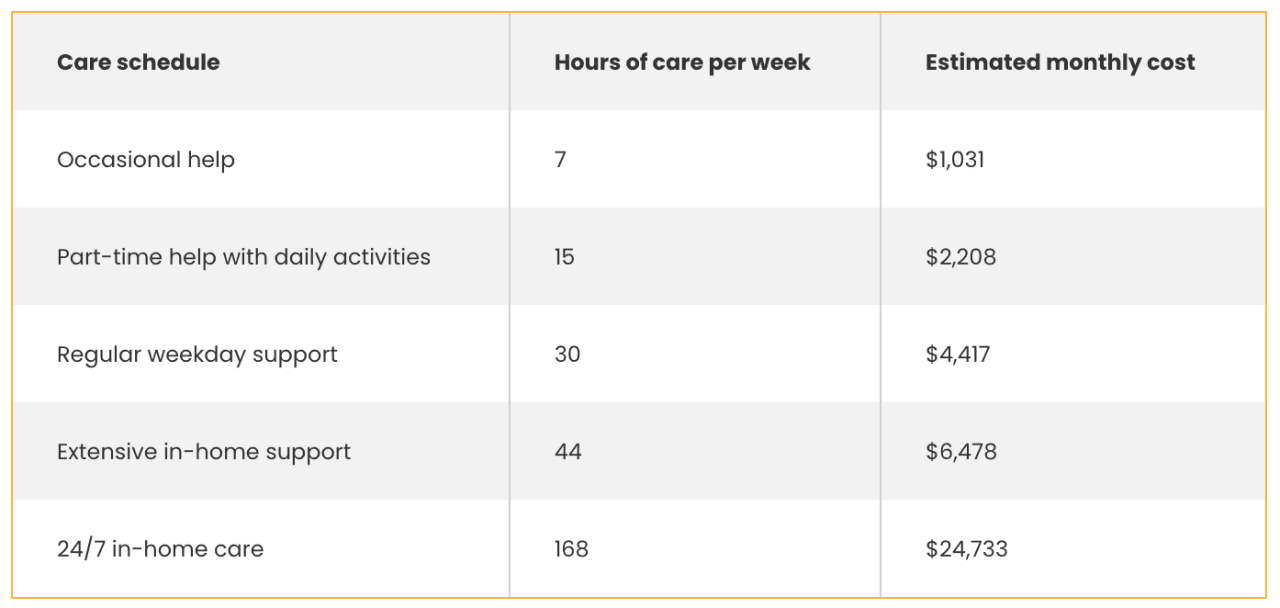
The level of care needed is a factor in the cost of in-home dementia care, and it depends on your loved one’s stage of dementia. The number of hours per week that care is needed also influences the cost. The table below shows typical weekly schedules for in-home dementia care and the estimated monthly costs families can expect when using private payment sources, such as personal savings and income.
Part-time in-home dementia care
A part-time schedule of 15 hours per week for in-home dementia care costs about $2,208 per month, or about $26,500 per year, based on proprietary data from A Place for Mom, a platform that guides families through every stage of the aging journey.] If your loved one is in an early stage of dementia and needs minimal assistance, it may make sense to hire a caregiver on a part-time basis so family caregivers can take a break, go to their own doctor’s appointments, see friends, work, or take care of other tasks during business hours.
Full-time in-home dementia care
At 44 hours per week, a full-time schedule will cost about $6,478 per month, or $77,732 per year. A full-time in-home caregiver is a reasonable option if you and other family caregivers must work full-time and can’t care for your loved one.
24-hour in-home dementia care
Round-the-clock care is the most expensive type of in-home dementia care, costing about $24,733 per month, or $296,796 per year.] If your loved one is at a more advanced stage of dementia and can’t be left alone for any length of time, you may want to consider 24-hour home care or a residential memory care community.
According to A Place for Mom’s proprietary data, the national median cost of a memory care community is $6,690 per month, or about $80,280 per year. This is comparable to the cost of full-time in-home dementia care, and significantly less expensive than 24/7 in-home care.
Caregiver training
Caring for people who are living with dementia requires specialized training and unique skills, which typically contributes to its higher costs. Know your loved one’s dementia symptoms, care needs, and expectations before screening home care providers. As you interview caregivers, ask:
- What has your experience been in caring for people living with dementia?
- Are you certified through a dementia care training program?
If you’re considering working with a home care agency to find a caregiver for your loved one with dementia, you can ask additional questions to ensure the company is trustworthy and reliable.
Location
Location and local cost of living greatly affect the costs of in-home dementia care. A community located in a large metropolitan area, near a desirable destination, or in an area with a higher cost of living is often more expensive. The national median cost of in-home dementia care is $34 per hour, with costs in half the states being higher and the other half being lower.
The costs of home safety modifications
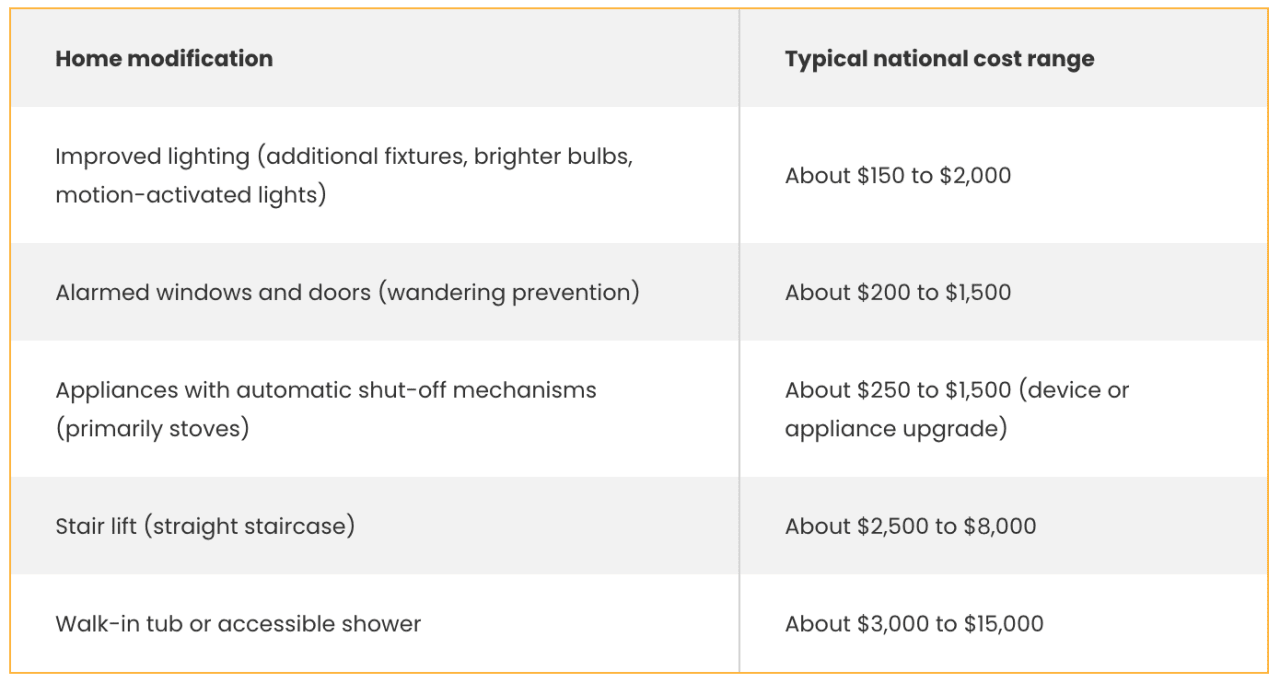
Families who care for their loved one at home often make safety modifications to reduce the risk of injury. The cost of these modifications depends greatly on the change being made. The table below provides typical national costs for selected home modifications, based on data from U.S. Department of Housing and Urban Development, the Administration for Community Living, and the National Council on Aging. These figures are only a starting point. Depending on where your loved one lives, the cost of changing their home to support aging in place may be higher or lower.
In the early stages of dementia, basic and inexpensive accommodations, such as removing trip hazards, installing grab bars, and leveling thresholds can reduce Alzheimer’s safety risks at home.
As dementia progresses, seniors may experience more mobility difficulties, disorientation, and wandering. Alarmed windows and doors may be needed to reduce the risks associated with wandering. Appliances with automatic shut-off mechanisms and mobility devices like stair lifts may also be necessary. Nonslip flooring, walk-in tubs or showers, and lever handles are other common changes that contribute to in-home dementia care costs.






“Since Grandpa didn’t want to move out of the home he’s been in for over 50 years, we had to make some changes,” says Richard, of Marion, Tennessee.
He and his wife have spent over $5,000 on home modifications since the diagnosis.
“We know that when things get worse, he won’t be able to live on his own anymore, so we’re also starting to make some changes in our house for whenever Grandpa needs to be here,” Richard notes.
Emotional and financial challenges faced by family caregivers
While caring for a loved one with dementia may be rewarding, families may also face emotional and financial challenges. About 70% of caregivers say that caring for someone who has dementia is stressful.
Emotional and mental health impacts
Family caregivers who care for someone who has dementia report more anxiety and depression, higher levels of stress, and lower well-being. Balancing care for a senior loved one with other responsibilities such as a career, childcare, and personal relationships can lead to caregiver burnout.
Richard and his wife Lizz are part of the sandwich generation, meaning they simultaneously care for an elderly loved one and a child or young adult. According to a 2023 AARP Public Policy Institute report, nearly three-quarters (74 percent) of sandwich generation caregivers are employed either full-time or part-time while also providing care to both aging adults and children.[09]
“We’re just fried a lot of the time,” Richard admits. “My wife does so much. Usually, she has to make a separate dinner plate for Grandpa since there are a lot of foods he can’t eat anymore. It can be hard getting the kids to do homework and taking care of him.”
Professional and financial impacts
It’s not uncommon for family caregivers to miss work for a loved one’s doctor’s appointments, emergency calls, and days when other caregivers aren’t available. This can lead to poor performance, lost pay, and fewer vacation days. On the other hand, providing in-home care for a loved one can reduce professional care expenses and help forge bonds between family members.
Since the beginning of 2020, Richard’s been working from home. He often spends afternoons helping his grandfather with showers, trips to the bathroom, and other needs. This has helped his family cut the cost of professional in-home dementia care in half.
“I’m dreading going back to the office because so much of the money I make in those hours goes straight to caregiver costs, and I don’t get to spend time with him,” Richard explains.
How in-home dementia care costs compare to other care options
Once families understand the cost of in-home dementia care, it’s often helpful to see how it compares with other senior care options. The figures below show national median costs across common senior living and care types to provide high-level context as you weigh next steps, based on A Place for Mom proprietary data. Actual costs can vary based on location, services, and care needs.
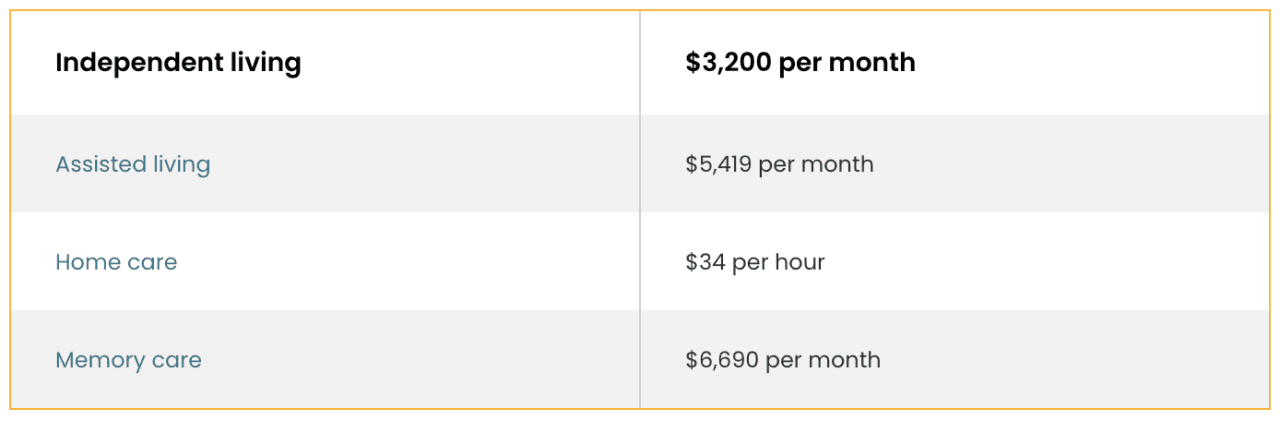
These national figures are meant to offer perspective, not a full cost breakdown. Each care option includes different services and pricing factors: assisted living, memory care, independent living. Comparing these details can help you determine which option best fits your loved one’s needs and your family’s budget.
Paying for in-home dementia care
Families typically pay for in-home dementia care out of pocket using private funds such as savings or income.
Does Medicare cover in-home dementia care costs?
Medicare won’t pay for long-term in-home dementia care services, but it will cover the cost of some dementia-related care such as cognitive assessments, medications, and care planning assistance. Medicare will also pay for home health care for a short period of time.
Does Medicaid cover in-home dementia care costs?
Yes, Medicaid may cover some home care services for a senior with dementia.
Does private health insurance cover the cost of dementia care?
Different private health insurance plans — such as employer-sponsored health plans and Medigap insurance plans — cover different aspects of medical care for a senior with dementia. However, in-home care for dementia usually isn’t covered by private plans. Review your loved one’s policy for specifics.
Is home care for dementia tax deductible?
Yes, the cost of the medical portion of home care services is deductible on a federal income tax return when specific conditions are met, as detailed by the IRS. Tax deductible in-home care services may include assistance with activities of daily living (ADLs) such as bathing, dressing, eating, and personal hygiene.
How do I know when it’s time to consider moving my loved one to memory care?
According to a recent report from AARP, 75% of seniors say they want to live in their own homes as they age. For people in the early stages of dementia, this is possible with the right amount of support and care. As dementia progresses, however, and your loved one’s needs change, you may need to consider a move to memory care.
This story was produced by A Place for Mom and reviewed and distributed by Stacker.



(0) comments
Welcome to the discussion.
Log In
Keep it Clean. Please avoid obscene, vulgar, lewd, racist or sexually-oriented language.
PLEASE TURN OFF YOUR CAPS LOCK.
Don't Threaten. Threats of harming another person will not be tolerated.
Be Truthful. Don't knowingly lie about anyone or anything.
Be Nice. No racism, sexism or any sort of -ism that is degrading to another person.
Be Proactive. Use the 'Report' link on each comment to let us know of abusive posts.
Share with Us. We'd love to hear eyewitness accounts, the history behind an article.