

Dollar stores have brought food closer to many rural Alabamians who live in “food deserts,” but such stores may not be the oasis they seem, according to the Education Policy Center's new report.
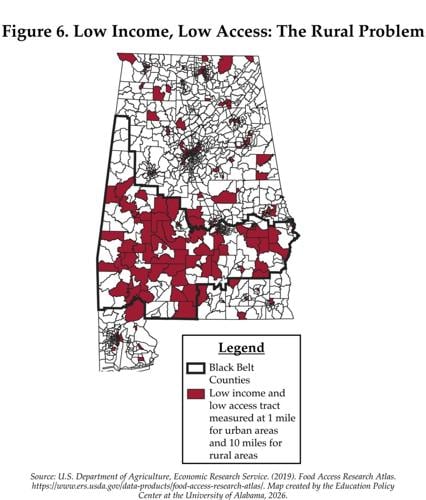
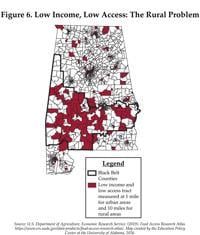
The 2008 Farm Bill defines a food desert as an area with limited access to affordable and nutritious food, especially if the area is low income. That defines many Black Belt counties once you leave the county seat.
Dollar stores have sprung up throughout rural Alabama, bringing consumer goods, including food, closer to Black Belt residents.
“A common criticism that came with this expansion of dollar stores was the lack of healthy food options” offered in the store, states the "Food Deserts and the Rural Gap" report from the Education Policy Center within The University of Alabama.
In addition, smaller local grocers who carry more nutritious food items have been squeezed out by dollar stores, according to the report. A 2025 study found that communities lost one grocery store for every three dollar stores that moved in, the report says.
The report notes that dollar stores have made an effort to improve their selection and quality, with Dollar General introducing about 125 items in their house brand “Good & Smart,” as well as their new DG Markets.





In addition to examining the effects of dollar stores, the report provies several measures of food access in the Black Belt. Almost 125,000 people across the Black Belt are food insecure. The average Black Belt county has 18.5% of its population food insecure, compared to 17.2% of the average non-Black Belt county.
As another measure, the Robert Wood Johnson Foundation developed a 0 to 10 score for healthy food environment based on distance from a grocery store, locations for healthy purchases and ability to afford healthy food. Alabama has a score of 5.3, while the Black Belt averages 6.1 and non-Black Belt counties average a score of 7.
The four counties in Alabama with a lower score than the state as a whole are Perry (3.9), Bullock (4.4), Greene (4.5) and Wilcox (4.7). Perry County, which has the state’s lowest score, spans about 720 square miles “but relies on a single Piggly Wiggly,” the report says.
The report suggests expanding funding for grocery stores in food desert areas to address disparities in food accessibility in the Black Belt.
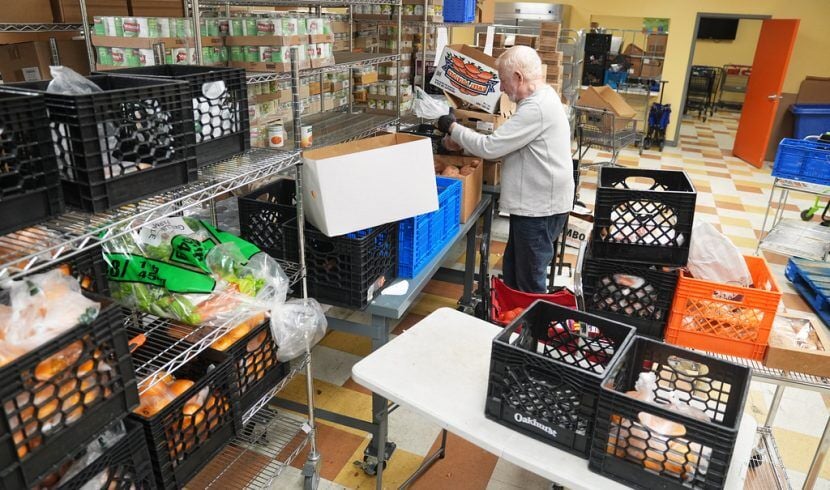
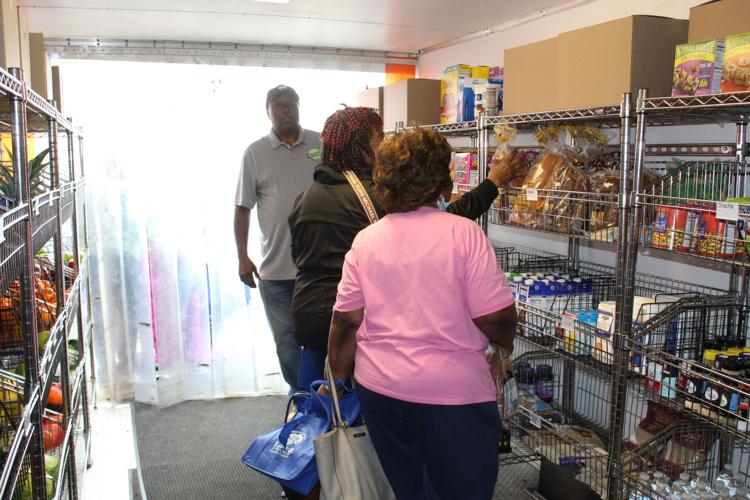
Community food pantries must be supported, with community colleges serving as anchor institutions. And the USDA should renew its Household Food Security Report, which was suspended in 2025. Data from the USDA survey are needed to track food access and nutrition disparities, according to the report.
(0) comments
Welcome to the discussion.
Log In
Keep it Clean. Please avoid obscene, vulgar, lewd, racist or sexually-oriented language.
PLEASE TURN OFF YOUR CAPS LOCK.
Don't Threaten. Threats of harming another person will not be tolerated.
Be Truthful. Don't knowingly lie about anyone or anything.
Be Nice. No racism, sexism or any sort of -ism that is degrading to another person.
Be Proactive. Use the 'Report' link on each comment to let us know of abusive posts.
Share with Us. We'd love to hear eyewitness accounts, the history behind an article.