Federal changes to the supplemental nutrition assistance program (SNAP) will cost Alabama between $174 and $261 million, state officials said Thursday.
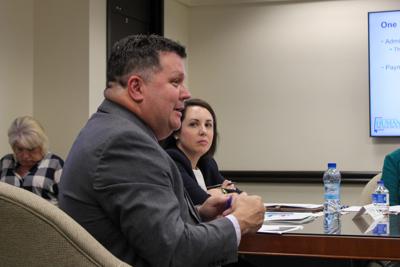
The One Big Beautiful Bill Act (OBBBA) introduced a penalty for states that have a high error rate in the SNAP program. Currently, Alabama’s error rate is around 10%, SNAP Director Brandon Hardin said at a quarterly meeting of the Alabama Department of Human Resources (DHR), which administers the program in the state.
“We won’t get that final number until June of this year to even know what our FY25 rate is officially. That’s what makes a lot of this so difficult, is because when you’re dealing with quality control data, it’s always six months behind,” Hardin said.
The penalty will go into effect on Oct. 1, 2027, and will be based on the error rate the state had at the end of fiscal year 2026. Errors are mostly from clients overpaying or underpaying for their benefits by not reporting a need within their household.
In FY28, the state will be responsible for 10% or 15% of benefits for SNAP, which it has never had to pay for. Alabama is currently between penalty tiers. The state will be responsible for 10% of benefits if the error rate is between 8 and 9.99%, and 15% of benefits if the error rate is 10% or more.
Hardin said there were 678,278 Alabamians enrolled in the SNAP program, about 44,200 less than October when a federal government shutdown left enrollees without benefits. Hardin said the disenrollments are due to federal eligibility changes, including requiring that able-bodied adults without dependents on SNAP must report 80 hours per month of work or volunteering.
“We work closely with the food banks, and they do a tremendous job at filling that aid,” Hardin said in an interview after the meeting. “For every meal they provide, SNAP provides nine. Maintaining the SNAP program is very important.”
Commissioner Nancy Buckner said that the agency submitted a waiver to the federal government to only count client errors and not county agency errors in an effort to lower the rate, but it was denied.
“For instance, in October of this year, we had x amount of dollars, 75% of those were client errors. That doesn’t mean it was client fraud, just client errors,” Hardin said.
Hardin said that other states have reached out to Alabama to ask questions about the error rate, and Alabama has done the same.





“We’re going to continue to move forward,” Hardin said. “We’ve made over 15 changes already, significant changes, to our policy.”
The Legislature appropriated $148.4 million, but it will only be released if the department lowers the error rate to 6%, which would prevent the state from paying for part of the program, by Oct. 1, or develops a plan to cover the cost of federal funding cuts. For fiscal year 2024, Alabama’s error rate was 8.32%, under the national average of 10.93%, according to the U.S. Department of Agriculture.
Senate Finance and Taxation General Fund budget chair Greg Albritton, R-Atmore, said in a phone interview Thursday afternoon that the state does not have the $174 to $261 million additional funds to cover SNAP benefits if the error rate is not reduced.
“We don’t have the extra funds to fund it, that’s part of the law also. DHR’s gotta figure out a route to meet the benefits of the needy that are on these programs if the error rate does not come down,” Albritton said.
Lawmakers have been preparing for smaller budgets since pandemic-era relief funds have gone away. Kirk Fulford, legislative fiscal officer, told lawmakers in January to be “conservative” with budgets and that 2028 will be a “rock fight.”
Albritton said Thursday that the Legislature’s priority remains getting services to Alabamians and funding agencies, but it may look different due to a reduction in revenue.
“I remain optimistic that we’re gonna be OK. We’re not the only state facing this brick wall. Most states are,” Albritton said. “We’re going to do everything we can to meet the needs that are there.”
This story was updated Friday at 8:58 a.m. to correct that the cost-sharing penalty will go into effect on Oct. 1, 2027, not 2028, which marks the beginning of FY28.

(0) comments
Welcome to the discussion.
Log In
Keep it Clean. Please avoid obscene, vulgar, lewd, racist or sexually-oriented language.
PLEASE TURN OFF YOUR CAPS LOCK.
Don't Threaten. Threats of harming another person will not be tolerated.
Be Truthful. Don't knowingly lie about anyone or anything.
Be Nice. No racism, sexism or any sort of -ism that is degrading to another person.
Be Proactive. Use the 'Report' link on each comment to let us know of abusive posts.
Share with Us. We'd love to hear eyewitness accounts, the history behind an article.