Cooking classes, market tours and food workshops earn a permanent place on travel itineraries, as travelers look for ways to participate in local culture, not just observe it. About 69% of millennials and Gen Z say creating something with their hands is one of the most rewarding parts of travel, while 82% say learning a new skill makes a trip more memorable. The experiences have moved from optional extras to a primary reason many travelers choose a destination.
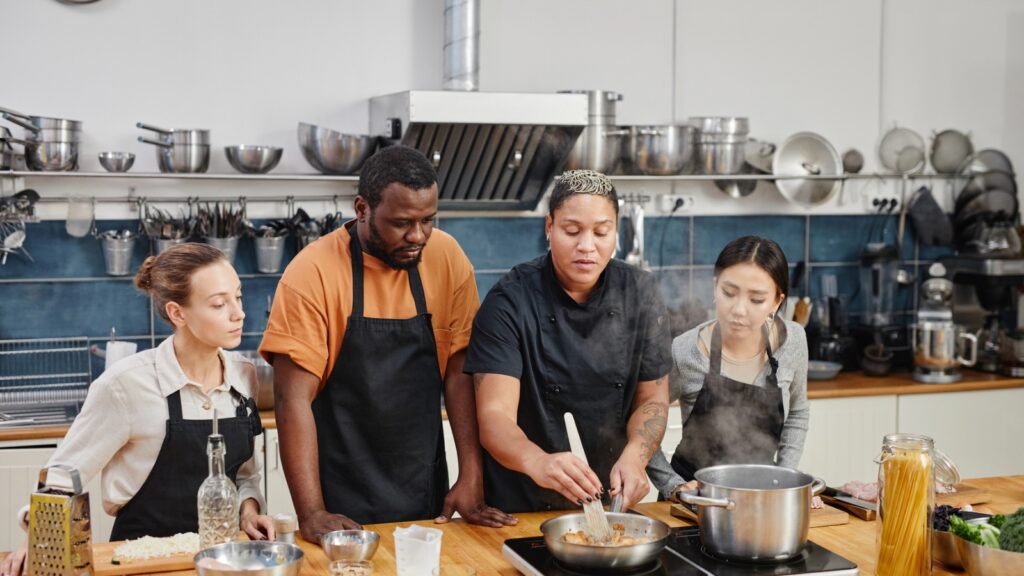
The broader travel industry now has a name for the behavior: “sight-doing.” Travelers increasingly seek hands-on experiences that move beyond landmarks and sightseeing, connecting them to local culture through participation. With about 79% of millennials and Gen Z likely to seek out destination-specific workshops or activities this year, a pasta recipe, market skill or cooking technique can outlast any trinket bought on the same trip.
Market before the kitchen
About 76% of global respondents say the skills they gain on a trip last longer than any material souvenir. Culinary experiences often start building those skills before anyone turns on a stove. The format is remarkably consistent: market first, kitchen second. Walking through a local market with a chef changes what follows. Ingredients gain a source, a season and a vendor who may have been selling them for decades.
In Jaipur, Rajasthan, travelers join local hosts at neighborhood markets before cooking dal baati churma in family home kitchens. Turmeric, cumin and cardamom are handled and smelled before they are measured, connecting the dish to the landscape that produced it. In Chiang Mai, the morning market tour is built into the day. Lemongrass, galangal and kaffir lime are identified at local stalls before an outdoor kitchen session takes place to make green curry paste from scratch.
In Istanbul, classes begin at the Egyptian Spice Bazaar, completed in 1664 at the crossroads of Europe and Asia. The experience then crosses the Bosphorus to a home kitchen, where meze and slow-braised lamb come together with ingredients chosen an hour earlier.
Where the technique takes time
The cooking itself delivers something a restaurant cannot. Travelers are not eating a chef’s version of a dish; they are making their own, guided on why each step matters. In Oaxaca, mole negro workshops take most of a day: toasting and grinding dried chiles on a metate, charring tomatoes over open flame and building the sauce in layers. The technique is indigenous, the ingredients are local and what travelers take home is a process they can repeat.






In Tuscany, travelers are requesting to cook with local nonnas, learning pasta, bread and slow-cooked regional dishes in private home kitchens. Interest in this format has grown as travelers seek generational knowledge that exists in family kitchens and cannot be found in any recipe book.
The food is the history
Some destinations make it impossible to separate the food from the history. In Marrakech, preserved lemon and tagine workshops draw travelers into a tradition rooted in Berber, Arab and Andalusian influences. Learning to identify ras el hanout and distinguish quality saffron at the souk is knowledge that travels home.
In Hoi An, a UNESCO World Heritage city known for its preserved historic quarter, classes begin at the Central Market before continuing by basket boat along the Thu Bon River. The experience ends with the preparation of Cao Lầu, a noodle dish so closely tied to the town that it is widely considered impossible to replicate anywhere else.
In the culinary context, the experience rarely ends when the trip does. Travelers bring home recipes, practice techniques and recreate dishes months later for friends and family who were never there, extending the experience well beyond the destination.
Skill is the new souvenir
Travel has long been measured by where you went and what you saw. The growing demand for culinary experiences suggests travelers are starting to measure it differently: by what they learned and whether it stayed with them. For destinations and operators, that is worth paying attention to. The traveler who leaves knowing how to make something is more likely to talk about it, recommend it and return for more of it.
Jennifer Allen is a retired chef turned traveler, cookbook author and nationally syndicated journalist; she’s also a co-founder of Food Drink Life, where she shares expert travel tips, cruise insights and luxury destination guides. A recognized cruise expert with a deep passion for high-end experiences and off-the-beaten-path destinations, Jennifer explores the world with curiosity, depth and a storyteller’s perspective. Her articles are regularly featured on the Associated Press Wire, The Washington Post, Seattle Times, MSN and more.
The post More travelers are trading restaurant tables for cutting boards — and coming home with more than memories appeared first on Food Drink Life.

(0) comments
Welcome to the discussion.
Log In
Keep it Clean. Please avoid obscene, vulgar, lewd, racist or sexually-oriented language.
PLEASE TURN OFF YOUR CAPS LOCK.
Don't Threaten. Threats of harming another person will not be tolerated.
Be Truthful. Don't knowingly lie about anyone or anything.
Be Nice. No racism, sexism or any sort of -ism that is degrading to another person.
Be Proactive. Use the 'Report' link on each comment to let us know of abusive posts.
Share with Us. We'd love to hear eyewitness accounts, the history behind an article.