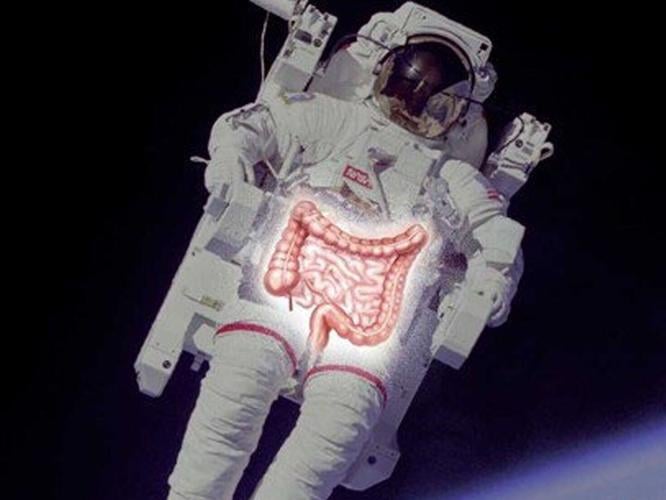






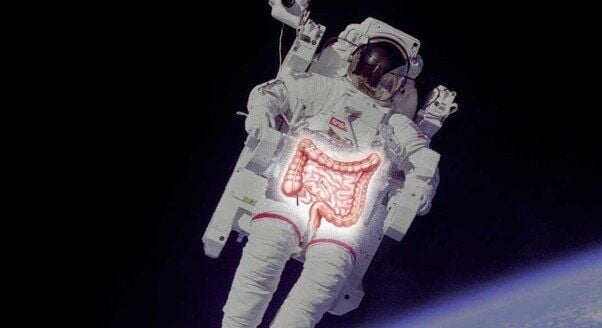
A new study from the University of Copenhagen in collaboration with NASA provides an idea of what happens in the stomach without the influence of gravity. (Frans Wej / Jean Beaufort / Elionas2 via SWNS)
By Stephen Beech
Astronauts may be able to avoid tummy troubles in space thanks to new research.
Constipation is a known side effect of space travel but, until now, little was known about why it happens.
Many things are different in space — including how the intestines work.
Constipation would cause major health issues on extended deep space voyages.
Now, a new study provides an idea of what happens in the stomach without the influence of gravity.
Researchers from the University of Copenhagen in Denmark, working in collaboration with NASA, examined blood samples from 52 astronauts who participated in monthslong missions to the International Space Station (ISS).
The study, published in the journal Nature Communications, identified gastrointestinal changes that occur shortly after the astronauts leave Earth and gravity behind.

(Photo by Pixabay via Pexels)
Researchers say their findings may have positive implications not just for astronauts onlong mission in space, but also for bedridden patients back on Earth.
Study first author Giorgia La Barbera said: "We see changes in astronauts' blood samples that indicate that the gut bacteria begin to ferment protein to a greater extent than usual within weeks after the astronauts arrive in space, and this change continues until they are back on Earth."
She explained that protein fermentation is when gut bacteria begin to break down protein instead of fiber because the fiber in the diet has been used up.
It is not abnormal, but it also happens to many people on Earth.
Study co-author Henrik Roager said: "The lack of gravity in space probably causes food to move more slowly through the intestine.
"This fits with the fact that we are seeing signs of increased protein fermentation.
"This may also help explain constipation in astronauts."





Joint first author Jan Stanstrup said: "The samples we have analyzed come from a total of 52 different astronauts, on different missions and across many years.

(Photo by Pixabay via Pexels)
"This is very different from how you normally do a study.
"So, it is quite impressive that our method has been able to show so clearly that there is consistently more protein fermentation."
The findings were part of an experiment to analyze astronauts' blood metabolites, which are small molecules in the circulation, revealing how the body's metabolism works.
Metabolites can be used as clues to many aspects of human health, including providing information about what you have eaten or how the intestines are functioning.
The researchers say their findings are important because changes in the gut not only affect digestion, but can have consequences for the rest of the body — including the brain.
Study senior author Lars Ove Dragstedsaid: "We know that products of protein fermentation is often associated with negative health consequences, such as kidney damage, potential effects on mood or reduced ability to focus, among others."

(Photo by Pixabay via Pexels)
With plans to send crews on extended space missions to the moon and beyond, the researchers say that the current findings may be important.
La Barbera said: "When we plan for longer journeys in space – for example to Mars - countermeasures may be needed to mitigate negative effects of space travel on the intestines."
Roager said: "Our findings can inform potential interventions – either directly through increasing dietary fiber, supplementation with prebiotics or other types of treatments that promote peristalsis and decrease gut transit time.
"This would help reduce protein fermentation and thus provide a healthy gut environment and avoid negative health consequences."
The researchers say their findings are not only relevant for space travelers, but may also implications here on Earth.
Dragsted added: "You can use this knowledge to help bedridden patients.
"They also experience constipation and likely also have increased protein fermentation that may aggerate health conditions."

(0) comments
Welcome to the discussion.
Log In
Keep it Clean. Please avoid obscene, vulgar, lewd, racist or sexually-oriented language.
PLEASE TURN OFF YOUR CAPS LOCK.
Don't Threaten. Threats of harming another person will not be tolerated.
Be Truthful. Don't knowingly lie about anyone or anything.
Be Nice. No racism, sexism or any sort of -ism that is degrading to another person.
Be Proactive. Use the 'Report' link on each comment to let us know of abusive posts.
Share with Us. We'd love to hear eyewitness accounts, the history behind an article.