

Wikimedia Commons
By Stephen Beech
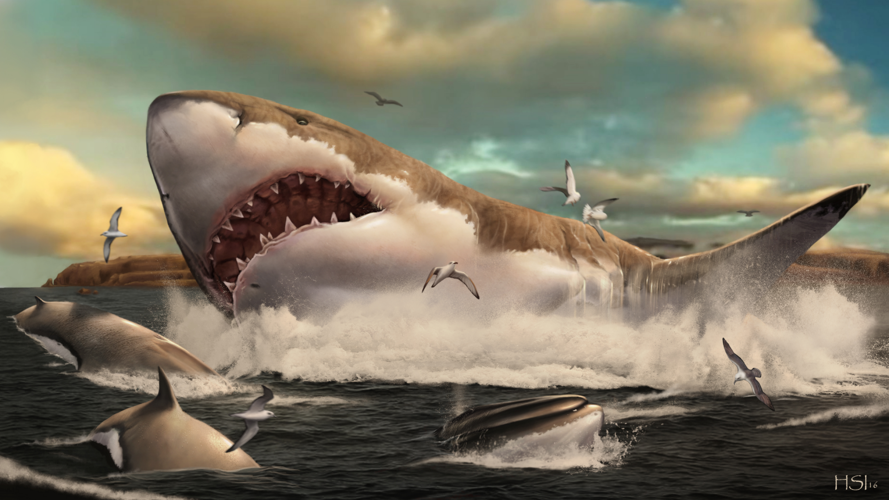
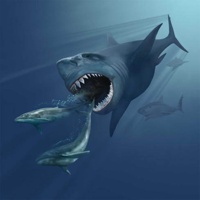
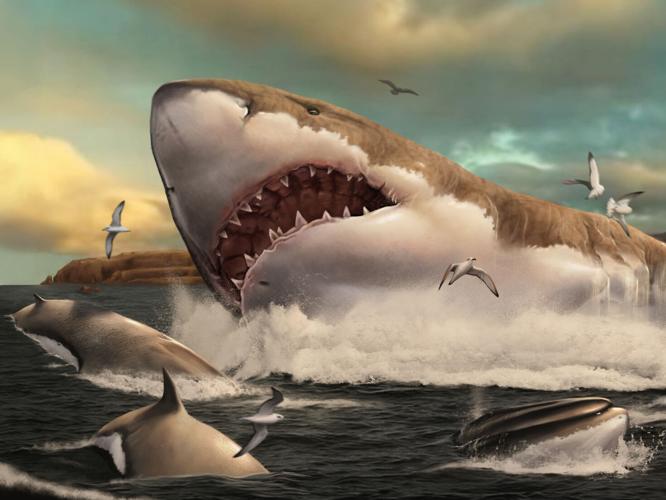
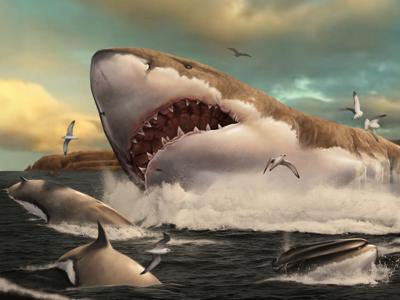
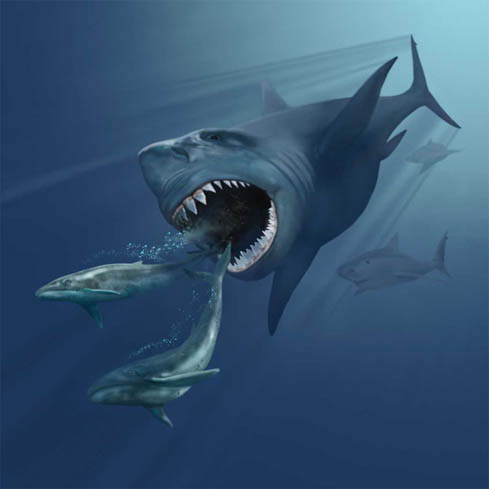
The deadly megalodon ate sea bream and smaller sharks as well as whales, suggests a new study.
The largest predatory fish in Earth’s history had a "broad diet" - fed on smaller species as well as other large predatory animals at the top of the food chain, say scientists.
They gained fresh clues into how Otodus megalodon met its "vast" appetite through state-of-the-art analysis of zinc detected in fossilized teeth.
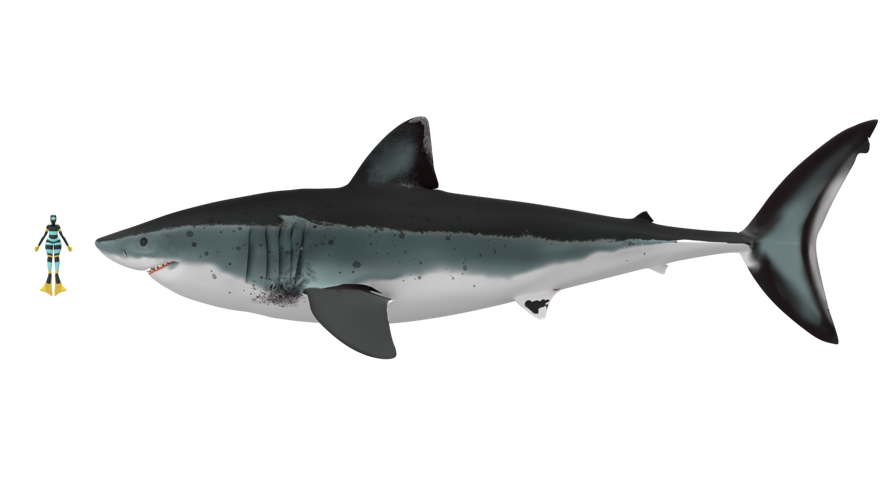
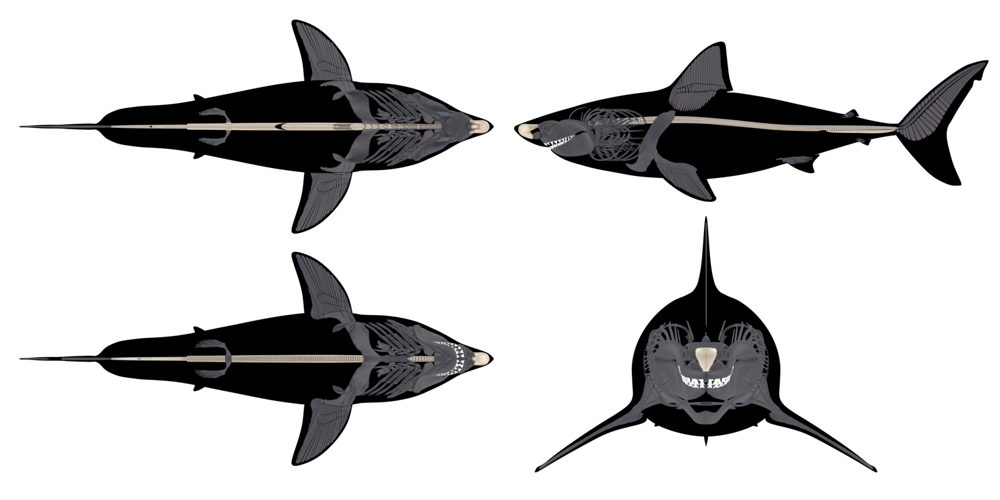
Measuring up to 24 meters (80 feet), it was longer than a truck with a trailer and weighed almost twice as much.
Embedded in its jaws were triangular teeth the size of a human hand, and its bite had the force of an industrial hydraulic press.
Megalodons dominated the world’s oceans between 20 and 3 million years ago, hunting for prey.
Scientists estimate it required around 100,000 kilocalories per day - 40 times the recommended daily intake for a human adult.

EvolutionIncarnate
Scientists widely assumed that megalodon’s main calorie intake was in the form of whales.
But Dr. Jeremy McCormack, of Goethe University in Frankfurt, Germany, said that it appears that the ocean giant had a "much broader" range of prey than previously assumed.
He and scientists from France, Austria and the United States examined fossilized megalodon teeth.
From the ancient teeth, the research team extracted zinc, an element that occurs in atomic isotopes of different weights.
Dr. McCormack explained that zinc is ingested with food, whereby less of the heavier isotope zinc-66 than the lighter isotope zinc-64 is stored in muscles and organs.
He said the tissue of fish that eat fish absorbs "significantly less" zinc-66, and those that, in turn, hunt them for food absorb even less.
That is why Otodus megalodon and its close relative Otodus chubutensis had the lowest ratio of zinc-66 to zinc-64 at the top of the food chain.






Karen Carr
Dr. McCormack said: “Since we don’t know how the ratio of the two zinc isotopes at the bottom of the food pyramid was at that time, we compared the teeth of various prehistoric and extant shark species with each other and with other animal species.
"This enabled us to gain an impression of predator-prey relationships 18 million years ago.”
The giant teeth used for the study, published in the journal Earth and Planetary Science Letters, mostly came from fossil deposits in Sigmaringen and Passau in Germany, where, 18 million years ago, a relatively shallow estuary flowed along the Alps, teeming with various other shark species alongside megalodon.
Dr. McCormack said: “Sea bream, which fed on mussels, snails and crustaceans, formed the lowest level of the food chain we studied.
"Smaller shark species such as requiem sharks and ancestors of today’s cetaceans, dolphins and whales, were next.
"Larger sharks such as sand tiger sharks were further up the food pyramid, and at the top were giant sharks like Araloselachus cuspidatus and the Otodus sharks, which include megalodon.”
Dr. McCormack stressed that the Otodus sharks can't be sharply differentiated from the lower levels of the pyramid.
He said: “Megalodon was by all means flexible enough to feed on marine mammals and large fish, from the top of the food pyramid as well as lower levels – depending on availability.”

EvolutionIncarnate
Dr. McCormack says the findings mean that the idea of Otodus sharks homing in on marine mammals when it comes to food needs to be revised:
He said: “Our study tends rather to draw a picture of megalodon as an ecologically versatile generalist.”
For example, comparisons between the fossils from Sigmaringen and Passau showed that the creatures from Passau fed more on prey from lower levels of the food pyramid, which the research team says also points to regional differences in the range of prey or changes in its availability at different times.
Dr. McCormack was delighted with the "comprehensive and coherent" results the new method of analysing teeth on the basis of zinc content produced, not only for prehistoric shark and whale species but also for herbivorous prehistoric rhinoceroses and even shark species that exist today.
He said: “Determining tooth zinc isotope ratios has once again proven to be a valuable instrument for paleoecological reconstructions.”
Co-author Professor Kenshu Shimada, a paleobiologist at DePaul University in the United States, added: “It gives us important insights into how the marine communities have changed over geologic time, but more importantly, the fact that even ‘supercarnivores’ are not immune to extinction.”
Previous studies, including one led by Dr. McCormack, indicated that, at least in part, the rise of the modern great white shark was to blame for the demise of megalodon.

(0) comments
Welcome to the discussion.
Log In
Keep it Clean. Please avoid obscene, vulgar, lewd, racist or sexually-oriented language.
PLEASE TURN OFF YOUR CAPS LOCK.
Don't Threaten. Threats of harming another person will not be tolerated.
Be Truthful. Don't knowingly lie about anyone or anything.
Be Nice. No racism, sexism or any sort of -ism that is degrading to another person.
Be Proactive. Use the 'Report' link on each comment to let us know of abusive posts.
Share with Us. We'd love to hear eyewitness accounts, the history behind an article.