US President Donald Trump complimented the president of Liberia Wednesday on his English-speaking skills -- despite English being the official language of the West African nation.
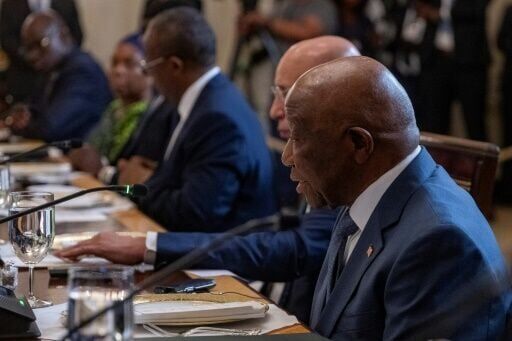
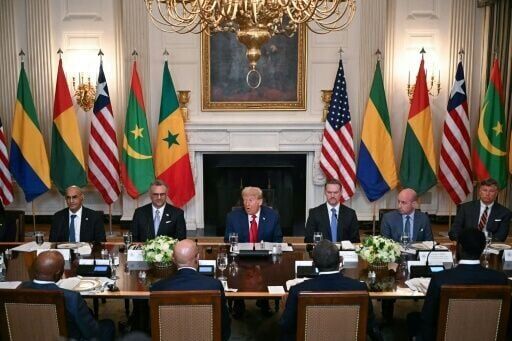
Trump was hosting a White House lunch with African leaders Wednesday, and -- after brief remarks from President Joseph Boakai -- asked the business graduate where he had picked up his linguistic know-how.
"Thank you, and such good English... Where did you learn to speak so beautifully? Where were you educated?" Trump said.
Boakai -- who, like most Liberians, speaks English as a first language -- indicated he had been educated in his native country.
He was facing away from the media, making his countenance hard to gauge -- but his laconic, mumbled response hinted at awkwardness.
Trump, who was surrounded by French-speaking presidents from other West African nations, kept digging.





"It's beautiful English. I have people at this table can't speak nearly as well," he said.
US engagement in Liberia began in the 1820s when the Congress- and slaveholder-funded American Colonization Society began sending freed slaves to its shores.
Thousands of "Americo-Liberian" settlers followed, declaring themselves independent in 1847 and setting up a government to rule over a native African majority.
The country has a diverse array of indigenous languages and a number of creolized dialects, while Kpelle-speakers are the largest single linguistic group.
Boakai himself can read and write in Mendi and Kissi but converses in Liberia's official tongue and lingua franca -- English.
ft/sla
(0) comments
Welcome to the discussion.
Log In
Keep it Clean. Please avoid obscene, vulgar, lewd, racist or sexually-oriented language.
PLEASE TURN OFF YOUR CAPS LOCK.
Don't Threaten. Threats of harming another person will not be tolerated.
Be Truthful. Don't knowingly lie about anyone or anything.
Be Nice. No racism, sexism or any sort of -ism that is degrading to another person.
Be Proactive. Use the 'Report' link on each comment to let us know of abusive posts.
Share with Us. We'd love to hear eyewitness accounts, the history behind an article.