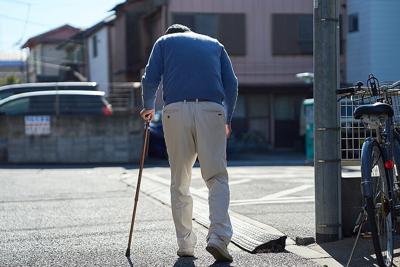

Aging happens one person and one family at a time, and America now has a much larger older population than it did two decades ago. U.S. Census Bureau data show that 61.2 million Americans were 65 or older in 2024, representing 18% of the population. That number is expected to keep growing: According to the Population Reference Bureau’s Fact Sheet: Aging in the United States, the population age 65 and older is projected to increase from 58 million in 2022 to 82 million by 2050.
In 2004, that age group accounted for 12.4% of the country, or about one in eight Americans, compared with nearly one in five today. Brookings Institution demographer William H. Frey told Harvard Business School’s Institute for Business in Global Society that the country “is aging rapidly, and that’s going to affect everything.”
And the size of that older population becomes especially important when looking at how many people live alone. According to the U.S. Census Bureau’s Living Arrangements Varied Across Age Groups, nearly three in 10 adults age 65 and older lived alone in 2022. Using a different measure, Pew Research Center found that the share of older adults living alone was 26% in 2023. Yet a smaller share of a much larger population still adds up to roughly 16 million people living by themselves.
For older adults who live alone, long stretches without contact mean no one else is there to notice an illness or injury. This leads to cases where limited contact delayed the discovery of a health emergency or death.
While no national system tracks unattended deaths as a separate category, millions of older Americans are spending their later years at home, making independent living an important part of how the country ages. Below, Trauma Services explains how this impacts the biohazard cleanup industry.
The Rise of Aging in Place
Most Americans over 50 want to stay right where they are as they grow older. AARP’s 2024 Home and Community Preferences Survey found that 75% of adults age 50 and older want to remain in their current home as long as possible, while 73% hope to stay in their community.
Experts call this aging in place, a way of growing older at home while keeping independence. UCHealth social worker Emily Johnson said home offers comfort and a familiar history, and staying there can help older adults keep a sense of control when they need support. And keeping that control also depends on whether staying home remains affordable.
Housing costs are a major reason some older adults expect they will eventually have to move, with AARP finding that 71% point to rent or mortgage costs and 60% to home maintenance.
Even if they reach a point where they need regular help, many would still prefer to remain at home. Pew Research Center found that 60% of older adults living at home without a caregiver would want to stay and receive care there if they could no longer manage on their own.
Choosing to receive care at home preserves independence, but it also changes how often some older adults interact with other people during everyday life.
The Growing Reality of Social Isolation Among Older Adults
Both social isolation and loneliness affect well-being, but experts draw an important distinction between them. Loneliness centers on how a person feels, while social isolation refers to having little regular contact or connection with other people.
Among older adults, social isolation is common enough to affect a large share of the population. The National Academies of Sciences, Engineering, and Medicine estimates that approximately 24% of community-dwelling Americans age 65 and older are socially isolated. Its report, Social Isolation and Loneliness in Older Adults: Opportunities for the Health Care System, also cites research finding that 43% of adults age 60 and older report feeling lonely.
The health concerns tied to that lack of connection have also drawn greater attention. University of Michigan physician Dr. Preeti Malani has said health experts now have a better understanding of how loneliness and isolation affect people as they age.
One reason health experts take social isolation so seriously comes from research reviewed by the National Academies, which associates it with a higher risk of premature death and approximately a 50% higher risk of developing dementia.
Why Unattended Deaths Are Becoming More Common
Perhaps the biggest concern with Americans growing old alone is that some of them also die alone. That concern has grown, with some physicians seeing more older patients approach the end of life without close family or friends nearby.
Dr. Jairon Johnson, medical director of hospice and palliative care for Presbyterian Healthcare Services, said clinicians have always seen patients who were essentially alone near the end of life, but “they weren’t as common as they are now.”
Johnson’s observation also brings attention to what professionals refer to as an unattended death, when someone dies without another person or medical provider present and the death is not discovered right away.
Even with growing concern around dying alone, national data do not provide a reliable count showing whether unattended deaths themselves are rising. But what researchers can document more clearly are the circumstances that delay discovery.





CDC data show more than one in four older adults report falling each year, and a fall at home with nobody else present leaves no one to respond right away.
Regular contact is what shortens that wait, while its absence leaves more time before someone realizes something is wrong. And if the emergency is fatal, the same delay can postpone discovery and leave families facing a new set of health and safety concerns.
The Public Health Challenges That Follow
The reality of an unattended death brings public health problems that most families never expected to solve. The first of those problems is inside the home, where decomposition affects nearby materials and leaves conditions that regular household cleaning cannot safely address.
Faced with those risks, grieving families have to decide who should enter the home and what should be left to trained professionals. And the timing makes those decisions especially hard, since families are trying to protect their own safety while processing a death.
But even during that difficult process, the response has to respect the person who died, and the standards professionals follow help determine how that work is carried out safely and respectfully.
How the Biohazard Cleanup Industry Is Evolving
Cleanup after an unattended death requires specialized training, which is why the biohazard cleanup industry built standards of its own. And one of the people who helped formalize those standards was Kent Bert, who chaired the committee that produced the first ANSI/IICRC S540 Standard for Trauma and Crime Scene Cleanup in 2017.
Bert said in the IICRC announcement that the goal was to bring trauma and crime scene cleanup closer to the level of professionalism already established in other IICRC-backed fields. The IICRC released an updated edition of S540 in 2023.
Professional standards, however, are separate from government licensing, and biohazard remediation does not operate under a broad federal trade-licensing system, though some states set their own registration or permitting requirements.
Worker safety falls under OSHA’s Bloodborne Pathogens Standard, which applies when employees face occupational exposure to blood or other potentially infectious materials, but OSHA does not license biohazard remediation companies. And by the time those protections are needed, the crisis has already happened, leaving an earlier public-health responsibility with families and communities.
What Communities Can Learn From These Trends
Among older adults who choose to remain at home, staying connected works best when support protects the independence they value, a balance UCHealth’s Johnson described as accepting help while still being the one “running the show.”
And support on those terms begins with family members and neighbors, who often provide that first point of connection and already know the routines well enough to notice when something changes. If more help becomes necessary, caregivers and healthcare providers add regular contact without taking control away.
Columbia geriatric psychiatrist Dr. Mark Nathanson has described living alone as a collaborative experience between older adults and loved ones, reinforcing why independence does not have to mean isolation.
Beyond loved ones, community organizations provide social programs and wellness checks that give older adults more regular points of contact while they continue living on their own.
Supporting Independent Living as America Ages
Growing older at home should remain a choice people make without surrendering control over daily life. And making that choice work starts before more help is needed, while older adults can still make those decisions for themselves. Some of that preparation happens at home, where ColumbiaDoctors points to medical alert systems and smart-home devices that can help older adults get assistance quickly.
Biohazard cleanup remains a professional response when deaths go undiscovered, but by the time that work is needed, a family is already coping with a loss and the difficult circumstances surrounding it.
That’s why planning should begin much earlier. Jodi Waterhouse of the University of Colorado Multidisciplinary Center on Aging told UCHealth that older adults should work with a team including their healthcare provider and care partners to weigh whether home remains the right place for them.
Her guidance keeps the final say with older adults themselves, who can decide early who will help if their health changes and what support they are willing to accept at home.
This story was produced by Trauma Services and reviewed and distributed by Stacker.
(0) comments
Welcome to the discussion.
Log In
Keep it Clean. Please avoid obscene, vulgar, lewd, racist or sexually-oriented language.
PLEASE TURN OFF YOUR CAPS LOCK.
Don't Threaten. Threats of harming another person will not be tolerated.
Be Truthful. Don't knowingly lie about anyone or anything.
Be Nice. No racism, sexism or any sort of -ism that is degrading to another person.
Be Proactive. Use the 'Report' link on each comment to let us know of abusive posts.
Share with Us. We'd love to hear eyewitness accounts, the history behind an article.