In 1965, the Black church stood at the center of the Civil Rights Movement, the Voting Rights Movement, and the fight for social justice across the American South.
Historic institutions such as Brown Chapel A.M.E. Church and First Baptist Church of Selma became more than houses of worship. They became command centers for resistance, education, strategy, protection, and political empowerment for African Americans who were denied equal access to the ballot box and basic constitutional rights.
These churches did not move with the comfort of the status quo. They moved against it. Their pews and fellowshiphalls welcomed organizers and leaders such as Dr. Martin Luther King Jr., Rev. James Orange, Dr. Bernard Lafayette, Congressman John Lewis, Amelia Boynton Robinson, Marie Foster, Annie Lee Cooper, Hosea Williams, Andrew Young, and countless local foot soldiers who organized voter registration drives, marches, mass meetings, and acts of civil disobedience throughout Alabama and the South.
Organizations such as the Southern Christian Leadership Conference (SCLC) and the Student Nonviolent Coordinating Committee (SNCC) relied heavily on Black churches because churches represented one of the few Black-controlled institutions free enough to organize, communicate, and mobilize people at scale.
Selma itself became ground zero because of the courage of local Black citizens, including the “Courageous Eight,” a group of Dallas County Black leaders who invited Dr. King and the SCLC into Selma to support the voting rights struggle already underway. Those men included Rev. F.D. Reese, J.D. Hunter, Henry Allen, Ulysses Blackmon, Ernest Doyle, James Gildersleeve, Oscar Weaver, and C.J. Adams. Their invitation helped transform a local fight into a national movement.
The Black church in 1965 was not silent about power.
Churches openly challenged segregationist policies and confronted political leadership that opposed Black voting rights. During that era, Alabama Gov. George Wallace stood firmly against federal desegregation efforts and voting rights expansion. Following President Lyndon B. Johnson’s signing of the Voting Rights Act of 1965, political realignment throughout the South accelerated as many white Southern conservatives gradually shifted away from the Democratic Party over the following decades.
The church did not merely preach salvation in 1965. It preached survival, citizenship, dignity, economic justice, and political participation. Pastors, deacons, teachers, and ordinary citizens risked jail, violence, job loss, fire bombings, and death because they believed silence was too expensive a price to pay for comfort.
Fast forward to 2026.
Alabama once again finds itself at the center of a national voting rights debate. Recent United States Supreme Court decisions and ongoing redistricting battles have reopened concerns surrounding minority representation, congressional district lines, and the future of Black political power in the Deep South.
The modern fight now centers heavily around Alabama Congressional Districts 2 and 7. District 7, represented by Congresswoman Terri Sewell, has historically served as Alabama’s primary majority-Black congressional district. Following federal court rulings tied to the landmark Allen v. Milligan case, Alabama had to create a second district where Black voters had a greater opportunity to elect a candidate of their choice, leading to the election of Congressman Shomari Figures in Congressional District 2.
Now, after renewed Supreme Court review and continued redistricting disputes, those districts again face uncertainty as lawmakers continue efforts critics argue could weaken Black voting strength and dilute African-American representation throughout the Black Belt and across Alabama.
Leaders and advocates across Alabama, including Senator Bobby Singleton, civil rights attorneys, organizers, and voting rights groups, continue fighting to preserve fair representation for African-American voters. Plaintiffs such as Evan Milligan and Marcus Caster became central figures in the legal battle challenging Alabama’s congressional maps under the Voting Rights Act.
The legal teams defending those districts include attorneys and organizations such as the NAACP Legal Defense Fund, the ACLU of Alabama, Campaign Legal Center, the Southern Poverty Law Center, Alabama Forward, and the NationalRedistricting Foundation. Attorneys including Deuel Ross, Abha Khanna, Sophia Lin Lakin, Danielle Lang, James Blacksher, Edward Still, Myron Penn, and former federal judge U.W. Clemon have all been connected to various aspects of the modern redistricting fight.
And that reality alone reflects how much has changed.
In 1965, churches themselves were often the headquarters, communication centers, fundraising engines, legal support networks, and organizing bodies for the movement. Communities raised money directly through congregations, local businesses, neighborhood networks, and grassroots sacrifice.
Today, much of that burden has shifted to nonprofit organizations, foundations, litigation funds, advocacy groups, and philanthropic institutions.
The question worth discussing is not whether those organizations are important. They absolutely are.
The question is whether the Black church has slowly surrendered part of its independent political voice in exchange for institutional stability.
Today, many Black churches and community organizations operate under 501(c)(3) nonprofit structures regulated by the IRS. Under those rules, churches may legally conduct voter registration drives, civic education, and “get out the vote” campaigns. However, they are restricted from directly endorsing partisan political candidates or formally engaging in campaign activity tied to parties or elections. Recent legal debates surrounding the Johnson Amendment and court disputes involving churches and political speech have again highlighted the tension between tax-exempt protections and unrestricted political advocacy.
Many churches and organizations now rely heavily on grants, stipends, sponsorships, partnerships, and philanthropic funding to sustain operations. That dependency can create caution. Some leaders fear speaking too directly or too politically because they worry about jeopardizing funding streams, nonprofit status, partnerships, or institutional relationships.
In 1965, churches risked jail, violence, economic retaliation, and death.
In 2026, some churches fear audits, grant losses, sponsorship withdrawals, controversy, and the loss of institutional funding.
That reality raises difficult but necessary questions.
Has the modern Black church become more financially secure but less politically courageous? Have stipends replaced sacrifice? Have institutional protections weakened prophetic responsibility? Are churches still functioning as communication hubs for the Black community in the same way they once did?
Communication itself has changed dramatically. Black radio once served as a direct pipeline between leadership and thecommunity. Churches, local radio stations, grassroots meetings, and neighborhood organizing networks carried political education directly into communities. Today, communication is fragmented across expensive digital platforms, advertising-driven systems, algorithms, and corporate-controlled media spaces. Access costs more. Visibility costs more.
Influence costs more.
At the same time, many churches are seeing declining attendance among younger generations. While some mega-churches continue to grow numerically, critics argue that conversations surrounding voting rights, civic education, economic independence, and political literacy are no longer as central as they were during the height of the Civil Rights Movement.
This is not an attack on the Black church.
It is an observation worth discussing honestly within the community.
If Black institutions are increasingly dependent on outside funding to survive, can they remain fully independent in message and mission? Why have more Black organizations not become economically self-sustaining? Why does philanthropy often shape what conversations are considered acceptable? And what happens when historic community institutions become cautious about confronting political power directly?
One example of that balancing act can be seen in the work of Faya Rose Touré and the National Voting Rights Museum and Institute, located at the foot of the historic Edmund Pettus Bridge in Selma, Alabama. The museum has becomeone of the nation’s symbolic institutions dedicated to preserving the history of the Voting Rights Movement and educating future generations about the sacrifices made during the struggle for equal access to the ballot box. Touré has also played a major role in sustaining the annual Selma Bridge Crossing Jubilee and pilgrimage tradition, where thousands gather each year during the first weekend of March to commemorate Bloody Sunday and reenact the historic march across the Edmund Pettus Bridge. While the museum and Jubilee have accepted sponsorships and institutional support over the years, Touré has consistently emphasized maintaining independence over the historical narrative, institutional direction, and the authentic telling of Selma’s voting rights legacy.
As Alabama now faces declining voter participation, shifting district lines, and renewed legal battles over representation, the questions become even more urgent.
From 1965 to 2026, the question remains: Has the modern Black church chosen stipends over salvation?
Or is there still room for a new generation of churches willing to recover the fearless civic and spiritual leadership that once helped transform America?
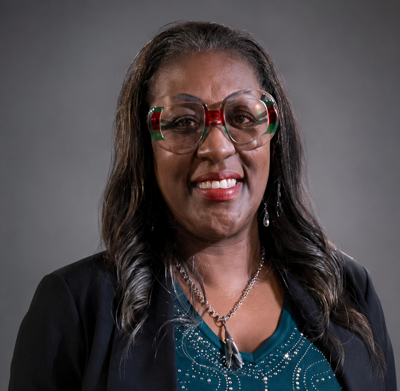
Kimesha Houston Alvarado, also known as “Sunshine” Alvarado, is a Selma-based community advocate, media personality, and civic commentator rooted in the historic Black Belt region. A military veteran with a background in logistics, communications, and public engagement, she uses media, community dialogue, and historical perspective to discuss voting rights, civic engagement, culture, and the evolving role of Black institutions in modern America.
(0) comments
Welcome to the discussion.
Log In
Keep it Clean. Please avoid obscene, vulgar, lewd, racist or sexually-oriented language.
PLEASE TURN OFF YOUR CAPS LOCK.
Don't Threaten. Threats of harming another person will not be tolerated.
Be Truthful. Don't knowingly lie about anyone or anything.
Be Nice. No racism, sexism or any sort of -ism that is degrading to another person.
Be Proactive. Use the 'Report' link on each comment to let us know of abusive posts.
Share with Us. We'd love to hear eyewitness accounts, the history behind an article.