When I was a jail chaplain one of the most satisfying parts of my work was bringing books inside to prisoners. These were mostly “spiritual” or “inspirational” books like Daily Word, Each Day a New Beginning (AA meditations) or selections from “wisdom teachers.” Inmates were surprised to see me carrying in a variety of scriptures. I handed out hundreds of Bibles, but I also honored requests for Quran’s and other holy books.
Many people think there is only one “true” scripture, which is a nice idea, but doesn’t hold water in the real world. Jews have their Torah; Christians have their Bible; Muslims have their Qur’an; Hindus have their Gita; Buddhists have their Sutras; Sikhs have their Granth Sahib; and there are Mormon books and Christian Science books and much much more. There is a world of scripture for a world of religions.
What makes one book exceptionally special for some is the belief that it was “given,” “handed down,” “delivered” or even dictated by a god or gods. This makes those who “received a revelation” exceptionally special too. Unfortunately, many forget or choose to ignore the fact that they and their cherished book are but one patch stitched into the massive quilt of belief.
Of all the book study groups around, the most popular may focus on the Bible, since it’s the only sacred scripture most Americans have heard about, and perhaps read. Some say this one book is the most published on the planet. I have no doubt that’s true (Gideons has distributed over 2 billion copies). The Qur’an is a close second, and there are millions of copies of the Hindu Vedas and Bhagavad Gita (Song of the Lord) as well.
People say “old” and “new” testaments, but after thousands of years I think we can say it’s all pretty old! Old doesn’t mean it isn’t worthwhile to read, that there aren’t some stories worth retelling in those ancient pages. But, as Emerson asked, why shouldn’t we also have an “original relation” to the universe, nature, god? Why should we always look over our shoulder and listen to voices from long ago? Isn’t there a “divine word” spoken today?
Holy books raise a whole library full of questions!
Once, in a gathering of jail inmates, I asked the question, “What does the Bible say?” This caused puzzled looks all around. After a number of comments and guesses, I joked that “The Bible doesn’t say anything; it’s a book. People say what they think it says.” Some groans. Some heads nodding. It wasn’t really a joke, you see. The truth was sinking in: a book does not speak. If we rely on “authorities” to tell us what the book says and what it means, we are relying on them to tell us what a divine voice says. As long as we keep that in mind, we’ll be fine. Maybe. It might be more important to read it for ourselves and think about it. We might decide we don’t believe some of the things written thousands of years ago. Who says that’s a bad thing?
We’ve heard of people who have died for a book. And, sadly, we hear of people who kill for a book. Books that are supposed to be sacred sources of peace, compassion and justice can be abused and misused.
Naturalist John Burroughs wrote of “Nature’s great book” and said it is important “to see with your reason as well as with your perceptions, that is to be an observer and to read the book of nature aright” (“Reading the Book of Nature,” in Ways of Nature, 1905). It’s hard to be a good observer of the world around us if we have our noses in dusty old books that speak of other worlds! The best thing may simply be to keep reading and reflecting, even as we observe more, learning from the life surrounding us.
A French Jesuit, Jean-Pierre deCaussade, was a mystic in these matters. He wrote encouragement to some nuns and his writings were published as The Sacrament of the Present Moment (heretical title!). He essentially said, “living scriptures are being written today.” Remarkable words. Wisdom texts are being written now—maybe you and I are writing them? If our spiritual life is rooted in the past, tied only to books and ideas of long ago, we won’t hear what we need to hear today.
When it comes right down to it, believer or not, Life is our bible, and it’s open for us to turn its living pages to read, to write, to explore and discover wisdom for our time.
Chris Highland
2026
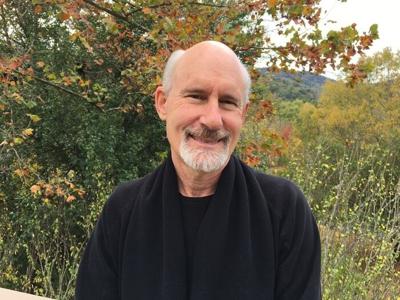
Chris Highland was a minister and chaplain for many years. He is a writer and teacher in Asheville, NC. www.chighland.com, (chris.highland@gmail.com).

(0) comments
Welcome to the discussion.
Log In
Keep it Clean. Please avoid obscene, vulgar, lewd, racist or sexually-oriented language.
PLEASE TURN OFF YOUR CAPS LOCK.
Don't Threaten. Threats of harming another person will not be tolerated.
Be Truthful. Don't knowingly lie about anyone or anything.
Be Nice. No racism, sexism or any sort of -ism that is degrading to another person.
Be Proactive. Use the 'Report' link on each comment to let us know of abusive posts.
Share with Us. We'd love to hear eyewitness accounts, the history behind an article.