Our yard is an active parade ground. Almost every day we see wild things large and small meandering to and fro across the grass. From beetles and spiders, snakes and rabbits, bobcats and black bears, along with a winged flurry of birds including wild turkeys, it’s a daily procession of wildness. Even an occasional deer or coyote wanders by. Having lived in and around forests, hills, meadows and streams for most of my life, I’m used to having non-human neighbors. But never this many creatures visiting so often.
I’ve been observing a long line of tiny ants scurrying across the patio. At first I thought they were all going one direction. Then I noticed the silent marchers were moving in both directions, back and forth from under the rhododendron to the house foundation. Closely watching the flow of fast-moving feet, I admit I have moments when I consider sweeping or spraying them. Yet, over the years I’ve learned to pay attention to these processions, to respect the interconnections of life near and far. Harming one species can harm many others, including our own.
So, in some sense, I’ve become a follower and friend of those who share the natural world with me. I understand that I’m a member of a visible and invisible community, even a student at times, in the great classroom of Nature.
We might have “followers” and “friends” on social media. We may choose to become “members” of a congregation or other like-minded group. We may decide to become “disciples” of a religious leader or a school of philosophy. A disciple is a student—a disciplined student— more than simply devoted to reading books, joining study groups or participating in rituals. Not every student drops everything, leaving family, home and possessions, to physically follow someone. Yet, some do make that choice, becoming serious disciples.
Maybe Jesus of Nazareth comes to mind, or perhaps Buddha of India, Confucius of China or Muhammad of Arabia. Each lived and taught on a relatively small patch of earth. All had students, attracting curious learners drawn to extraordinary teaching by extraordinary teachers. Do you ever wonder what would have happened if the teacher-student relationship had continued through the history of religion, rather than the Worshipped-worshipper or Superhuman-mere mortal dynamic? The very natural, very human, educational relation of a student to a teacher was essentially forgotten in the rush to elevate the teacher to the position of a god (this is not the case with Confucius or Muhammad, though they are lifted up to the status of divine men). Praising one’s professor as an honored teacher is one thing; praising them as more than human is another. It seems to me great harm comes from “super-naturalizing” an educator. They are no longer relatable as a fellow human being, but something greater, better. However, education is not worship and worship is not education.
Returning to our patio procession, and the wild creatures passing by, I wonder if the lessons I’ve been learning from them are instructive for this concept of a disciplined student follower.
I think of these living beings as “neighbors,” fellow inhabitants of the environment where homes are built right on top of homes that already exist. From the smallest to the largest living thing, they have lived and moved on this ground (and in trees and skies) for hundreds if not thousands of years. What would it be like to follow them, learn from their teaching, as disciples, students of the wide open neighborhood?
Sometimes I think of naturalists and scientists as new models of student-disciples. They are committed (even devoted) to searching, investigating, studying our world as inquisitive learners. We don’t have to become naturalists or scientists to be attentive observers of our environment. However, it could be our “profession” to become better neighbors with our surroundings, determined to follow the flow of feet (feathers, fins, etc) as members of that diverse community of which we are one part.
Anyone can choose to become a follower of a particular religion or philosophy. Wise human teachers from the distant past still offer useful lessons for our lives, in our day (though some of their instructions and worldviews are better left behind). It may be wise to consider the fact none of those ancient “professors” is here in our world today, so it is our responsibility to learn and apply whatever lessons we may find that truly benefit all our neighbors, not only one dominant species or one exclusive group of members.
Didn’t those teachers, who, for better or worse, became founders of religious institutions rather than educational institutions, gather knowledge and wisdom from the natural world around them every day? What does this teach us about the living lessons found in the wild processions on the move in our world at the present time?
Chris Highland
2026
______________
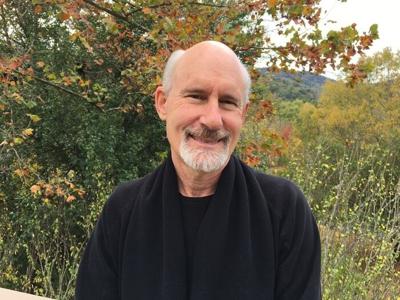
Chris Highland was a minister and chaplain for many years. He is a writer and teacher in Asheville, NC. www.chighland.com, (chris.highland@gmail.com)

(0) comments
Welcome to the discussion.
Log In
Keep it Clean. Please avoid obscene, vulgar, lewd, racist or sexually-oriented language.
PLEASE TURN OFF YOUR CAPS LOCK.
Don't Threaten. Threats of harming another person will not be tolerated.
Be Truthful. Don't knowingly lie about anyone or anything.
Be Nice. No racism, sexism or any sort of -ism that is degrading to another person.
Be Proactive. Use the 'Report' link on each comment to let us know of abusive posts.
Share with Us. We'd love to hear eyewitness accounts, the history behind an article.