
I grew up in a suburb of Seattle, Washington when the Christmas Season was marvelous and magical. Like many of my generation, each day of December sparkled with that unmatched anticipation of a child—expectant, wide-eyed for Santa, a fresh-cut tree, innumerable lights around foggy, frosty windows. And of course, Mom’s special holiday feasts for all the senses as well as our stomachs, and Dad’s amazing ability to surprise year after year with his stealthful generosity.
As a teen, the list of wants for the twenty-fifth shrank, but not the anticipation. There were still snowball fights, sledding with friends, singing seasonal songs, acting in school plays and gathering for Christmas parties, sweet desserts and gift-exchanges. A particular present for me was walking out of a Christmas Eve candlelight service with my family, opening the big sanctuary doors at midnight, to find snowflakes swirling down around our heads.
Christmas was and will always be a holiday for me, mainly because my birthday also falls on that special day. Though I never achieved such fame, I always felt warmed by the dual greetings of “Merry Christmas!” and “Happy Birthday!” When I learned I was adopted on the day of Nativity, that stunning knowledge only increased the wonder, the mystery and the gift of family itself.
Along with my youth, the gentle carols of that era melted away as I emerged from the hibernation of many cozy Christmases, into college, seminary, ordination, chaplaincy and teaching. I moved away. Parents passed. Family drifted. I became a chaplain among the poorest people, those who had no homes, no families—whose holidays are often empty days, cluttered with sad sleigh-rides of emotions—who stand in the cold with cardboard signs as warm and well-fed followers of the Christmas Child pass them in the Winter night.
The story of Christmas became too packaged in consumerism. It seemed to me that the spending-spree celebration of the baby boy “adopted” by Christians, directly contradicted his poverty and life among the poorest neighbors. I left traditional, religious Christmas, like the crumpled wrapping paper around the tree of my childhood. I stopped cutting a tree, choosing instead to climb a pine, a fir, an alder, a cedar to celebrate the changing seasons of my life—to become a living ornament; to see a wider world; to be scented with the season’s sap; to find higher, simpler presents.
I don’t wish to take the comfort and joy out of Christmas. I just choose new traditions that feel more natural.
—I simply celebrate the Solstice Season itself. Those free gifts described by Scottish poet Robert Burns on his own Winter birthday: “What wealth can never give nor take away.” I open myself to a reverence for the beauty of crisp days and star-filled nights; dripping branches of living trees; the scent of woodsmoke; conversations with good people I know or meet.
—I am learning to cherish the most basic presents of life shared by all humanity: breath and heartbeat, thought and reason, dream and inspiration—Nature’s bounteous treasures.
—I am growing in a practice of understanding and respect for all beliefs, of all nations, all races, creeds, colors and languages on this small spinning blue-green-brown ornament never wrapped and packaged by one religion or country. I am also growing in impatience with those who seem to have no understanding or respect for our wonderful diversity.
—I strive to care for this fragile globe hanging on something more than a dead tree, (ironically chopped down to “honor life”), because this earthy Bethlehem hangs on more than a dream, a myth, magic or a long ago birth of a swaddled Jewish-Palestinian infant. Its health depends on the innocent ones born today—in any country—and what we leave in their precious hands. This wondrous rock in space revolves, as do we all, on more than hope; it turns on compassion and cooperative action in balance with Nature’s awe-inspiring way—finding the livelihood that is our natural blessing of birth.
—I may not celebrate Christmas as in Decembers past, yet I still enjoy a few strings of lights, kindling candles, hanging greens on the door, offering a toast to the goodness and beauty, giving a few people I love small and simple presents that make them smile and my heart warm.
May each of us feel the joy, shared by one houseless neighbor on a downtown street, who whispered his wisdom to me while we stood in a river of bleary-eyed bag-bearers:
“I’m grateful to be standing here today; that I got up this morning. This day, like every day, I tell myself, ‘This is My Birthday!’”
Every day can be a celebration of our birth, or Christmas, or any holiday, when we choose to celebrate the greatest gift: Life.
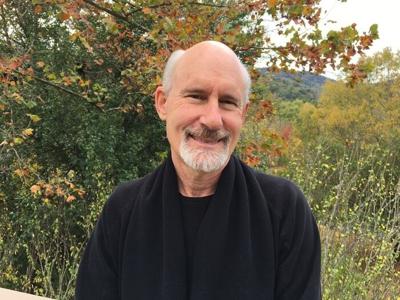
Chris Highland was a Protestant minister and interfaith chaplain for many years before becoming a humanist celebrant and author. He lives in Asheville, North Carolina. His website is www.chighland.com.
(0) comments
Welcome to the discussion.
Log In
Keep it Clean. Please avoid obscene, vulgar, lewd, racist or sexually-oriented language.
PLEASE TURN OFF YOUR CAPS LOCK.
Don't Threaten. Threats of harming another person will not be tolerated.
Be Truthful. Don't knowingly lie about anyone or anything.
Be Nice. No racism, sexism or any sort of -ism that is degrading to another person.
Be Proactive. Use the 'Report' link on each comment to let us know of abusive posts.
Share with Us. We'd love to hear eyewitness accounts, the history behind an article.