A wise passage in the ancient book of Tao teaches: “The one who knows does not speak. The one who speaks does not know” (56). Have you ever noticed that some of the wisest people (not necessarily the most knowledgeable or educated) don’t spend all their time filling the world with more words or speeches? They may be construction or office workers, farmers or janitors, who aren’t as interested in expounding their own words as they are in listening and observing, with a sense of curiosity about the world. Wisdom cautions and calms when we are quick to speak, to interject our own opinions; when we think we have the most important word, wisdom whispers: “The one who knows does not speak.” Maybe one lesson is that holding back on the words can help us remember we don’t know much, that our knowledge is limited. Then we can be more careful and considerate in our speech, and in our actions too.
Another “simply profound” teaching from the Tao draws from this well of wisdom: “The one who is contented with contentment is always contented” (46). I often think one of my personal goals is to find contentment rather than happiness. As I see it, it seems reasonable that a practice of more listening than speaking is not only wise, but can lead to greater contentment—deep satisfaction. In these moments (I don’t think we can hold onto that state very long), we may come to a greater realization that our words don’t matter as much as actions, and being content is more meaningful when we encourage others to experience contentment.
What got me on this track of thinking was one other line from the Tao: “I treat those who are good with goodness. I also treat those who are not good with goodness. Thus goodness is attained” (49). This is one of those ancient teachings, similar to what we find in the Torah, the Gospels, the Qur’an, the Gita and the writings of the Stoics, that appears too simplistic, too cliche, not something that can alter or guide the course of one’s life. Yet, these lines may actually be the foundation and the core of any reasonably ethical or relevant religious life.
In my view, “The Word became flesh” is perhaps the most challenging of religious concepts, though it readily applies to practical ethics with or without a faith commitment. Putting an idea into words can be difficult, but putting those words into action—making them flesh, an act of both mind and body—can push us to the limits. We see someone in need and think: “I wish somebody else would help them”; we imagine a plan to organize people to accomplish an important task; we think of a solution to a problem … but it all stays in our head. How do I act? What’s the first step? Is this possible? Can I really do this? Should I be the one to help? For me, this is the time to breath deep, search for that inner contentment, and dig around for some wisdom to direct the best ways to “attain goodness.”
Through my years in faith, in ministry, in service, my intention was to do good to others as much as possible. When another person was harming themselves or others—not being good in some way—I still wanted to do the right thing to help them, if I could. This would usually be harder than helping a person doing good for themselves or others. It could be more of a challenge, but doing good is doing good, isn’t it? Sure, it might begin with “good words,” and these can potentially encourage a degree of contentment in a person, but it’s what we do—our good works—that breaks open the goodness, and helps the other do good as well. In other words, we aren’t the center of goodness, just the facilitators of whatever good is possible then and there.
I’ve always found it troubling to hear a believer say “Good works aren’t enough … they don’t please God unless you have faith.” What kind of Good God would set up that kind of world? Think of people you know who aren’t believers, but they are good folks, who live decent lives, considerate of others. Can you imagine believing in a Creator who would reject them, judging them unworthy? Is that a “good” faith?
I think the Tao, written centuries before the Christian Church was born, has some words we need to hear today. Words that encourage less words. Scripture that calls for less scripture. Maybe “the Word became flesh” is better understood as Action before Words. Don’t just talk about your beliefs, embody your beliefs—with wisdom, and good-heartedness.
Chris Highland
2026
______________
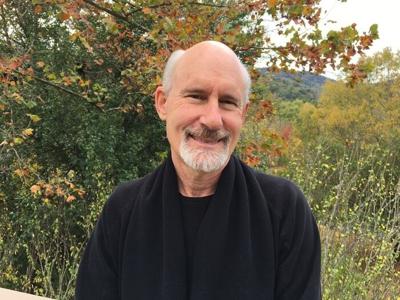
Chris Highland was a minister and chaplain for many years. He is a writer and teacher in Asheville, NC. www.chighland.com, (chris.highland@gmail.com)

(0) comments
Welcome to the discussion.
Log In
Keep it Clean. Please avoid obscene, vulgar, lewd, racist or sexually-oriented language.
PLEASE TURN OFF YOUR CAPS LOCK.
Don't Threaten. Threats of harming another person will not be tolerated.
Be Truthful. Don't knowingly lie about anyone or anything.
Be Nice. No racism, sexism or any sort of -ism that is degrading to another person.
Be Proactive. Use the 'Report' link on each comment to let us know of abusive posts.
Share with Us. We'd love to hear eyewitness accounts, the history behind an article.