
College Football Rivalries Turn Historic Matchups Into Personal Battles Fueled by Pride, Tradition, Family, and Bragging Rights
Rivalries give sports their flavor. They turn a regular-season game into a final, where pride can matter as much as the result.
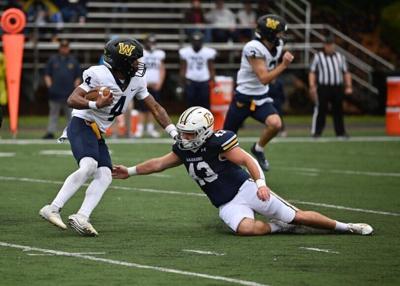
In American college football that passion reaches another level: packed stadiums, families split between two teams, generations of fans, and matchups with decades of history.
So when we talk about the biggest college football rivalry, rankings and titles don't tell the whole story, and the biggest rivalry isn't necessarily the one with the most history or the highest-ranked teams.
Some feed on geography, others on old disputes and family traditions. What they share is the power to turn 60 minutes of football into something deeply personal.
What Makes the Biggest College Football Rivalry So Special?
What lets a game between two universities stop a city? History, regional pride, conference competition, and traditions passed down through generations.
Many of the biggest college football rivalries also come with a trophy that sharpens the stakes, since winning means the right to talk back to the rival for a whole year.
More Than a Game: Family, Pride, and Bragging Rights
Psychology helps explain the intensity. Social identity theory, developed by Henri Tajfel and John Turner, holds that we build part of our identity from the groups we belong to, and in college football those groups can be a university, a family, or the community we grew up in.
A 2014 Sport Management Review study by Cody Havard looked at how rivalry shapes college sports fans, including the satisfaction some take in a rival's failure, which explains familiar scenes like a Thanksgiving table where two generations back different schools.
The Historic Rivalries That Still Define College Football
Any list of the greatest college football rivalries of all time always sparks fierce debate among fans, even nowadays.
Historic college football rivalries like these have pitted universities, cities, and families against each other for a century or more.
The five college football rivalry games below, including one close to home in Pennsylvania, are examples, not a ranking.
Rivalry | Common name or context | What makes it personal? |
Michigan vs. Ohio State | The Game | Regional identity, tradition, conference stakes |
Alabama vs. Auburn | The Iron Bowl | In-state pride and championship implications |
Army vs. Navy | The Army-Navy Game | Military identity and shared tradition |
Texas vs. Oklahoma | Red River Rivalry | Historic competition and neutral-site intensity |
Penn State vs. Pitt | The Keystone Classic | In-state history and a rivalry paused by conference realignment |
Michigan vs. Ohio State: A Border War With National Stakes
Known simply as The Game, this matchup began in 1897, though the animosity is older: in 1835 the two states nearly came to blows over the Toledo Strip. Closing the regular season since 1935, it often decides Big Ten titles and, more recently, playoff hopes.
Alabama vs. Auburn: When State Pride Takes Over
The Iron Bowl began in 1893, in a game Auburn counts as the first of 1893 and Alabama as the last of 1892, the first of many disputes.
Disagreements over player expenses and officiating then halted the series after 1907 until 1948. The name nods to Birmingham's steel industry, and the game can still divide families and entire communities.
Army vs. Navy: A Rivalry Built on Tradition
Navy won the first meeting 24-0 in 1890, and the academies have played every year since 1930.
After each game, both teams stand together for both alma maters, with the winner's played last, so winning is known as "singing second." Here the pride of representing a military institution counts as much as the result.
Texas vs. Oklahoma: The Stakes of the Red River Rivalry






Texas and Oklahoma have met since 1900, and since 1929 the game has been played in Dallas during the State Fair of Texas, in a stadium split between burnt orange and crimson, now known as the Cotton Bowl.
The winner takes home the Golden Hat, awarded since 1941. Both schools now play in the SEC, and the game's Cotton Bowl contract runs through 2036.
Penn State vs. Pitt: The Keystone State's Missing Rivalry
Closer to home, Penn State and Pitt first met on November 6, 1893, in State College, a 32-0 Nittany Lions win, and they played every year from 1935 to 1992, when Penn State's move to the Big Ten ended the annual tradition.
The series returned from 2016 to 2019, and that final game was the 100th meeting, with Penn State leading 53-43-4. Neither school's 2026 schedule includes the other, and no future game has been announced, a reminder that conference realignment can pause a rivalry without erasing the feeling around it.
Why One Rivalry Loss Can Change Everything
Losing to the biggest rival can hurt more than losing a final, and the damage can reach rankings, playoff hopes, and how fans judge a coach.
In 2006, undefeated No. 2 Michigan met No. 1 Ohio State, and the Buckeyes won 42-39, and Michigan lost its shot at the national title game a day after the death of its legendary coach, Bo Schembechler.
Rankings, Playoff Hopes, and a Year's Worth of Bragging Rights
A rivalry can also give a team the push it needs. In the 2023 Iron Bowl, Alabama beat Auburn 27-24 on a touchdown pass on fourth-and-31 with 32 seconds left, keeping its playoff hopes alive, and the Crimson Tide went on to the College Football Playoff semifinals.
Not every rivalry decides a championship, but almost every one leaves a story that outlasts the final score.
The Betting Angle: Reading Rivalry Games Beyond the Scoreboard
Rivalry games can be unpredictable, since pressure and emotion add variables. Fans who follow college football betting should look past rankings to injuries, recent form, home-field advantage, and head-to-head history.
It also helps to know the main markets: the point spread sets a margin the favorite must cover, the moneyline is a bet on who wins, and the total is a wager on whether combined points land above or below a set line.
For fans who follow the numbers as closely as the traditions, comparing college football betting lines can add another layer to rivalry week, and BetUS Sportsbook offers a place to review available spreads, moneylines, and totals.
A rivalry's history guarantees nothing about its next result, and team loyalty can cloud judgment, so treat betting as entertainment rather than a way to make money.
Why These Rivalries Will Never Lose Their Meaning
The biggest college football rivalry endures because rivalries are part of the identity of families, universities, and entire communities.
Michigan and Ohio State played 102 consecutive years, from 1918 to 2019, a tradition only the pandemic interrupted. Scores get forgotten, but the pride of beating the eternal rival can stay with us for life: the final score may fade, while the bragging rights remain.
Frequently Asked Questions
What is the biggest college football rivalry of all time?
It depends on whether fans prize history, frequency, national stakes, or emotional intensity. Michigan-Ohio State, meeting since 1897, is a strong example, but no single rivalry is universally accepted as the biggest.
Which college football rivalries have the most history?
Minnesota-Wisconsin, first played in 1890, is the most-played FBS series, with more than 130 meetings, while Georgia-Auburn dates to 1892 and Army-Navy to 1890. The number of meetings and cultural significance aren't the same thing.
Why are college football rivalry games so important?
They shape school identity, alumni communities, conference standings, recruiting narratives, and year-round bragging rights, so one result can echo long after the season.
(0) comments
Welcome to the discussion.
Log In
Keep it Clean. Please avoid obscene, vulgar, lewd, racist or sexually-oriented language.
PLEASE TURN OFF YOUR CAPS LOCK.
Don't Threaten. Threats of harming another person will not be tolerated.
Be Truthful. Don't knowingly lie about anyone or anything.
Be Nice. No racism, sexism or any sort of -ism that is degrading to another person.
Be Proactive. Use the 'Report' link on each comment to let us know of abusive posts.
Share with Us. We'd love to hear eyewitness accounts, the history behind an article.