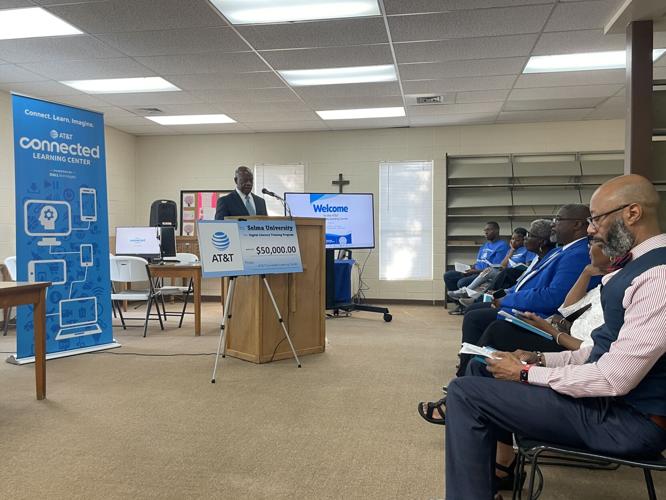
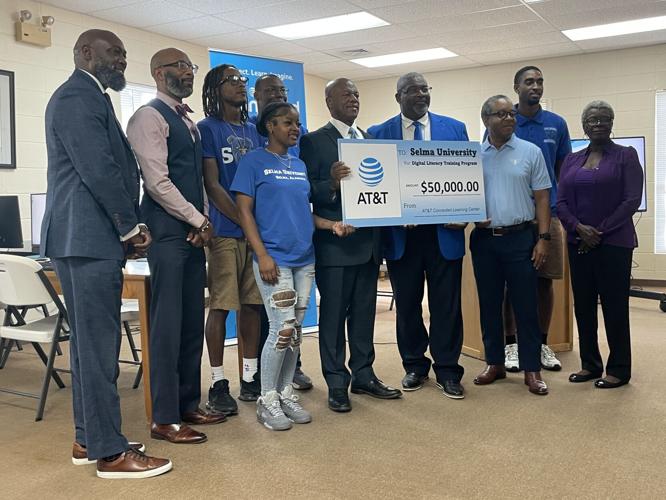
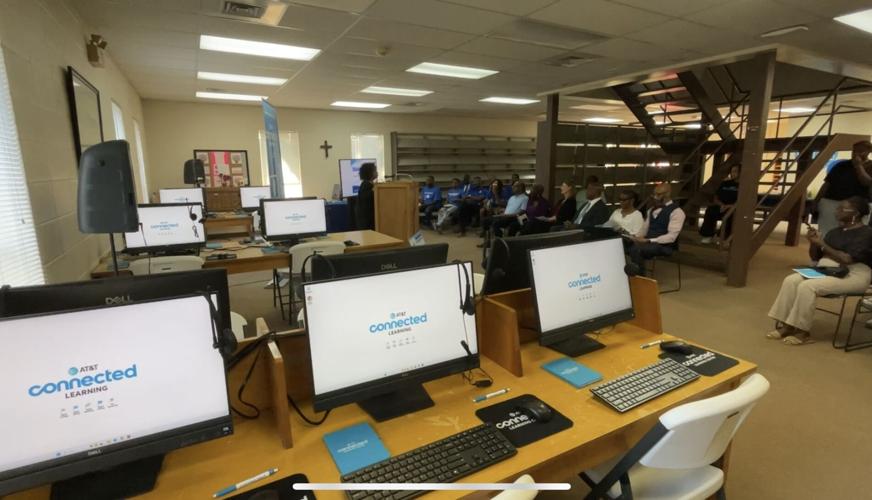
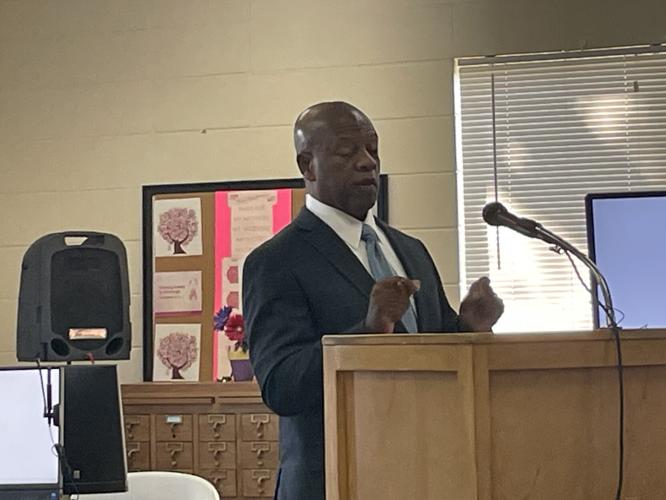
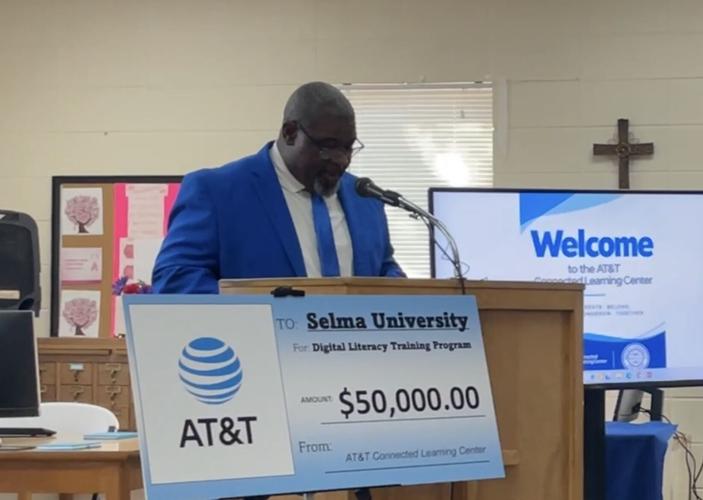
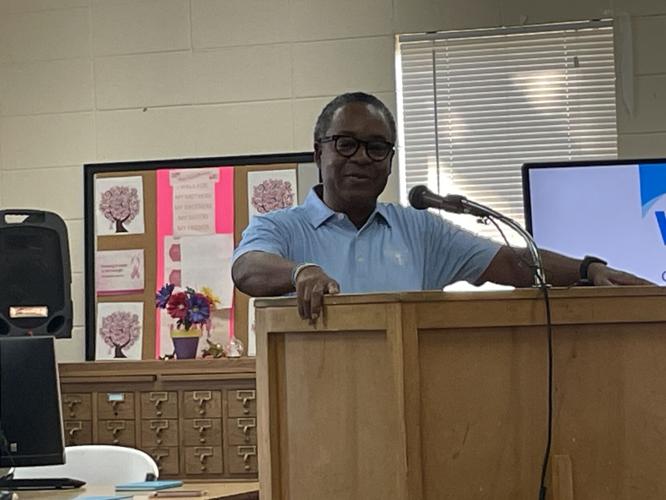

Selma University and AT&T marked a major step toward closing the digital divide in Dallas County on Tuesday with a ribbon cutting for the new AT&T Connected Learning Center inside the Stone-Robinson Library on the Selma University campus.
The investment includes an additional $50,000 to support programming at the new center.
Cleo Washington, AT&T Vice President of External Affairs for Alabama, said the center is part of the company’s nationwide effort to expand digital access. He said the Selma site will offer free high speed fiber internet, Wi Fi, tutoring, mentoring and digital literacy courses. Washington said AT&T is investing $5 billion to help 25 million people get connected by 2030.
“We recently opened our 100th Connected Learning Center, and we are very proud of that,” Washington said. “According to the U.S. Census Bureau, millions nationwide still do not have access to the internet or connected devices. They are needing to fully participate in the online world, an issue we call the digital divide.”
Washington said AT&T chose Selma University because of its long record of serving undeserved students and families.
University President Dr. Stanford Angion said the partnership means “a whole lot to Selma University, our campus community, our anchor community, and all others who will be benefited by this Connected Learning Center.”
Mayor Johnny Moss III said AT&T’s investment is ideal for Selma.
“This Connected Learning Center represents exactly the kind of investment we need here in Selma,” Moss said. “Access to technology is no longer a luxury. It is essential to education, employment, entrepreneurship and opportunity.”
Local leaders attending included Selma City School Superintendent David Scott, Councilwoman Jannie Thomas, Council President Kenard Randolph, Judge Jimmy Nunn and Dallas County Economic Development Authority Director Brenda Tuck.
Selma University librarian Joyce Kendrick outlined the academic resources that will be available through the center, including business ebooks, religion ebooks, academic journals, newspapers and databases provided through EBSCO.
“We want this center to be more than just computers,” Kendrick said. “We want it to be a place where academic scholarship thrives, where knowledge is turned into ideas, and where ideas are turned into something good that can be helpful in the community.”
(0) comments
Welcome to the discussion.
Log In
Keep it Clean. Please avoid obscene, vulgar, lewd, racist or sexually-oriented language.
PLEASE TURN OFF YOUR CAPS LOCK.
Don't Threaten. Threats of harming another person will not be tolerated.
Be Truthful. Don't knowingly lie about anyone or anything.
Be Nice. No racism, sexism or any sort of -ism that is degrading to another person.
Be Proactive. Use the 'Report' link on each comment to let us know of abusive posts.
Share with Us. We'd love to hear eyewitness accounts, the history behind an article.