MGM+’s deep-dive docuseries The Hillside Strangler revisits the terrifying killing spree that occurred in Los Angeles during the late 1970s, exploring the chilling murders of young women, the ensuing media frenzy, and the complex police investigation and court case that ultimately led to the arrest of cousins Kenneth Bianchi and Angelo Buono.
The series contextualizes the crimes within the cultural anxiety of the era, shedding light on how the case reshaped public fears, law enforcement tactics, and the modern understanding of serial killers. To this day, it is considered one of the most disturbing and consequential serial-murder cases in American history.
“I think the Hillside Strangler case still resonates because it shattered a basic sense of safety in a whole new way. The victims didn’t fit a single profile people could distance themselves from, and the bodies were left in familiar places Angelenos passed every day,” director and showrunner Peter LoGreco told TV Insider. “It made the city itself feel like the crime scene, and many young women lived in a state of unrelenting terror for months.”
During the course of the limited series, shocking and dismaying facts were revealed that may not have been common knowledge to viewers at home. Here are a few of the strangest and most shocking takeaways:
A case wasn’t immediately opened after the first victim was found
Yolanda Washington came to Los Angeles to be a model, but ended up in sex work. She was killed, found posed and naked, strangled in Forest Lawn by Warner Bros. Studios, and was the first official victim to be found.

MGM+
At the time she died, there wasn’t an investigation. “Everyone turned a blind eye. Prostitutes were seen as only hurting themselves. That was the attitude,” said human rights advocate Dr. Lois Lee.
The police knew it was a serial killer by the third victim
It was only after the police compared the first victim to the third victim Lissa Kastin, and compared their bodies side by side, that it became clear it was a mass murderer. “There was no doubt. It was the exact same ligature marks on the throat, on the wrist, and on the ankles. It looked like it came out of a Xerox machine,” said Detective Pete Finnigan. “At that point, we knew we were looking for an individual responsible for both murders.”
A key piece of evidence was found on the eyelid of a victim
One of the most important clues was a speck of upholstery foam found in victim Judy Miller’s eyelid that linked her to Buono’s upholstery shop. Investigators speculated that the foam had been placed beneath the tape used to blindfold her, leaving behind microscopic residue that ultimately helped tie the case to Buono.
The duo attempted to kidnap Cathy Lorre, the daughter of Hollywood legend Peter Lorre
In Episode 3, Bianchi admitted that the duo briefly considered taking Cathy Lorre, the daughter of Hollywood legend Peter Lorre, as a victim. “Pete Lorre’s daughter was going to be a victim,” Bianchi confessed. “Somehow, the notoriety and the fact that who she was Peter Lorre’s daughter, somehow stifled whatever was going on. I can remember her showing the pictures of her sitting on her father’s lap.”
According to the docuseries, Lorre didn’t even report the incident, so when authorities corroborated the story with Lorre and identified the men, it made their case stronger. “The car came around the corner and just cut us off,” said Lorre in a video. “Two men got out of the car. The one on the driver’s side, Bianchi, started questioning me for ID and age.”
Doctors attempted to hypnotize Kenneth Bianchi
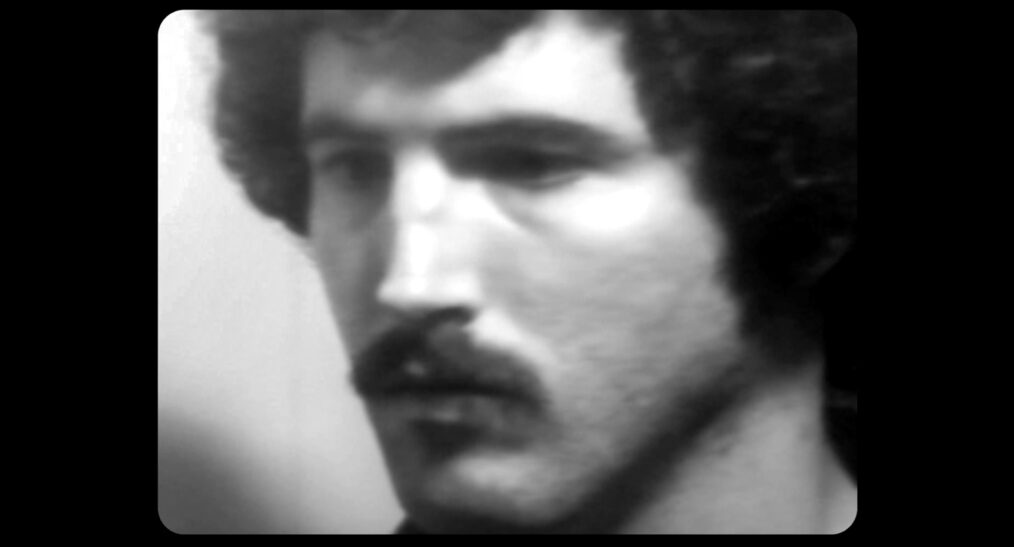
When Bianchi was being examined by a series of specialists, he insisted that his memories were “foggy,” claiming difficulty recalling key events. In an effort to “restore” these memories, doctors and attorneys turned to hypnosis.
“There was a bit of desperation to prove that Ken Bianchi was potentially insane to stop him from being put to death,” commented forensic psychologist Dr. Rachel Toles.
MGM+
“Back in the ’70s and ’80s, people were hypnotizing their clients to help remember,” said Toles. “Back in the ’70s, they used hypnosis for all kinds of things.” That included witness testimony, which at the time was believed to be a valuable investigative tool.



As a result, defense attorneys hypnotized Bianchi to uncover what may have happened.
Bianchi himself stated, “They thought hypnosis was a way to get to the truth. We believe you believe you are innocent, but we believe you don’t remember that you committed the crimes.”
“It also became a cautionary tale about pushing investigative tools too far,” helmer LoGreco told TV Insider. “Techniques like hypnosis opened doors but nearly undermined the case, and the system has since become far more careful about how those methods are used.”
Kenneth Bianchi attempted a split personality defense
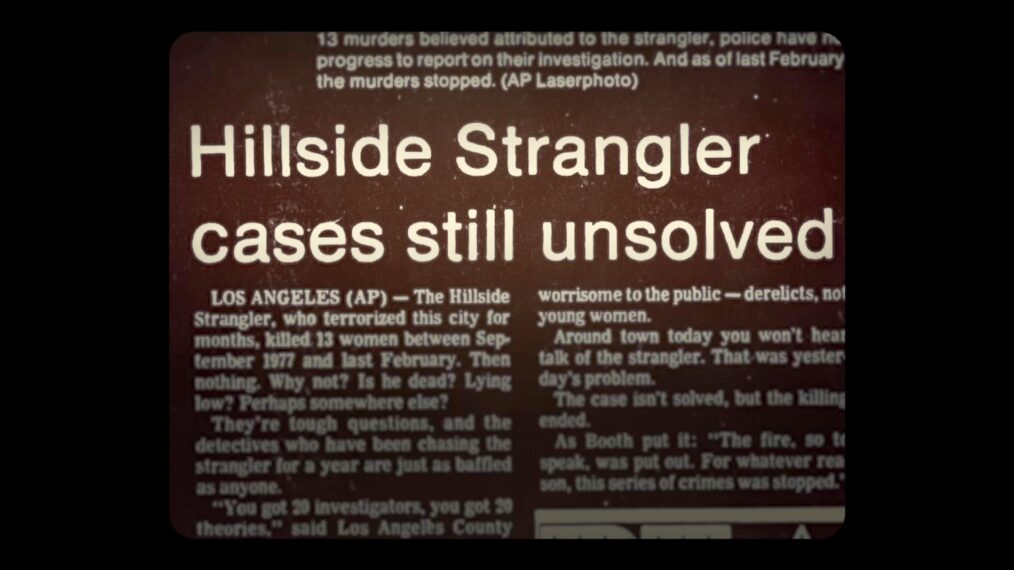
In Episode 2, Bianchi alluded to a friend named “Stevie” who appeared to him as a child when his mother was allegedly abusing him. “Stevie lives with me,” said Bianchi during a hypnosis session. “He told me not to take it. He told me when she hits me, I should hit him back.”
MGM+
During later sessions, Bianchi demonstrated the “Stevie” personality, who was hostile toward the doctors and harbored deep resentment toward his mother. “He still puts up with her s***… I was doing fine. Now I can’t even f***ing come out when I want to.”
While one of the doctors believed this was proof of multiple personality disorder, and Bianchi’s attorney hoped to use it as the basis for an insanity defense, other doctors concluded he was faking to avoid conviction, ultimately diagnosing him with Antisocial Personality Disorder.
Angelo Buono’s original attorney dismissed himself because he disliked his client
“I just didn’t like Angelo Buono. His whole cocky attitude was getting to me more and more and more,” said retired criminal defense attorney Terry Giles. “Our relationship was nails on a chalkboard and… I wouldn’t have dropped off a case because I thought he did it. I handle a lot of cases, all my clients are guilty. It’s the only time I just decided that I can’t take this guy. Life’s too short, and I just decided we were going to withdraw from the case.”
Angelo Buono’s case almost got dismissed
Angelo Buono’s part in the Hillside Strangler murder case almost got dismissed because the Los Angeles County District Attorney’s office believed their main witness, Buono’s cousin and accomplice Kenneth Bianchi, was no longer credible after repeatedly changing his story.
Bianchi made a deal that if he testified against his cousin Buono, the death penalty would be off the table. Attorney Roger Kelly then wrote a memo that he didn’t believe he could convict Buono on Bianchi’s testimony alone because the story kept changing, and it was almost all they had.
Deputy District Attorney Roger Kelly expressed doubt about moving forward with the prosecution of Buono. There was a motion to dismiss, but the judge read the preliminary hearing transcript and “stunned the courtroom” by refusing to dismiss the 10 murder counts against Buono.
“I was shocked,” said Buono’s former council Giles. “I’m just guessing, but if Angelo was in the courtroom a few times, Judge [Ronald M.] George, doesn’t like him, doesn’t like his attitude, and he thought he could be good for it. And this case needed to be tried, one way or another.”
The Hillside Strangler, Now Streaming, MGM+
More Headlines:
- ‘The Night Manager’: Tom Hiddleston Breaks Down Angela’s Betrayal Over Richard Roper’s Survival (VIDEO)
- 8 Shocking Takeaways from MGM+’s ‘Hillside Strangler’ Docuseries
- White House Threatened to Sue CBS If ‘Evening News’ Interview Was Edited: ‘We’ll Sue Your Ass Off’
- Piers Morgan Shares Health Update From Hospital Bed as Prayers Pour In
- ’90 Day Fiancé’ Star Leida Margaretha Faces 24 New Felony Charges



(0) comments
Welcome to the discussion.
Log In
Keep it Clean. Please avoid obscene, vulgar, lewd, racist or sexually-oriented language.
PLEASE TURN OFF YOUR CAPS LOCK.
Don't Threaten. Threats of harming another person will not be tolerated.
Be Truthful. Don't knowingly lie about anyone or anything.
Be Nice. No racism, sexism or any sort of -ism that is degrading to another person.
Be Proactive. Use the 'Report' link on each comment to let us know of abusive posts.
Share with Us. We'd love to hear eyewitness accounts, the history behind an article.