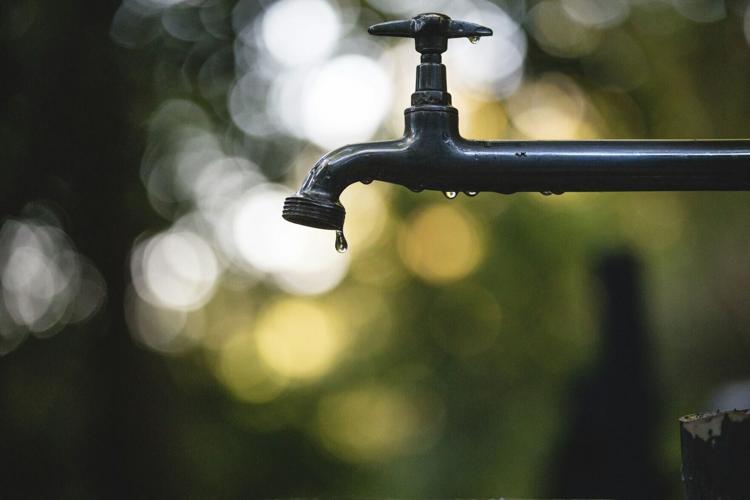


(Photo by Luis Tosta via Unsplash)
Although three in four Americans polled say they “care a lot” about what they put in their bodies, 35% have not thought about one essential part of their health in the past year: the quality of their tap water.
A survey of 2,000 general population Americans found that at a time when most claim to be more intentional than ever about their health (76%), water literacy is falling behind.
Half of those surveyed believe water that meets government regulations is fine to drink (51%), yet 70% of people misunderstand regulated water.
Conducted by Talker Research for Culligan International, the survey found that most people did not know arsenic (80%), nitrates (79%) and PFAS (74%) may be hiding in their tap water.
Nearly half of those polled either falsely believe water that meets government regulations has no contaminants (20%) or is based on the latest science (28%).
Dr. Eric Roy, head of science at Culligan International, explains more about the gap between health, science and regulation.
“It can be confusing to understand what’s in your water without foundational knowledge about water quality,” said Dr. Roy. “Headlines add to that confusion as they keep shining light on health concerns stemming from contaminants in drinking water, while municipalities report that tap water meets current regulatory standards.”
At the same time, water remains one of the most important resources we use daily.
Most respondents report relying on tap water daily (92%), whether for brushing teeth (67%) and cooking (62%), or drinking (48%) and for ice and beverages like coffee or protein shakes (40% each) — underscoring how deeply this misunderstanding is embedded in everyday routines.
Half of respondents believe that if their water tastes fine, it’s safe to drink.

(Talker Research)






Still, “contaminants in water” came out as the top “invisible risk” among those surveyed in their day-to-day lives (45%), followed by air pollution (43%) and food additives (42%).
Despite concerns around tap water quality, more than half (51%) of people have not tested their water in the last year.
The disconnect reflects an assumption about quality in one’s home, with 44% believing home tap water is fine to drink and 46% believing the water in their home is free of harmful contaminants.
Add to that, 48% often hesitate before consuming tap water from outside their home, like when at a restaurant or hotel.
The average person may not realize they’re falling for water-related myths.
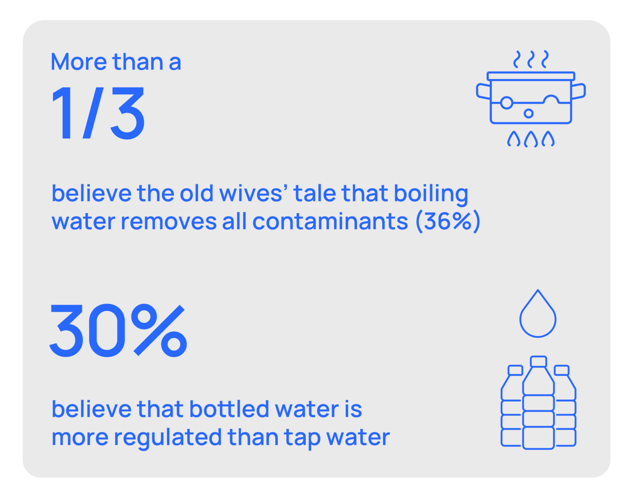
More than a third believe the old wives’ tales that boiling water removes all contaminants (36%) and that bottled water is more regulated than tap water (30%).
Thirty-one percent of respondents admit they aren’t happy with the quality of water in their local area, despite 38% saying it played a factor in deciding where to live.
Just 23% give the quality of their tap water an “A+,” and one in 10 would give it a failing grade altogether.
Even fewer are satisfied with the taste of their tap water, with only 20% giving the taste an “A+.”
“There’s a growing misconception that all water filters work the same way, with 57% of respondents believing they all provide the same level of filtration, when in reality, water filters are not all created equal,” said Dr. Roy. “Some filters are designed to improve taste and odor primarily, while others are certified to reduce a much broader range of contaminants. Understanding what’s in your water and choosing a filtration system designed to address those specific concerns is one of the most important steps people can take toward cleaner, safer, better-tasting water.”
Research methodology:
Talker Research surveyed 2,000 general population Americans who have access to the internet; the survey was commissioned by Culligan International and administered and conducted online by Talker Research between May 13 and May 18, 2026. A link to the questionnaire can be found here.
To view the complete methodology as part of AAPOR’s Transparency Initiative, please visit the Talker Research Process and Methodology page.

(0) comments
Welcome to the discussion.
Log In
Keep it Clean. Please avoid obscene, vulgar, lewd, racist or sexually-oriented language.
PLEASE TURN OFF YOUR CAPS LOCK.
Don't Threaten. Threats of harming another person will not be tolerated.
Be Truthful. Don't knowingly lie about anyone or anything.
Be Nice. No racism, sexism or any sort of -ism that is degrading to another person.
Be Proactive. Use the 'Report' link on each comment to let us know of abusive posts.
Share with Us. We'd love to hear eyewitness accounts, the history behind an article.