People who had a religious upbringing tend to enjoy better physical health in old age, according to a new study.
Researchers analyzed data from more than 10,000 people aged 50 or above across 28 European countries.
The findings suggest that those who had a religious upbringing tend to enjoy better physical well-being in later life and report fewer difficulties with daily activities such as dressing or washing.
The study, published in the journal Social Science and Medicine, found that religiosity is more common among lower socio-economic groups, who may turn to religion as a way of coping with adversity.
The findings come at a time when countries worldwide face the challenges of ageing populations, with the global population over the age of 60 expected to hit 2.1 billion by 2050.
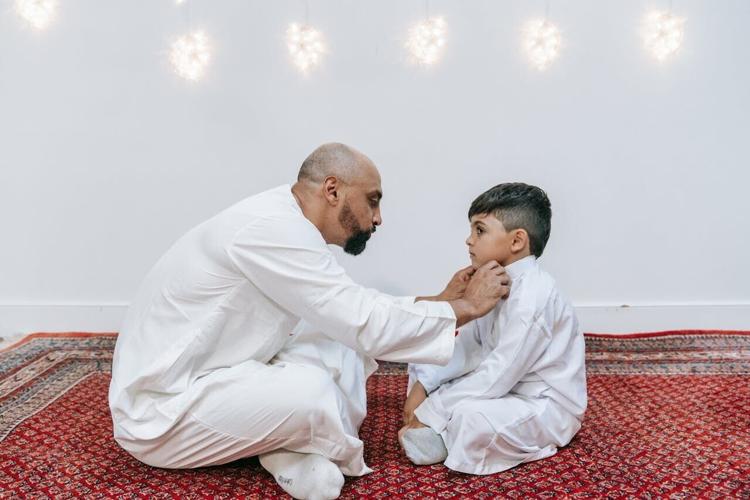
(Photo by cottonbro studio via Pexels)
By Talker
The researchers employed an advanced machine learning method to detect complex patterns that traditional statistical techniques may miss.
A religious upbringing was defined by whether participants were raised religiously by their parents during childhood.
Many children in Europe were brought after the Second World War in families that attended religious services or learned moral beliefs and values from their parents.
For some, those early rituals provided a sense of belonging and meaning but, for others, they created pressures that lingered unresolved.
(Photo by Timur Weber via Pexels)
By Talker
The Finnish research team say a religious upbringing may function as both a coping mechanism and an indicator of broader socio-economic challenges.
But study author Xu Zong said: “While religion may offer some benefits, it doesn’t necessarily fully mitigate the health risks linked to long-term disadvantages."
He says childhood socio-economic challenges may, in fact, exacerbate health problems in later life.
Zong, a doctoral researcher at the University of Helsinki in Finland, said: “In particular, parental mental health issues and heavy alcohol consumption intensify the negative association between an early religious upbringing and self-rated health in later life."
He believes that tackling childhood socio-economic disadvantages is key to narrowing health inequalities in later life.
Zong added: “Investing in children’s social well-being in Finland and other ageing societies is one of the most effective ways to build a healthier, more equal future."
Keep it Clean. Please avoid obscene, vulgar, lewd,
racist or sexually-oriented language. PLEASE TURN OFF YOUR CAPS LOCK. Don't Threaten. Threats of harming another
person will not be tolerated. Be Truthful. Don't knowingly lie about anyone
or anything. Be Nice. No racism, sexism or any sort of -ism
that is degrading to another person. Be Proactive. Use the 'Report' link on
each comment to let us know of abusive posts. Share with Us. We'd love to hear eyewitness
accounts, the history behind an article.














(0) comments
Welcome to the discussion.
Log In
Keep it Clean. Please avoid obscene, vulgar, lewd, racist or sexually-oriented language.
PLEASE TURN OFF YOUR CAPS LOCK.
Don't Threaten. Threats of harming another person will not be tolerated.
Be Truthful. Don't knowingly lie about anyone or anything.
Be Nice. No racism, sexism or any sort of -ism that is degrading to another person.
Be Proactive. Use the 'Report' link on each comment to let us know of abusive posts.
Share with Us. We'd love to hear eyewitness accounts, the history behind an article.