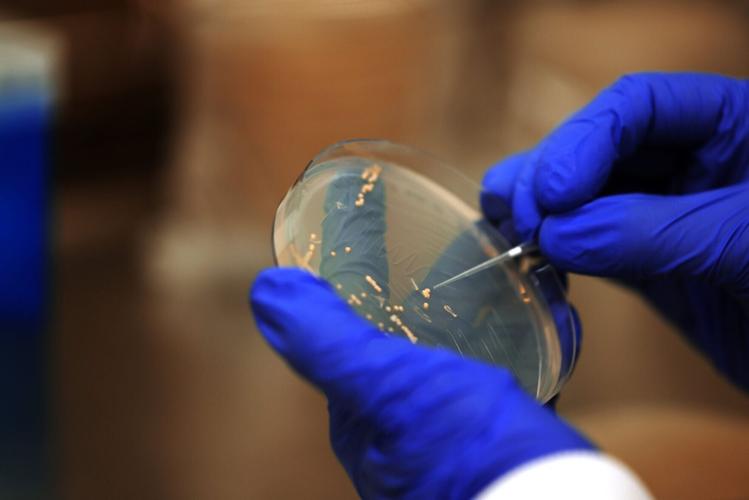





The colonies of baker’s yeast grown on this agar plate have been genetically engineered to make M2 proteins, which are essential for producing new viruses. (Fei Wen via SWNS)
By Stephen Beech
A universal flu vaccine derived from yeast could replace annual shots, according to new research.
The study shows that engineered baker's yeast produces virus-like particles that protect mice against multiple strains of the potentially deadly respiratory illness.
The influenza virus causes 250,000 to 300,000 deaths and up to 5 million cases of severe illness around the globe every year, as well as posing a pandemic threat.
But the world mostly relies on an 80-year-old method for producing flu vaccines from chicken eggs — a slow, costly process that struggles to quickly adapt to new, mutant strains.
Now, researchers at the University of Michigan have developed a process to manufacture flu vaccines in baker's yeast that they say is fast, inexpensive and safe.
Early results from mouse studies suggest the approach could make annual flu shots obsolete by providing "long-lasting protection" against multiple influenza strains.

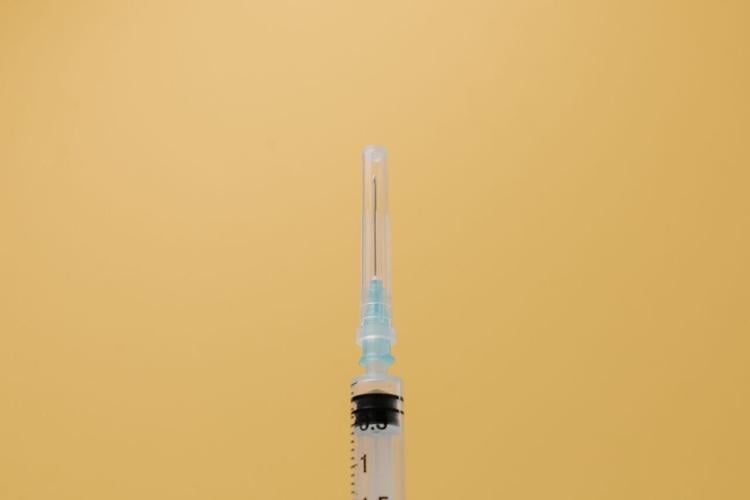
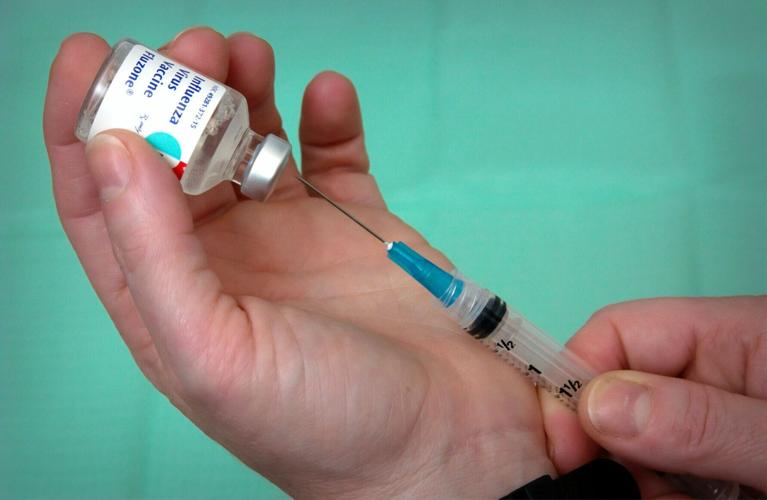
(Photo by Tara Winstead via Pexels)
Until now a universal flu vaccine against multiple strains and subtypes has remained elusive.
Most vaccines target hemagglutinin (HA), a viral surface protein that triggers a strong immune response — a prerequisite for effective vaccines.
But HA mutates rapidly, requiring the design of a new vaccine — and another shot — every year.
Trang Hoang, a graduate student at the University of Michigan, instead targeted a different viral protein: M2, which is essential for producing new viruses.
She said: "The influenza M2 protein is far less prone to mutation than HA.
"M2 has remained relatively conserved since the 1918 flu pandemic and shows high sequence conservation across human, swine, and avian influenza A strains."
Fei Wen, Hoang's advisor, said: "Sequence conservation's very important because pandemics usually start when strains jump from one host to another."
Previously, researchers focused on HA for vaccine development rather than M2 because of HA's stronger antibody response.

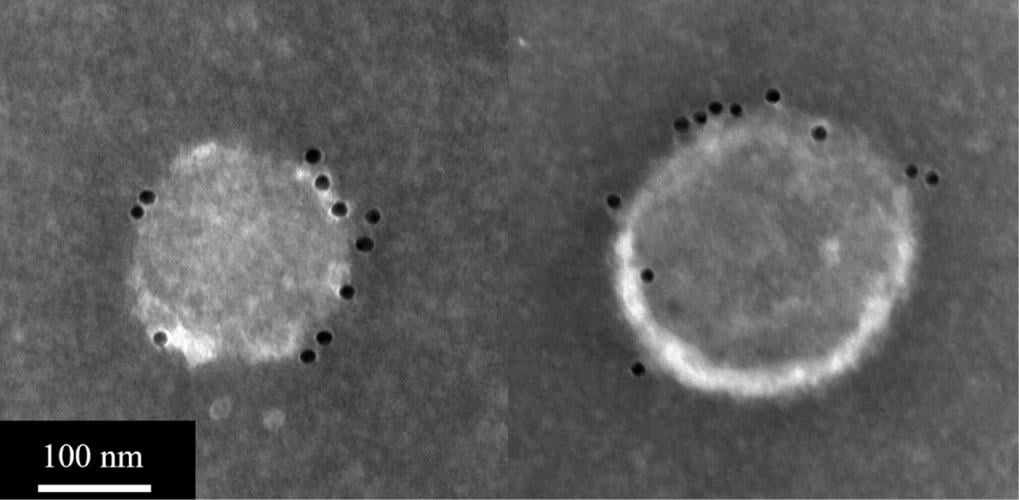
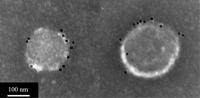
These light-gray spheres are virus-like particles, and the small black spots are M2 proteins, which could be key to a new flu vaccine that provides long-lasting protection. (Fei Wen via SWNS)
But by targeting a highly conserved viral protein such as M2, the research team hoped the resulting vaccine would provide broad protection that lasts longer than a year, perhaps even a lifetime.
Along with targeting M2, Wen and Hoang aimed to develop a more cost-effective, rapid system for manufacturing large amounts of the new vaccine that doesn't require incubation in chicken eggs.
Their approach uses baker's yeast to produce virus-like particles (VLPs) that display the M2 protein on their surface.





They explained that VLPs mimic the virus' size, shape and behavior but don't contain the genetic material that causes infection.
The researchers reasoned that including high amounts of M2 on VLPs could increase the viral protein's ability to trigger an immune response.
Hoang transformed ordinary yeast into VLP "factories" by editing the yeast genome to make large amounts of the influenza M2 protein.

(Photo by kaboompics via Pexels)
After incubating the yeast in a nutrient-rich liquid, she treated it with mild reagents to gently remove the yeast's rigid cell wall — an essential step for allowing VLPs to bud from the yeast's plasma membrane.
Hoang then separated and purified the M2 VLPs from the yeast by centrifugation.
She vaccinated 18 mice with the purified M2 VLPs to test whether they could stimulate a strong immune response.
Blood serum collected from the vaccinated mice contained "abundant" antibodies against M2 from five influenza strains.
Hoang then exposed the VLP-vaccinated mice to three of the different influenza strains, observing 100% protection from infection.
She said the results indicated that the new vaccine activated the immune system and protected mice against multiple strains of influenza.
Although the findings in mice are promising, the research team says work still needs to be done before the universal flu vaccine is ready for human trials.
They first plan to investigate how long M2 VLP-induced immunity lasts in mice.

CDC
Wen said: "I would definitely anticipate that the M2 vaccine provides broader and longer protection than the current HA-focused vaccines.
"Can it be even longer than that, like once in a lifetime? Possibly, or maybe people will need a booster when they get older."
She also wants to explore new vaccine designs for people with weak immune responses.
The team has licensed the technology to a company developing yeast systems to produce oral vaccines.
Wen believe that eventually engineered yeast strains could be "brewed" as oral vaccines for influenza and other diseases.
She added: "It sounds like science fiction, but we're very excited by the potential of this yeast-based vaccine production system."
The researchers presented their findings at the latest meeting of the American Chemical Society (ACS) in Chicago.

(0) comments
Welcome to the discussion.
Log In
Keep it Clean. Please avoid obscene, vulgar, lewd, racist or sexually-oriented language.
PLEASE TURN OFF YOUR CAPS LOCK.
Don't Threaten. Threats of harming another person will not be tolerated.
Be Truthful. Don't knowingly lie about anyone or anything.
Be Nice. No racism, sexism or any sort of -ism that is degrading to another person.
Be Proactive. Use the 'Report' link on each comment to let us know of abusive posts.
Share with Us. We'd love to hear eyewitness accounts, the history behind an article.