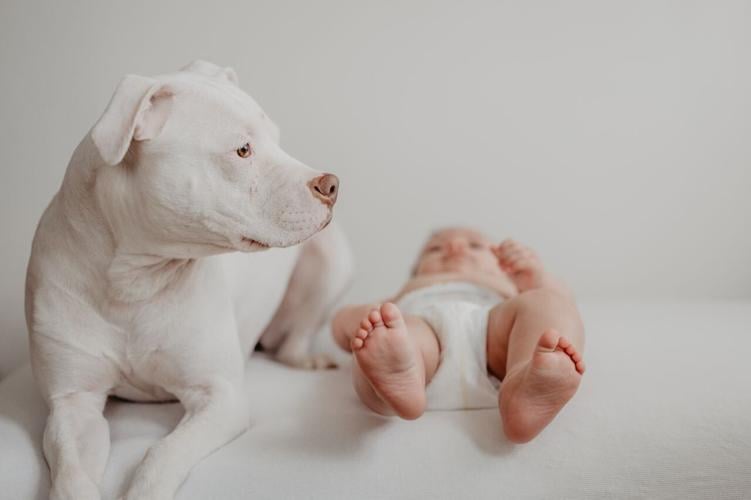





(Photo by Emma Bauso via Pexels)
By Stephen Beech
Babies who grow up around dogs are on average healthier and require fewer antibiotic courses than their peers, according to new research.
They are also less likely to develop respiratory tract infections — which can lead to asthma — than young children who don't have contact with pet pooches, suggests the study.
Scientists say the protective association is explained, at least in part, by the spread of dog-associated germs and microbes within the home.
The Finnish study showed that the presence of specific dog-associated microbes at home were linked to fewer respiratory tract infections, fewer antibiotic courses and more healthy weeks during the child's first year of life.
The richness and diversity are higher in homes with a dog than in homes without a dog, but the general characteristics of the microbiota were not associated with the incidence of respiratory tract infections or morbidity in the child.

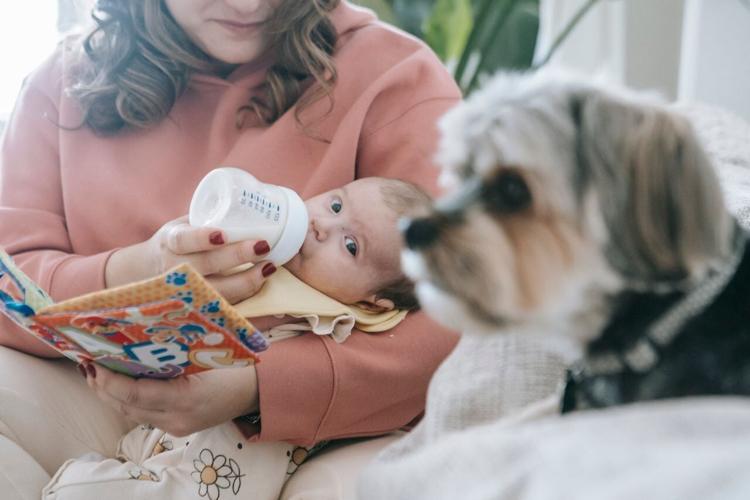
(Photo by Sarah Chai via Pexels)
The study included nearly 400 families from Finland.
About one-third of the families lived on farms, half in rural areas and the rest in towns.





The study, published in the journal Pediatric Allergy and Immunology, shows that certain dog-associated microbes or their combinations can explain up to a quarter of the protective effect of dog ownership on children's respiratory tract infections, antibiotic use and the number of healthy weeks during the first year of life.
The protective effect of a dog ownership remained also after accounting for other factors known to influence childhood infection risk — including family size, living environment and exposure to tobacco smoke.
Pediatrician Jenni Mäki, of the Finnish Institute for Health and Welfare in Helsinki, said: "The results strengthen our understanding that the microbial environment during early childhood plays an important role in the development of child's immune system.

(Photo by Sarah Chai via Pexels)
"It has been suggested that in the future it may be possible to modify the home microbiota in ways that promote health.
"Our study shows that dog ownership already does this today."
Chief researcher Anne Karvonen, also from the Finnish Institute for Health and Welfare, added: "Respiratory tract infections in early childhood are a significant risk factor for asthma.
"When some of children's respiratory tract infections can be prevented with dog-associated microbes, this may also reduce the child's risk of developing asthma later in life."
The research team believes a more outdoor-oriented lifestyle in dog-owning families, shared responsibilities related to caring for the pet and partly similar dietary habits shared among dog owners may also influence the microbiota in the home, and thereby the development of the child's resistance to germs.
However, those factors were not examined in the study.

(0) comments
Welcome to the discussion.
Log In
Keep it Clean. Please avoid obscene, vulgar, lewd, racist or sexually-oriented language.
PLEASE TURN OFF YOUR CAPS LOCK.
Don't Threaten. Threats of harming another person will not be tolerated.
Be Truthful. Don't knowingly lie about anyone or anything.
Be Nice. No racism, sexism or any sort of -ism that is degrading to another person.
Be Proactive. Use the 'Report' link on each comment to let us know of abusive posts.
Share with Us. We'd love to hear eyewitness accounts, the history behind an article.