


Kelly Sikkema
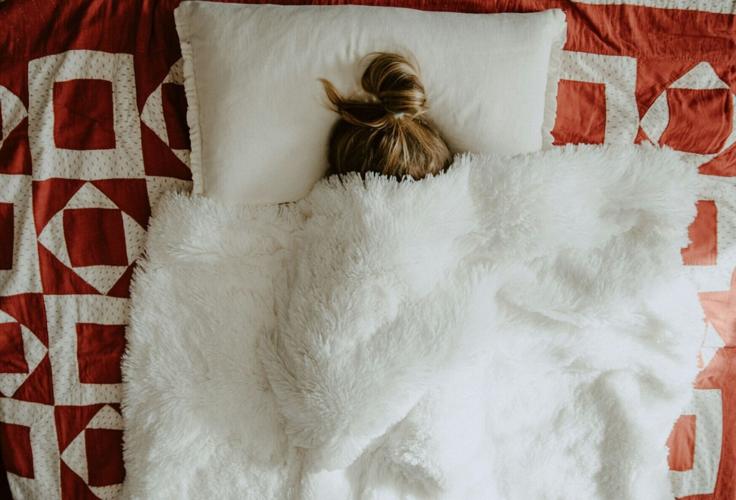
Americans have found 2026 exhausting — literally.
A survey of 2,000 general population Americans revealed more than six in 10 (63%) have found 2026 “exhausting,” and 57% believe it’s been more stressful than previous years.
And this is taking a toll on respondents’ sleep (66%), but they may not get a reprieve in the coming weeks.
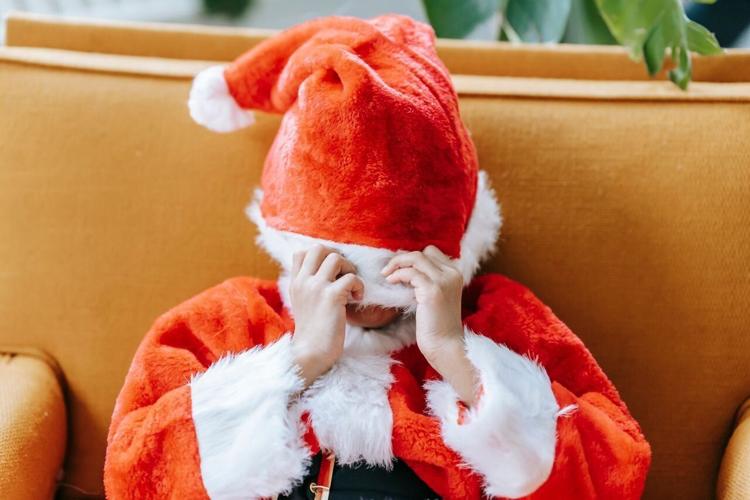
As the end of the year approaches — and for many, the holiday season — 40% believe the upcoming months will be more exhausting than the rest of the year.
With this in mind, the survey explored the idea of a “holiday sleep paradox.”

(Talker Research)
Commissioned by Avocado Green Mattress and conducted by Talker Research, the results found 74% of respondents believe the end of the year should be a time of rest — but despite this, it’ll be the busiest time of the year for over half (58%).
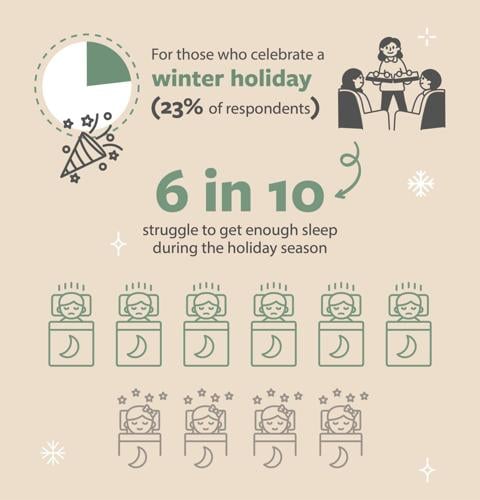
For those who celebrate a winter holiday (93% of respondents), six in 10 struggle to get enough sleep during the holiday season.
Some respondents may be willing to sacrifice sleep for a good cause, though — as the top contributor to bad sleep during the end of the year was staying up to spend time with loved ones (17%).
That was followed by thinking about holiday plans (16%) and staying up because of holiday tradition(s) (15%). Overeating decadent food (13%) and the stress of seeing family (13%) rounded out the top five reasons.






“The end of the year is a busy, stressful time, especially if you’re celebrating any holidays,” said Laura Scott, director of brand marketing at Avocado Green Mattress. “With the joy — and pressure — that comes with seeing family, the stress of traveling and the changes to routines, it’s no surprise that Americans’ sleep is impacted through the final months of the year.”

(Photo by Marta Wave via Pexels)
The average holiday celebrator surveyed needs over a week to recover from the holidays — eight days, specifically.
Younger generations need more time: For those who celebrate the holidays, Gen Z and millennials need about nine and a half days to recover, while baby boomers need less than five.
But next year, the holiday sleep paradox may not be as extreme, as 42% of respondents believe their sleep will improve in the new year.
For those who are optimistic about their sleep improving, they’re hoping to make this change by getting better pillows (37%), investing in a quality mattress (25%) and taking supplements that help their sleep (25%).
That’s in addition to taking time to stretch (25%) and meditate (24%).
“Getting quality sleep, night after night, is an amalgamation of the mental and physical factors. Having comfortable pillows and a quality mattress are extremely important in setting yourself up for a good night’s rest, but people shouldn’t minimize factors like stress,” said Scott. “With a busy end of year coming up for many Americans, good sleep may be harder to achieve — be mindful of what you can and can’t control, so you’re not accidentally adding to that mental load.”
Research methodology:
Talker Research surveyed 2,000 general population Americans who have access to the internet; the survey was commissioned by Avocado Green Mattress and administered and conducted online by Talker Research between Oct. 22–26, 2026. A link to the questionnaire can be found here.
To view the complete methodology as part of AAPOR’s Transparency Initiative, please visit the Talker Research Process and Methodology page.
(0) comments
Welcome to the discussion.
Log In
Keep it Clean. Please avoid obscene, vulgar, lewd, racist or sexually-oriented language.
PLEASE TURN OFF YOUR CAPS LOCK.
Don't Threaten. Threats of harming another person will not be tolerated.
Be Truthful. Don't knowingly lie about anyone or anything.
Be Nice. No racism, sexism or any sort of -ism that is degrading to another person.
Be Proactive. Use the 'Report' link on each comment to let us know of abusive posts.
Share with Us. We'd love to hear eyewitness accounts, the history behind an article.