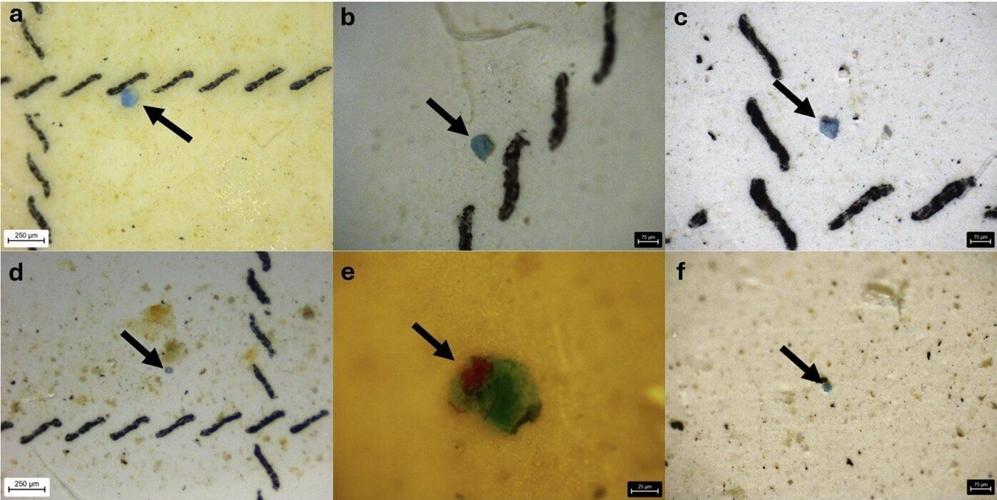






Picture of microplastics from biopsies. (Ilias Dimeas / European Respirat via SWNS)
By Stephen Beech
Patients diagnosed with lung cancer have more microplastic in their lungs, reveals new research.
Scientists discovered that people with lung cancer are more likely to have microplastics in their lungs and to have larger quantities of the tiny plastic particles in their lungs.
They said their findings add to growing evidence that microplastics are entering our bodies via the air we breathe — and suggests that there may be a link between microplastics and lung disease.
Study leader Dr. Ilias Dimeas said: "Microplastics have become an unavoidable part of our environment, but we still know remarkably little about what happens once they enter the human body.
"We don't yet know what the background levels of microplastics in the lungs are, how much they vary from person to person, or whether they contribute to disease.

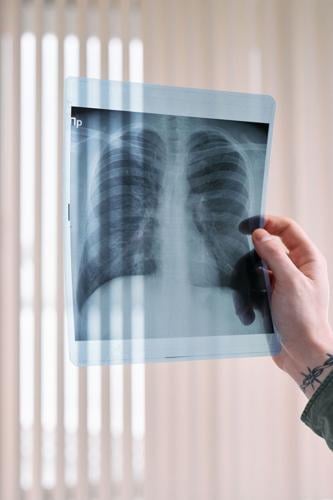
(Photo by cottonbro studio via Pexels)
"If we are breathing these particles in every day, we need to understand where they end up and whether they could be linked to disease."
The study included 100 people who were having a bronchoscopy to investigate lung symptoms at University Hospital of Larissa in Thessaly, Greece.
A thin flexible bronchoscope is fed into the lungs, allowing a doctor to see inside the lungs via a camera and take samples as needed.
As part of the process, each patient provided a lung-wash sample, where saline solution is used to "wash out" a section of the lung, collecting cells and other material.
In half of patients, researchers also took a small sample of lung tissue.

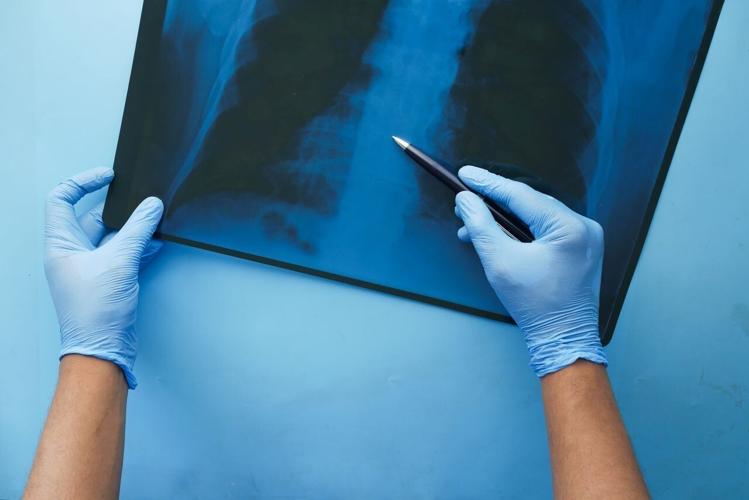
(Photo by Sogi via Pexels)
Each sample was analyzed in detail for the presence of microplastics and a selection were tested to see which types of plastics were present.
Of the 100 patients, 50 were subsequently diagnosed with lung cancer while 50 were not.
Across all samples, the researchers identified a total of 232 microplastic particles.
Overall, 70% of patients had detectable microplastics in at least one sample — either the lung wash, tissue or both.
When the lung wash and tissue samples from each patient were analyzed together, patients with lung cancer were more likely to have detectable microplastics and had a higher overall microplastic burden than those without cancer.
Patients with lung cancer were also more likely to have detectable microplastics in their lung wash samples — 66% compared to 46% — and had a higher microplastic burden than patients without lung cancer.
When the researchers compared the lung wash and tissue samples from the same person, they found that patients with more microplastic in their lung wash tended to have less in the corresponding tissue sample, and vice versa.






Because lung wash samples collect particles from the airspaces whereas tissue samples capture particles embedded within the lung itself, the researchers said the finding suggests that microplastics may not be distributed evenly throughout the lung and that different regions may retain particles differently.
Analysis of the microplastics showed that polypropylene and polyethylene were the most common types of plastic.

(Photo by Towfiqu barbhuiya via Pexels)
They are widely used in everyday products such as packaging, textiles, household materials and consumer goods.
Dr. Dimeas said: "Our results suggest that inhaled microplastics can be found in the human lung more frequently than many people may realize.
"This adds to the growing evidence that reducing environmental plastic pollution may have benefits that extend beyond ecosystems and into human health.
"This type of study doesn't tell us why we found more microplastics in the samples from lung cancer patients.
"Microplastics could contribute to inflammation or other biological processes that may contribute to diseases like cancer, but it is also possible that diseased lungs simply retain particles differently than healthy lungs.
"What it does show is that microplastics were found more often and in greater numbers in patients with lung cancer, which raises important questions for future research."
He added: "We have already begun more laboratory experiments to better understand the types of plastics involved and how they may interact with lung cells."
Dr. Dimeas, of University College Dublin School of Medicine, Ireland, and the University of Thessaly, and his colleagues are also analyzing samples from patients with chronic lung diseases to understand whether microplastics play a role in lung scarring and disease progression.
He is due to present the findings at the European Respiratory Society (ERS) Congress in Barcelona, Spain, on Sunday.
Barbara Hoffmann, chair of the ERS Advocacy Council, said the findings show that microplastics are "infiltrating" many parts of the human body.
Hoffmann, who is based at the University of Dusseldorf, Germany, said: "Lung cancer is the most common type of cancer worldwide.
"It's also the leading cause of cancer deaths, with around 2.5 million cases and 1.8 million deaths annually.
"Smoking remains by far the biggest cause of lung cancer.
"Air pollution is now also known to cause lung cancer and contribute to many other lung diseases, such as asthma and COPD."
She added: "Research on the health effects of microplastics is still at a very early stage, but we are starting to realize that these tiny pieces of plastic are infiltrating many parts of the body.
"This study adds to evidence that we are breathing microplastics in via the air and they are lodging in our lungs.
"We need more research to fully understand their potential role in lung diseases, including cancer.
"In the meantime, we advocate for the fundamental human right to breathe clean air, and this includes air that is not polluted with microplastics."
(0) comments
Welcome to the discussion.
Log In
Keep it Clean. Please avoid obscene, vulgar, lewd, racist or sexually-oriented language.
PLEASE TURN OFF YOUR CAPS LOCK.
Don't Threaten. Threats of harming another person will not be tolerated.
Be Truthful. Don't knowingly lie about anyone or anything.
Be Nice. No racism, sexism or any sort of -ism that is degrading to another person.
Be Proactive. Use the 'Report' link on each comment to let us know of abusive posts.
Share with Us. We'd love to hear eyewitness accounts, the history behind an article.