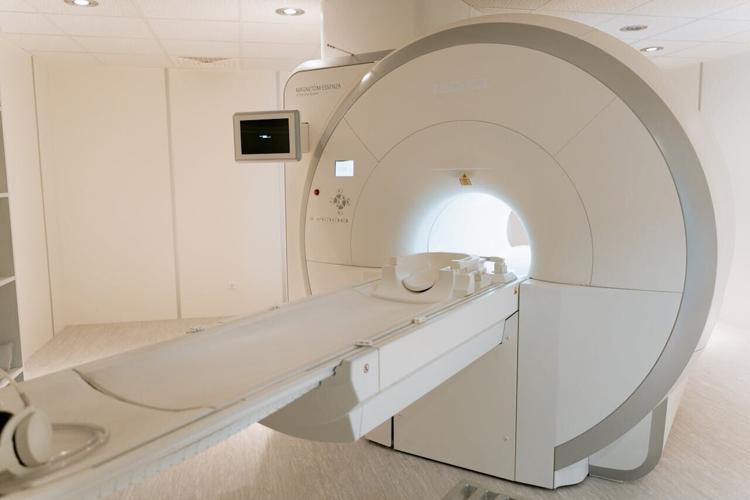
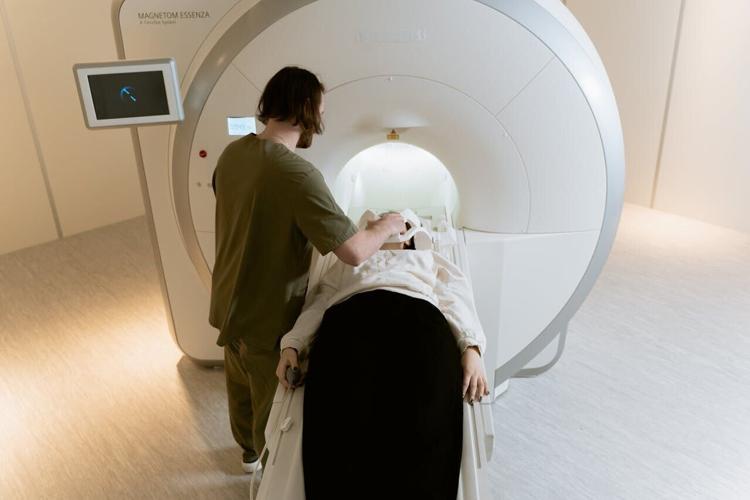


(Photo by MART PRODUCTION via Pexels)
By Stephen Beech
Thousands of heart patients could be spared "risky" invasive tests - thanks to an MRI scan breakthrough.
The step forward - hailed as a "game changer" - means doctors may soon be able to tell just how sick a heart failure patient really is by using a routine scan.
People with heart failure often need a test called right heart catheterization, where a tube is inserted into the heart to measure oxygen levels in the blood.
But experts say the invasive procedure, which helps doctors understand the severity of the condition, is far from pleasant and carries risks - especially for older, frail or unwell patients.
Now, researchers from the University of East Anglia (UEA), working with colleagues at the University of Leeds and Newcastle University, have developed a way to estimate crucial blood oxygen levels using a standard cardiac MRI.
The team hope their findings, published in the journal JACC Advances, could potentially spare tens of thousands of future heart patients from undergoing the risky tube procedure.

(Photo by MART PRODUCTION via Pexels)
Lead researcher Professor Pankaj Garg said: “Our breakthrough could be a game changer for assessing advanced heart failure.
"It could allow us to measure risk more safely and more often, especially for patients who are too frail or high-risk for an invasive catheter procedure.
”Heart failure affects hundreds of thousands of people in the UK and significantly weakens the heart’s ability to pump blood.
"Doctors often need detailed information about a patient’s circulation to decide on the best treatment.
“We wanted to develop a safe, non-invasive alternative which could allow far more patients to be properly assessed - and allow repeat monitoring without the risks of a catheter test."
He explained that the team developed a method that uses a routine type of MRI measurement called T2 mapping to estimate how much oxygen is left in the blood as it returns to the heart - a key marker of how well the heart is coping.







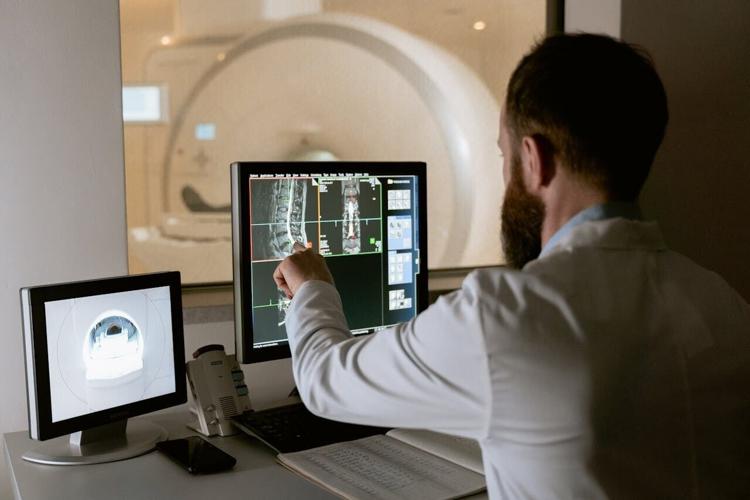
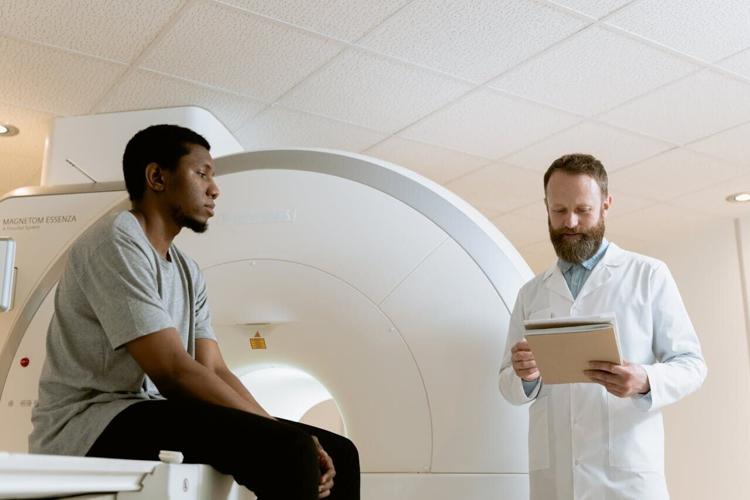
(Photo by MART PRODUCTION via Pexels)
Garg, from UEA’s Norwich Medical School and a consultant cardiologist at the Norfolk and Norwich University Hospital, said: “Blood with different oxygen levels behaves slightly differently in a magnetic field.
"By measuring how that blood reacts, we were able to develop a formula that predicts the oxygen reading without ever inserting a tube or taking a blood sample.”
The research team first tested the technique in 30 patients and found the MRI results closely matched the invasive catheter readings.
They then analysed 628 people with newly diagnosed heart failure, following them for around three years.
Those with healthier oxygen readings on MRI were "significantly less likely" to die or end up in hospital due to their condition.
Crucially, the MRI-based measure stayed accurate even after accounting for age, other illnesses and overall heart function.

(Photo by MART PRODUCTION via Pexels)
Garg said: “One of the most important markers in advanced heart failure is how much oxygen is left in blood returning to the right side of the heart.
"Until now, getting that number has usually meant a tube test.
"Our study shows it can be estimated non-invasively from a standard heart MRI.”
Study senior author Dr. Peter Swoboda, from the University of Leeds, said: “This means we may be able to read off a crucial haemodynamic number from an everyday scan - effectively turning a routine MRI into a much more powerful test, without putting a tube into the heart.”
Co-author Dr. Gareth Matthews, from the University of East Anglia, said: “Because this can be done as part of a standard cardiac MRI, it needs no extra hardware and no contrast dye, and adds only seconds to the scan."
Dr. Matthews added: “It has real potential to widen access to safer heart failure assessment across the NHS."
The team say further research is needed to confirm the findings in different hospitals and patient groups, and to understand how best to use the measure in day-to-day decision-making.



(0) comments
Welcome to the discussion.
Log In
Keep it Clean. Please avoid obscene, vulgar, lewd, racist or sexually-oriented language.
PLEASE TURN OFF YOUR CAPS LOCK.
Don't Threaten. Threats of harming another person will not be tolerated.
Be Truthful. Don't knowingly lie about anyone or anything.
Be Nice. No racism, sexism or any sort of -ism that is degrading to another person.
Be Proactive. Use the 'Report' link on each comment to let us know of abusive posts.
Share with Us. We'd love to hear eyewitness accounts, the history behind an article.