

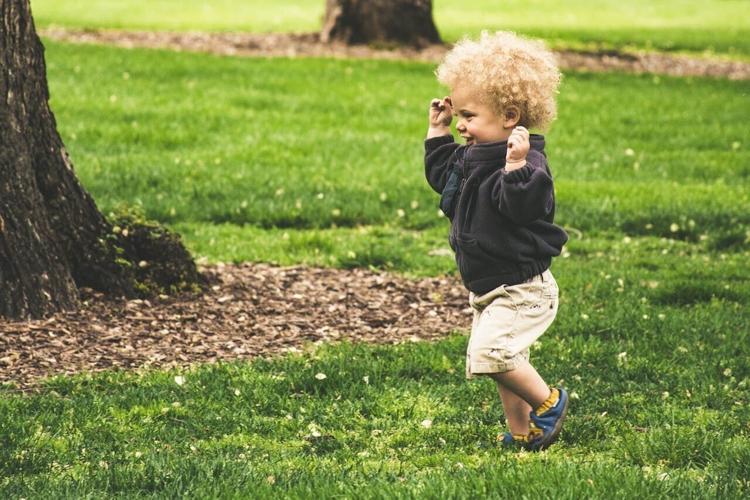

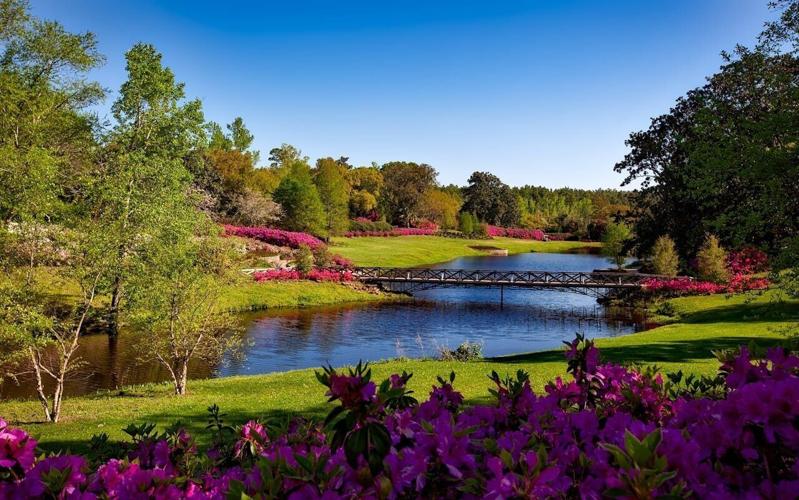

Photo by kelvin agustinus via Pexels
By Stephen Beech
Newborn babies living near trees tend to be healthier, according to new research.
Data suggests it’s not because healthier people reside near parks, say American scientists.
The new study analyzed in detail the link between proximity to green spaces - including trees and parks - and having a healthy baby.
Researchers at Drexel University’s Dornsife School of Public Health in Philadelphia, Pennsylvania, explored the effect of residing near newly planted trees.
Using a unique dataset - the planting of more than 36,000 trees between 1990 and 2020 in Portland, Oregon by the non-profit group Friends of Trees — the research team measured the number of new trees planted within 100 meters of a mother’s address for the first 10 years after their child’s birth, existing tree cover and road coverage in that area.
Controlling for factors that can influence birth weight, such as whether it was the mother's first pregnancy, the team discovered a link between number of trees planted and higher birth weight.
The findings, published in the journal Science of The Total Environment, also showed that nearby tree planting, including new and existing trees, were associated with three key measures of newborn health: higher birth weight, lower risk of small-for-gestational-age birth and decreased risk of pre-term birth.

Photo by Brett Sayles via Pexels
For example, each tree planted within 100 meters of a mother’s home within 10 years before a child’s birth was associated with a statistically significant 2.3-gram increase in birthweight.
In contrast with previous studies that also looked at green spaces and pregnancy, the current study controlled for existing tree coverage to focus on the role newly planted trees may play in the health of newborns.
Senior author Professor Yvonne Michael said: “Although there is benefit from well-established trees, we’re finding that newly planted trees are also associated with healthy birth weight.
“This is another data point showing that planting trees is a relatively easy and low-cost way to improve public health from the earliest stages of a life.”






Living within 100 meters of at least 10 trees was associated with about a 50-gram increase in birthweight, according to the study.
The birthweight benefit from trees generally tops out at about 10 trees, according to the researchers.
Prof Michael said: “Fifty grams may not seem like a lot, but if every baby in our sample gained 50 grams at birth, that means 642 fewer babies considered small for gestational age, and at higher risk for worse development later in life."
She said stress is associated with increased likelihood of delivering a baby preterm and poor health outcomes later in life.
The research team speculated that established older trees near a person’s home may provide more benefit than newly planted trees by also providing psychological restoration, as other studies have suggested that developed natural environments foster a “soft fascination” - in contrast with psychologically draining characteristics of buildings and other aspects of built environments.

Photo by Pixabay via Pexels
Prof Michael said: “It’s rare to have detailed information on large-scale tree plantings for research.
“Existing tree cover is often closely tied to factors like income, education, and race, making it difficult to fully account for other possible explanations when studying birth outcomes.
"By focusing on newly planted trees, we were able to reduce the bias - essentially treating it as a natural experiment.
"Plus, we observed the improvements in birth outcomes after trees were planted, establishing temporal order.”
In the current study, existing trees, but not newly planted ones, helped to mitigate some of the negative impact of road density - the ratio of the length of roads in an area relative to the overall land area - on birthweight.
The research team believe that that may be attributed to more developed leaves of established trees, which are better equipped to combat road noise and reduce air pollution.
The research team found that race, education and even existing tree canopy had no correlation with new trees planted in an area.
The study follows several papers delving into the effects of green space on health, including a 2013 study published by Prof Michael and her colleagues which found that the loss of 100 million trees to an invasive pest, called the emerald ash borer, coincided with an increase in heart disease deaths and lower-respiratory-tract illness in counties with more tree loss due to bug infestation.

(0) comments
Welcome to the discussion.
Log In
Keep it Clean. Please avoid obscene, vulgar, lewd, racist or sexually-oriented language.
PLEASE TURN OFF YOUR CAPS LOCK.
Don't Threaten. Threats of harming another person will not be tolerated.
Be Truthful. Don't knowingly lie about anyone or anything.
Be Nice. No racism, sexism or any sort of -ism that is degrading to another person.
Be Proactive. Use the 'Report' link on each comment to let us know of abusive posts.
Share with Us. We'd love to hear eyewitness accounts, the history behind an article.