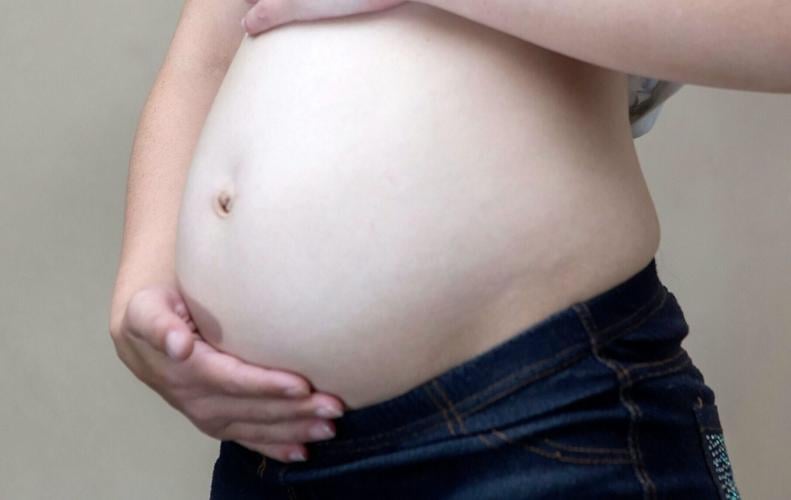

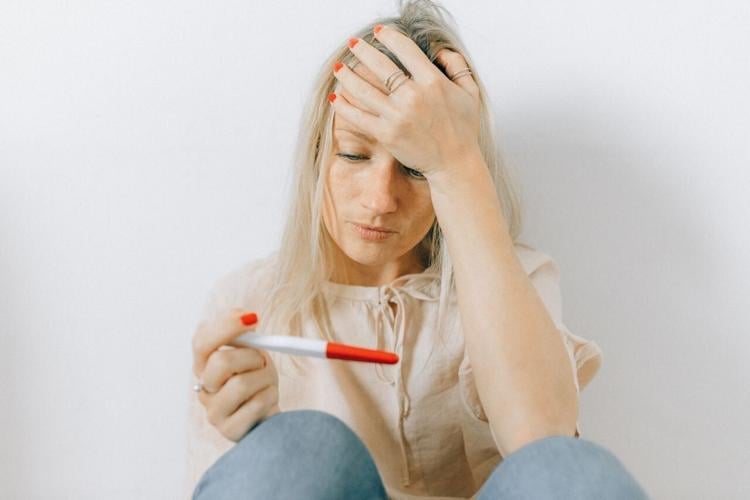




A new study explored how depression during pregnancy can affect the baby. (SWNS)
By Stephen Beech
Babies born to moms who had depression during pregnancy are at greater risk of ADHD and autism, according to new research.
The higher risk of their children requiring special educational needs can't be attributed entirely to exposure in the womb to antidepressants, say scientists.
Study leader Saraid McIlvride, of the University of Glasgow, said: "Antidepressant use during pregnancy is increasing, but currently, the long-term effects of these drugs on child development are unclear.
"Having untreated depression during pregnancy carries its own risks, however, making it very challenging for someone with depression to make informed decisions about whether to take medication during pregnancy."
For the new study, published in the journal PLOS Medicine, researchers followed more than 167,000 children born in Wales between 2009 and 2016, until 2022.

(Photo by Nataliya Vaitkevich via Pexels)
Utilizing medical and school records, the team looked for any links between depression diagnoses or antidepressant use in mothers, and special educational needs in their children, such as diagnoses of autism or attention deficit hyperactivity disorder (ADHD), or learning, behavioral, emotional or social difficulties.
The findings showed that children of women who received antidepressant treatment had higher rates of certain neurodevelopmental disorders than women with depression who were untreated.
But the researchers said the results could be affected by the fact that women with more severe depression are more likely to be prescribed antidepressants.
When comparing between treated depression, untreated depression and antidepressant exposure without depression, the analysis showed that antidepressant exposure was associated with an additional 6.3 cases per 100 children in those not exposed to depression, and an additional 2.9 cases per 100 children in those exposed to depression.





The researchers concluded that children of mothers with depression have a higher risk of neurodevelopmental disorders regardless of whether they were exposed to antidepressants, but medication may carry an extra risk.
The team cautioned that any potential risk of treatment should be balanced against the risks of untreated depression in mothers, which is associated with a higher risk of postnatal depression.

(Photo by Matilda Wormwood via Pexels)
McIlvride said: "We showed that if women with depression took antidepressants while pregnant their children were more likely to have special educational needs, but it was only a very slight increase and may have been due to them having more severe depression, rather than an effect of the medicine.
"Among children of mothers with depression, 24 in every 100 children had special educational needs if she was not on treatment, and this increased by just three in every 100 children if she was taking antidepressants.
"This is compared to 20 in every 100 children for those not exposed to depression or antidepressants in the womb.
"Our results don't suggest that women should automatically stop taking their antidepressants because depression can harm both mother and baby if not treated.
"Women should always speak to their doctor about what is best in their situation.
"Our study indicates that exposure to antidepressants during pregnancy could serve as a marker for additional support being needed at school."
She added: "Linking mothers' and babies' routinely collected data and being able to follow their health and development over time is an amazing resource which can support research into maternal mental health, an area which urgently needs more attention.
"Further studies are needed to empower women with the knowledge they need to make informed decisions, together with their doctor or midwife, about their own health as well as their baby's."
(0) comments
Welcome to the discussion.
Log In
Keep it Clean. Please avoid obscene, vulgar, lewd, racist or sexually-oriented language.
PLEASE TURN OFF YOUR CAPS LOCK.
Don't Threaten. Threats of harming another person will not be tolerated.
Be Truthful. Don't knowingly lie about anyone or anything.
Be Nice. No racism, sexism or any sort of -ism that is degrading to another person.
Be Proactive. Use the 'Report' link on each comment to let us know of abusive posts.
Share with Us. We'd love to hear eyewitness accounts, the history behind an article.