





(Photo by RDNE Stock project via Pexels)
By Stephen Beech
Love can help mend a broken heart, suggests a new study.
Intimate relationships may have a positive as well as negative impact on heart health, say scientists.
Previous research has shown that a doomed love affair or broken marriage really can lead to a broken heart.
The new study highlights the need to focus on emotional and relationship factors to improve recovery and well-being for cardiac patients and their partners.
Heart disease is the leading cause of death worldwide, but there is growing recognition that recovery is not only physical but also emotional and social.
The new study, published in the Canadian Journal of Cardiology, shows that strong and supportive relationships can indeed improve heart health for patients with cardiovascular disease.

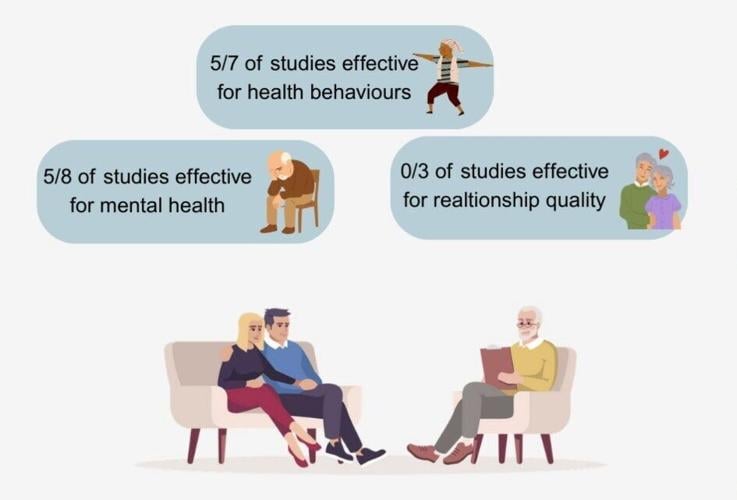
A new article in the Canadian Journal of Cardiology shows that strong and supportive relationships can improve heart health for individuals with cardiovascular disease and calls for partners to be included in cardiac rehabilitation programs to support long-term heart health and quality of life for both members of the couple. (Canadian Journal of Cardiology via SWNS)
It calls for intimate partners to be included in cardiac rehabilitation programmes to support long-term heart health and quality of life for both members of the couple.
An evaluation of the effectiveness of couples-based interventions on modifiable cardiovascular risk factors, cardiac well-being, mental health, and relationship quality in adults with diagnosed heart disease and their partners shows that 77% of the reviewed studies report health behavior improvements.
Professor Heather Tulloch, of the University of Ottawa Heart Institute in Canada, said: “Considering the well-established literature highlighting that relationship quality impacts heart health, it is surprising that such a limited number of studies have targeted relationship quality in their interventions
“Sometimes heart disease brings couples closer together, but often it’s a challenge for the relationship and both people in it.
"We’ve learned over the years that cardiac events do not only happen to the patient, but to the couple.”
Cardiovascular disease is responsible for around one-in-three of all deaths in Europe, and 20% of all deaths prior to the age of 65.






Most cardiac care focuses only on the individual patient.

(Photo by Hannah Barata via Pexels)
Couples-based programs, reviewed in the study, aim to change that by involving both partners in recovery and lifestyle changes.
The approach recognizes that partners are often "key facilitators" of recovery, for example, by cooking heart-healthy meals, encouraging regular physical activity, and ensuring medications are taken correctly.
While there is growing evidence that such interventions can improve health behaviors, less is known about how they affect emotional adjustment or the quality of the relationship itself.
Healthcare systems are increasingly emphasizing patient-centered and family-oriented care.

(Photo by Puwadon Sang-ngern via Pexels)
The research team say couples-based approaches could help healthcare professionals better support both patients and their partners during cardiac rehab.
Not only will patients receive important interventions for improved health but, their partners - who may have similar cardiovascular risk factors - may also benefit.
Tulloch said: “Interventions that include the partner as an active participant and meaningfully address what’s happening in patients’ relationships ought to be developed and tested, with the aim of helping couples better cope with heart disease by enhancing their mental and physical health and the health of their relationship.”
The researchers propose a "stepped care" model within cardiac rehab as a viable pathway for systematic screening and referral to appropriate services to help couples deal with distress.
They say future studies should focus more on emotional and relational factors to strengthen both partners’ recovery and well-being.
Tulloch added: “We need to treat the heart and nurture relationships to enhance health behaviors, mental health and, possibly, cardiovascular outcomes among those with heart disease.
“This could lead to stronger emotional and social adjustment during patients’ recovery and ultimately to better health behaviors.”


(0) comments
Welcome to the discussion.
Log In
Keep it Clean. Please avoid obscene, vulgar, lewd, racist or sexually-oriented language.
PLEASE TURN OFF YOUR CAPS LOCK.
Don't Threaten. Threats of harming another person will not be tolerated.
Be Truthful. Don't knowingly lie about anyone or anything.
Be Nice. No racism, sexism or any sort of -ism that is degrading to another person.
Be Proactive. Use the 'Report' link on each comment to let us know of abusive posts.
Share with Us. We'd love to hear eyewitness accounts, the history behind an article.