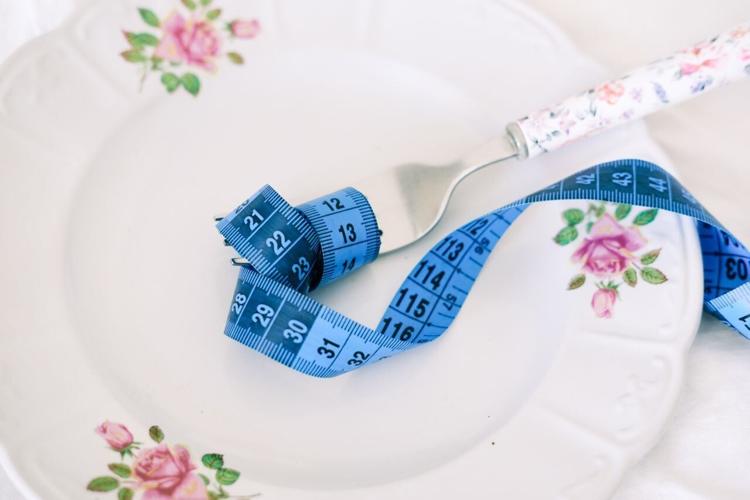



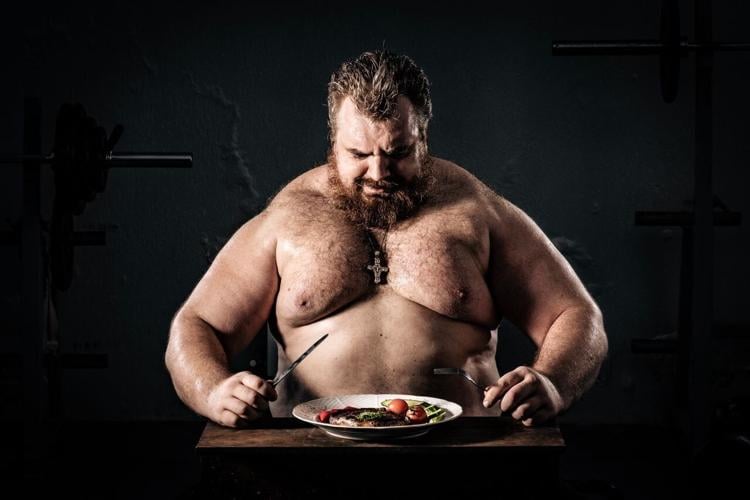




(Photo by Beyzaa Yurtkuran via Pexels)
By Stephen Beech
Men struggle to lose weight because they see diet programs as too restrictive and female-focused, according to a new study.
Researchers found that traditional diets are often perceived by men as primarily aimed at women.
The study, led by Anglia Ruskin University (ARU) scientists, is the first to investigate men's motivation for losing weight, their personal experiences and the weight-loss approaches they find most appealing.

Study co-lead author Anglia Ruskin University Professor Justin Roberts. (Anglia Ruskin University via SWNS)
Latest NHS England figures show that 70% of men are either overweight or clinically obese, compared with 62% of women.
Researchers say their findings, published in the journal PLOS One, highlight the public health need to ensure weight-loss support is tailored to men's experiences and attitudes.
The research involved interviews with 24 U.K. men, ages 30 and over, who had experience of being overweight.
Participants had either previously taken part in a weight-loss program or were planning to lose weight in the near future.
It found that the men often associated dieting with being denied the food they enjoy, and they were reluctant to commit to approaches they saw as requiring significant sacrifice.
One participant told researchers: "I think diet is a very negative word because as soon as you mention the word diet everybody automatically thinks restriction, restriction, restriction."
A recurring theme across all focus groups was the perception that dieting is a largely female-focused activity.
Participants described dieting conversations as more commonly associated with women, often through social media and magazines.
A view shared by most participants was that they would feel self-conscious and uncomfortable engaging themselves.

(Photo by Alexa Popovich via Pexels)
One said that dieting is "part of that conversation because now it's social media pressure."






The study found that men were more likely to reject a diet program if it was seen as female-focused or too restrictive.
But the participants responded more positively when it was framed as a competitive challenge or an activity shared with their partner.
Support from spouses emerged as a key factor in helping participants maintain long-term engagement with weight-loss efforts.
One participant said: "For me, it was having the support of my wife.
"Without that, I wouldn't have done it."
Many of the participants said their dietary changes were largely orchestrated by their partner, who they saw as having greater knowledge and experience of dieting.
The research team suggests that programs tailored toward men may be more effective if they focus on visible progress and elements of challenge or competition, rather than traditional dieting messages.

(Photo by kaboompics via Pexels)
They say male-oriented weight-loss programs could also incorporate sport or other forms of physical activity.
Study co-lead author Justin Roberts, of ARU, said: "Obesity is a major public health issue, so we wanted to evaluate adult male perceptions and experiences of weight-loss initiatives and also understand the support mechanisms used by men when targeting weight loss.
"This is the first time an academic study like this has been carried out.
"We found that for weight-loss programs to appeal to men, they should involve quick-wins, early rewards and a degree of social competitiveness around aesthetic gains, ahead of health-specific requirements.
"This could involve sport or physical challenges, perhaps focused on strength or stamina."
Roberts added: "Terminology should avoid 'diets' and 'dieting' and instead frame weight loss as a positive personal challenge.
"Our findings also suggest that initiatives aimed at couples could be particularly effective.
"The support of spouses was found to be especially helpful, while participants also found having a 'buddy' or mentor was also beneficial."

(0) comments
Welcome to the discussion.
Log In
Keep it Clean. Please avoid obscene, vulgar, lewd, racist or sexually-oriented language.
PLEASE TURN OFF YOUR CAPS LOCK.
Don't Threaten. Threats of harming another person will not be tolerated.
Be Truthful. Don't knowingly lie about anyone or anything.
Be Nice. No racism, sexism or any sort of -ism that is degrading to another person.
Be Proactive. Use the 'Report' link on each comment to let us know of abusive posts.
Share with Us. We'd love to hear eyewitness accounts, the history behind an article.