

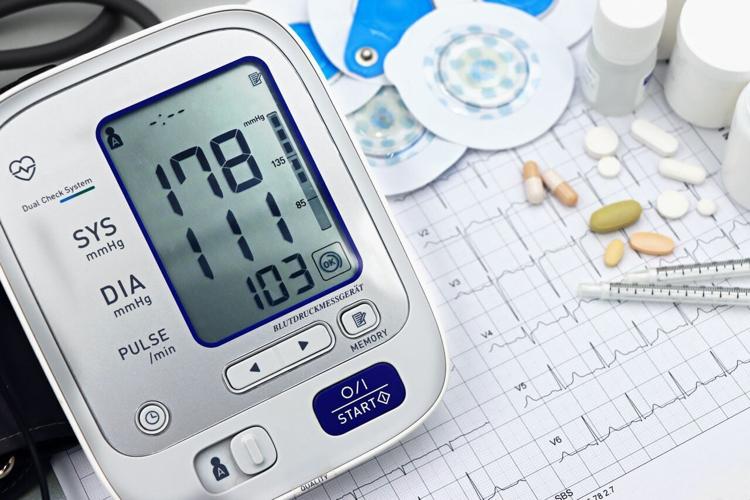



Photo by Dee Dave via Pexels
By Stephen Beech
An alternative drug to statins could help control potentially deadly cholesterol, say scientists.
Researchers have discovered how high cholesterol levels dismantle the liver's defenses — and how the new medication could combat it.
Cholesterol-related heart disease remains the leading cause of death worldwide.
While doctors have more tools than ever to treat it, such as statins, many patients still can't achieve safe cholesterol levels, or can't tolerate the side effects of the available drugs.
Now, American researchers have uncovered a hidden biological pathway that explains why high-cholesterol diets steadily chip away at our body's ability to clear harmful low-density lipoprotein (LDL) — or bad cholesterol — from the blood.
The team from the University of California San Diego School of Medicine have also identified a drug candidate already proven safe in humans that could potentially target it.
Study senior author Alan Saltiel said: "We've known for a long time that a high-cholesterol diet reduces the liver's ability to clear cholesterol from the blood, but we didn't fully understand why.

Photo by Marta Branco via Pexels
"This new discovery explains a critical piece of that puzzle."
He explained that the liver is the main organ involved in removing cholesterol from the blood so it can be broken down and used elsewhere.
Saltiel said: "This is done through LDL receptors, which sit on the surface of liver cells and act like docking stations, grabbing LDL cholesterol from the bloodstream and pulling it inside the cell for processing.
"The more LDL receptors on liver cells, the more cholesterol gets cleared from the blood — which is why most cholesterol-lowering drugs, such as statins or PCSK9 inhibitors, work by preserving or increasing the number of these receptors."
The new research, published in the journal Nature, was conducted in a combination of mice and human cells.






It revealed a previously unknown mechanism that quietly works against the cholesterol removal process, slowly reducing the number of LDL receptors and contributing to high blood cholesterol.
The team found that the process begins when a protein called Ral, which Saltiel has previously studied in fat cells, is activated by high dietary cholesterol.
The more Ral is activated, the fewer LDL receptors remain available to clear cholesterol from the blood.
Saltiel explained that the depletion process ultimately relies on an enzyme called cathepsin A, or CTSA.

Study senior author Alan Saltiel. (UC San Diego Health Sciences via SWNS)
The research team found that blocking CTSA with a small molecule inhibitor was enough to stabilize LDL receptors and "dramatically lower" circulating LDL cholesterol in mice.
Saltiel said: "There's still a real need for new cholesterol-lowering options, since some people can't get to safe levels even with the drugs we have now.
"This new pathway we discovered is completely separate from anything that existing drugs target, so it gives us a new opportunity to fill that gap."
After a fundamental biological breakthrough, Saltiel said it usually takes significant additional research to find drugs that target it.
However, in this case, a CTSA inhibitor has already been through the early stages of drug development, with the initial goal of treating heart failure.
While it was eventually shelved for strategic reasons, the drug had previously advanced to a Phase 1 clinical trial, where it was successfully tested for safety.
Saltiel says the new discovery suggests that the investigational drug is already ready for testing in a Phase 2 trial for high cholesterol.
He added: "Luckily, there's an experimental drug sitting on the shelf that's already been shown to be safe in humans.
"We hope to test whether this might be effective by conducting a clinical trial — which could potentially bring a new treatment option to patients much sooner than would have been expected."

(0) comments
Welcome to the discussion.
Log In
Keep it Clean. Please avoid obscene, vulgar, lewd, racist or sexually-oriented language.
PLEASE TURN OFF YOUR CAPS LOCK.
Don't Threaten. Threats of harming another person will not be tolerated.
Be Truthful. Don't knowingly lie about anyone or anything.
Be Nice. No racism, sexism or any sort of -ism that is degrading to another person.
Be Proactive. Use the 'Report' link on each comment to let us know of abusive posts.
Share with Us. We'd love to hear eyewitness accounts, the history behind an article.