





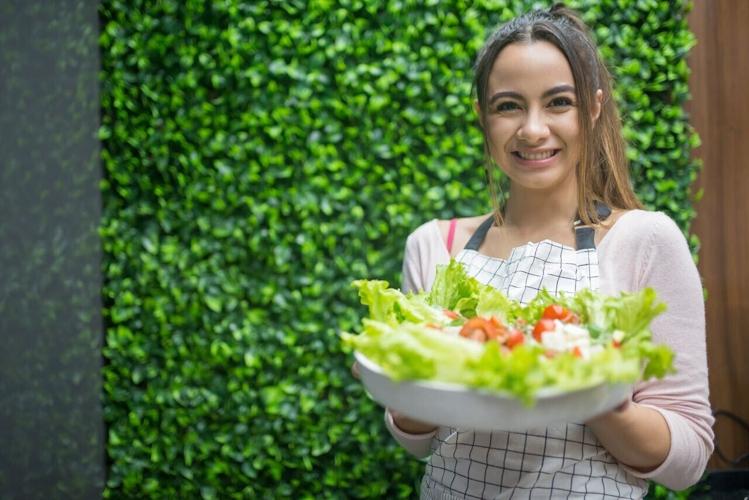

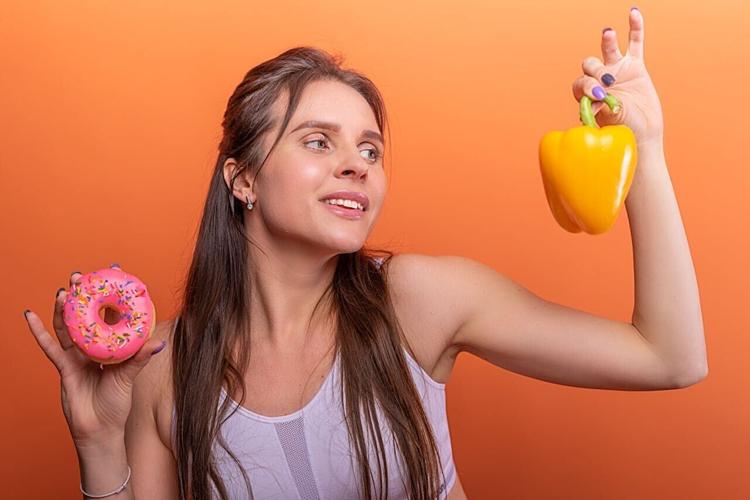


(Photo by Mikhail Nilov via Pexels)
By Stephen Beech
Women need to maintain a positive outlook if they want to stick to a diet, suggests new research.
Dieters are more likely to gorge on unhealthy snacks when they're feeling down or stressed, according to the study.
But women who aren’t dieting tend to eat more when they felt positive emotions.
Australian researchers found that emotions drive our eating choices - and many people struggle to stick to their dieting goals, particularly when their emotions fluctuate throughout the day.
The study, published in the journal Food Quality and Preference, examined how emotions influence eating behavior in chronic dieters.
The research team tested whether negative moods and difficulties regulating emotions drive people toward unhealthy food choices.

Dr. Isaac Williams, College of Education, Psychology & Social Work. (Flinders University via SWNS)
Lead author and psychologist Dr.â¯Isaac Williams says people actively trying to restrict their food intake were far more likely to reach for unhealthy snacks - such as chocolate, pastries or chips - when they experienced negative emotions such as stress or sadness.
Dr. Williams, of Flinders University, Adelaide, said: “Our findings show that your immediate emotional state is a much stronger driver of snacking than your overall personality or your usual mood patterns.
“It’s those inâtheâmoment feelings that tend to push people off track.”
More than 150 women completed a sevenâday online snack diary, recording everything they ate and the emotions they felt just before taking their first bite.
Dr. Williams said: “We found that women who were dieting were significantly more likely to choose unhealthy snacks when they felt negative emotions.
“In contrast, women who weren’t dieting tended to eat more overall when they felt positive emotions, such as happiness or excitement.”

(Photo by Gustavo Fring via Pexels)
The findings showed that dieters were especially vulnerable, eating almost twice as many unhealthy snacks when they felt bad compared to when they felt good.
Dr. Williams said: “For people who are trying to diet, negative emotions seem to act as a trigger for breaking their healthy eating intentions.






“It’s not that they eat more food overall, but that they choose foods that are higher in calories and lower in nutritional value.”
The study also found that longâstanding emotional tendencies didn't predict eating behavior.
Study senior author Professor Eva Kemps says that people who generally experience more negative emotions were not necessarily more likely to break their diet; instead, the emotion felt immediately before eating had the biggest impact.
She said: “This tells us that what matters most is the immediate emotional context, not someone’s typical emotional style."

(Photo by Kampus Production via Pexels)
A surprising finding was that emotionâregulation skills did not provide the level of protection researchers expected.
While the research team predicted that people who were better at managing their emotions would be less prone to emotional eating, the influence of common strategies such as reappraisal or suppressing emotion was limited.
What mattered most was emotional awareness - how clearly people recognized and understood their feelings.
Dr. Williams said: “Emotional awareness seems to be the real key."
The study also highlighted the strong effect of positive emotions on people who were not dieting.
When the participants felt happier than usual, they tended to eat more snacks of all types, both healthy and unhealthy.

(Photo by Atlantic Ambience via Pexels)
Dr.â¯Williams said: “We often think of comfort eating as something people do when they’re sad, but for many people, being in a good mood can be just as much of a temptation to indulge.”
He says the study findings offer practical insights for anyone aiming to maintain healthier eating habits.
Short, simple strategies that boost positive mood or increase emotional awareness may help dieters stay on track.
Dr.â¯Williams suggests brief mindfulness exercises, slowing down before eating or checking in with your feelings as useful tools.
He added: “We’re not as rational about food as we like to think.
“Understanding your emotions in real time can help break the cycle of turning to unhealthy snacks when you feel stressed, tired or overwhelmed.”



(0) comments
Welcome to the discussion.
Log In
Keep it Clean. Please avoid obscene, vulgar, lewd, racist or sexually-oriented language.
PLEASE TURN OFF YOUR CAPS LOCK.
Don't Threaten. Threats of harming another person will not be tolerated.
Be Truthful. Don't knowingly lie about anyone or anything.
Be Nice. No racism, sexism or any sort of -ism that is degrading to another person.
Be Proactive. Use the 'Report' link on each comment to let us know of abusive posts.
Share with Us. We'd love to hear eyewitness accounts, the history behind an article.