


Survey: Millions of Americans struggle to access hormone care
At 28, Logan became what he calls a "walking zombie." He had crushing fatigue, no sex drive, little emotion, and no motivation. Blood tests from his primary care doctor showed a testosterone level around 180 nanograms per deciliter (ng/dL), well below the standard diagnostic cutoff for low testosterone. But because his doctor wasn't experienced in prescribing hormone therapy — or the careful monitoring it requires — he referred Logan to an endocrinologist.
Logan, who lives in rural Michigan, waited three months for an appointment and drove 90 minutes to get there. After reviewing multiple blood tests over several months showing testosterone levels between 100 and 302 ng/dL, the endocrinologist told him his numbers were fine and his symptoms must have another cause. "I felt hopeless," Logan said. "I knew what I was feeling, and no one was willing to help me."
Logan lives in what longevity platform Hone Health calls a ”hormone desert” — a geographic area where residents lack access to qualified hormone health providers. These hormone deserts are ubiquitous across the country, especially in the South, the Midwest, and in rural areas, according to a new analysis by Hone Health comparing U.S. Census data with registries of menopause-certified physicians and board-certified urologists.
"Your ZIP code shouldn't determine whether your hormones get treated, but for millions of Americans, that's exactly what's happening," said Jim Staheli, D.O., medical director of Hone Health and a family medicine doctor who specializes in longevity and hormone optimization. "When people can't access qualified hormone care, they don't just live with symptoms longer — they miss opportunities for early diagnosis, losing the chance to reduce their risk of chronic diseases before they become much harder to treat."
Hormone Care Availability Across the U.S.
Many less densely populated states such as Mississippi, Idaho, Oklahoma, Iowa, Wyoming, and Nevada have become hormone deserts, according to the analysis, but even more densely populated states may have regions where patients struggle to find qualified care.
Top hormone deserts for men
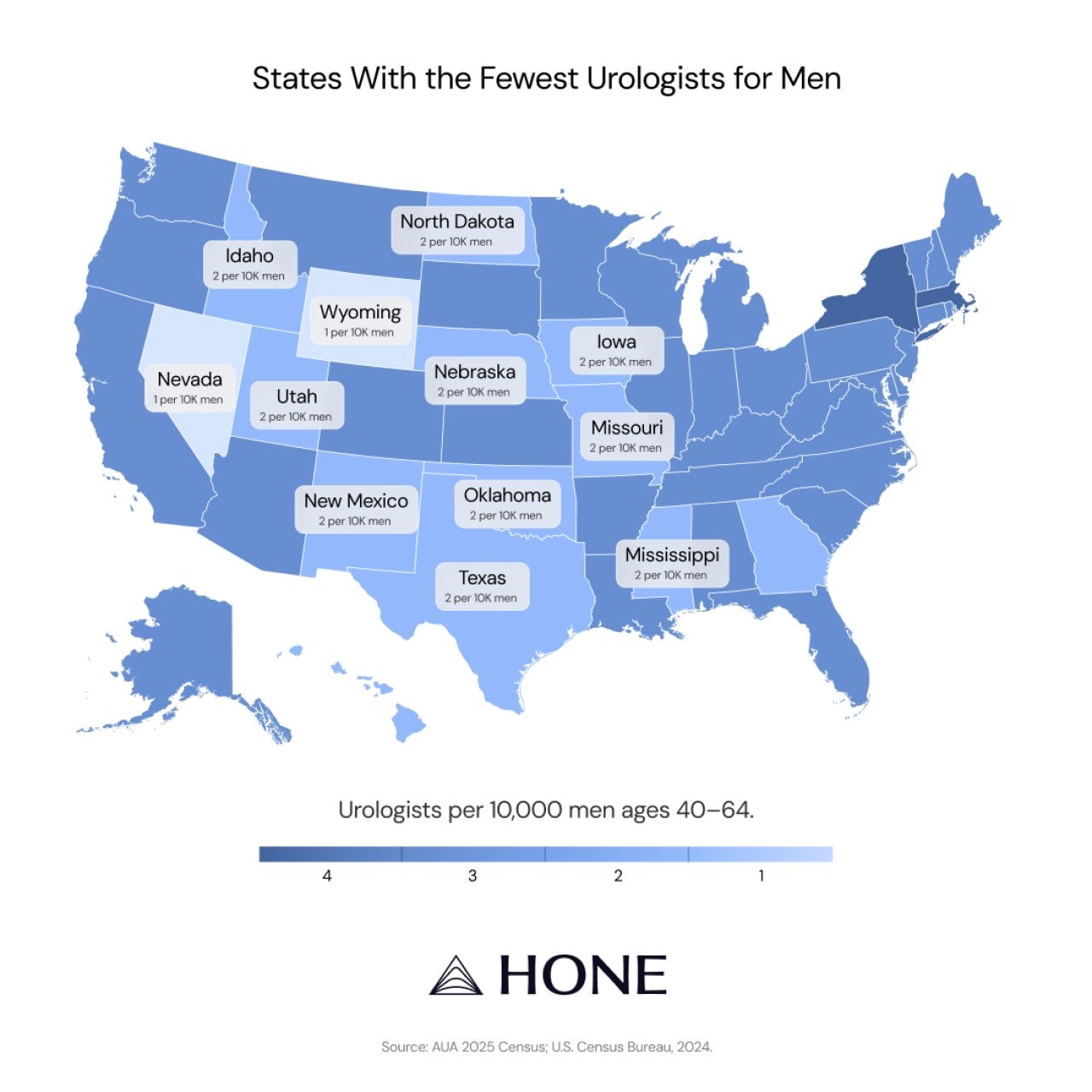
- Nevada and Wyoming each have only 1 board-certified urologist per 10,000 men aged 40–64.
- Arkansas, Georgia, Hawaii, Idaho, Iowa, Mississippi, Missouri, Nebraska, New Mexico, North Dakota, Oklahoma, Texas, and Utah have 2 urologists per 10,000 men.
- California has 2.5 urologists per 10,000 men, but providers are concentrated in San Francisco, San Jose, and Los Angeles, while most of the San Joaquin Valley is a desert.
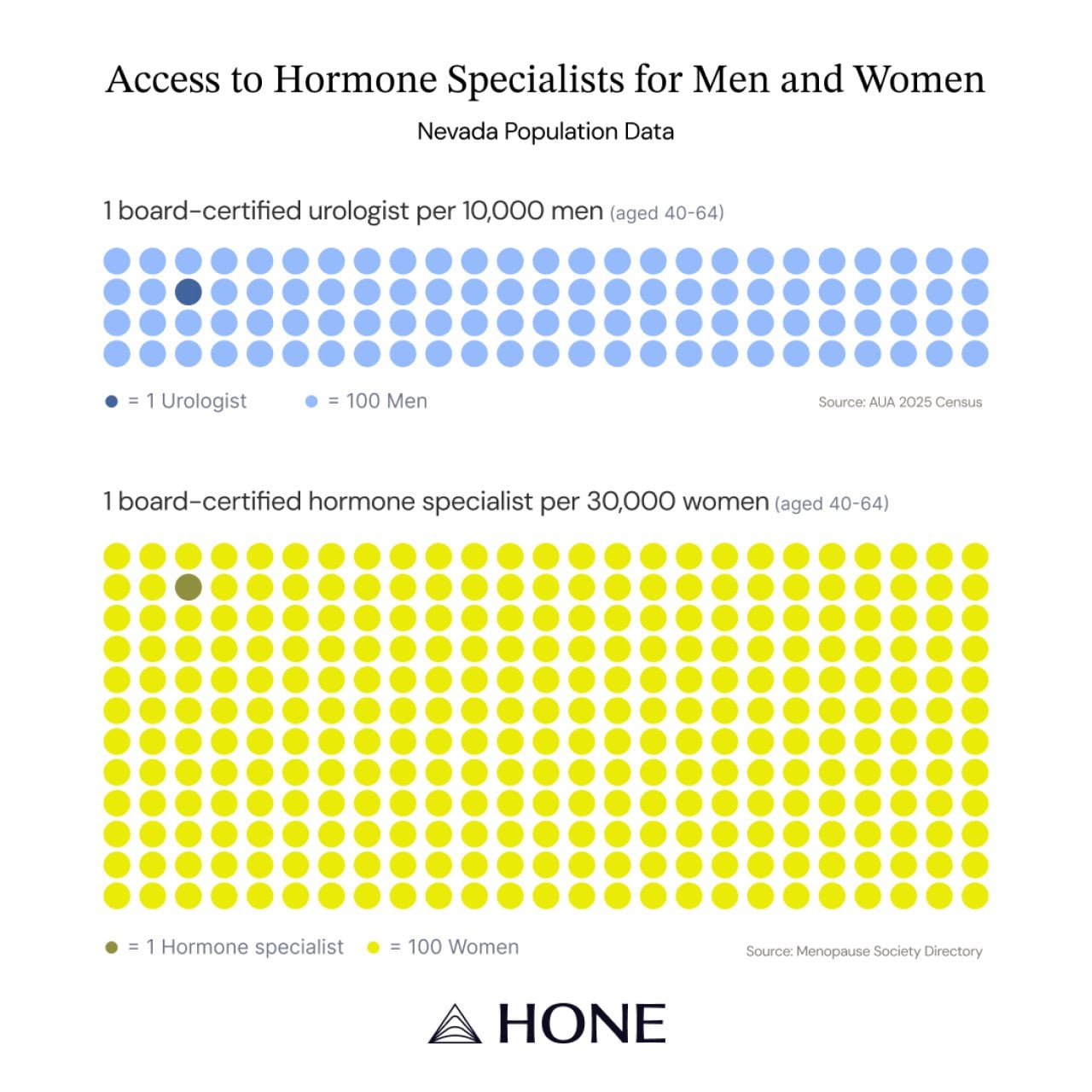
To understand the impact of these hormone deserts, consider Nevada as an example. With one urologist for every 10,000 men, and testosterone deficiency affecting an estimated 1 in 4 men ages 40-64, each urologist in Nevada would need to see 10 patients per day to meet annual demand. And that's on top of all their patients with other urological symptoms, including prostate cancer, kidney stones, and bladder disorders.
Top hormone deserts for women
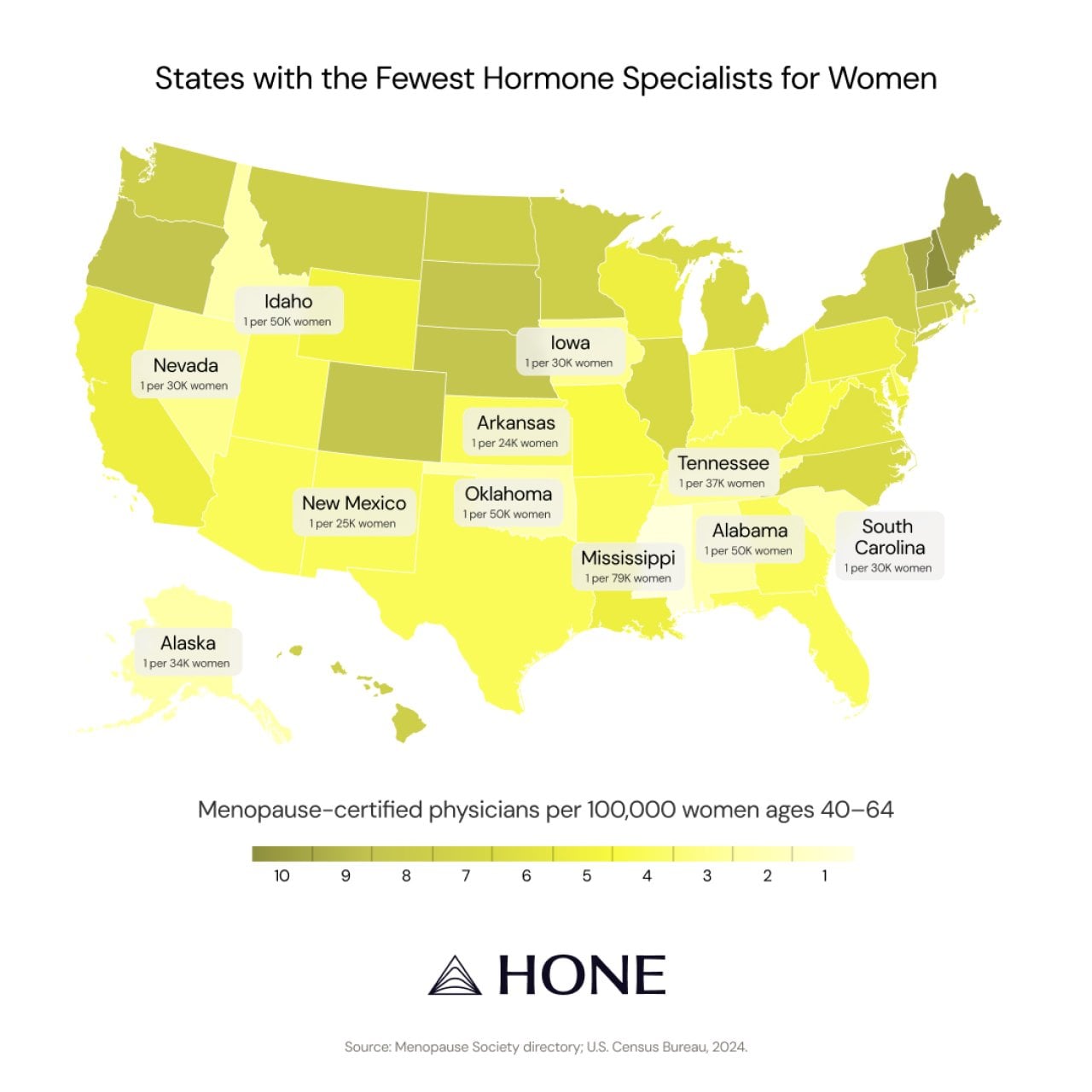
- Mississippi has roughly 1 menopause-certified physician for every 79,000 women aged 40–64.
- Alabama, Idaho, and Oklahoma each have roughly 1 menopause-certified physician for every 50,000 women in that age bracket.
- Alaska, Iowa, Nevada, South Carolina, and Tennessee each have roughly 1 menopause-certified physician for every 33,000 women in the target age range.
- Colorado, which has 1 provider for roughly every 12,000 women 40-64, lacks trained physicians in the highly rural northeast region of the state.
The landscape of specialized hormone care in the U.S. is even bleaker for women, leaving many without help around perimenopause and menopause, a time when symptoms can severely compromise quality of life and chronic diseases often begin to take hold.
With one menopause-certified physician for every 79,000 women in Mississippi, for example, and an estimated 75% of women experiencing symptoms significant enough to affect quality of life, a single specialist would need to see 237 patients per day to meet annual demand — more than 10 times what a full clinical schedule allows.
Where hormone providers are more abundant
Overall, OB-GYNs and urologists are most concentrated in parts of New England, the mid-Atlantic, and major cities like Seattle; Olympia, Washington; San Francisco; San Jose, California; New Orleans; Minneapolis; Cleveland; Chicago; and Charlotte, North Carolina. However, rural parts of those states and many Mountain States have virtually no providers. Some densely populated states, like New York and New Jersey, don’t make the list because even though they have many qualified providers, patients still need to wait weeks or months for an appointment.
Rural areas have fewer hormone providers
Rural areas across the country have lower concentrations of medical providers generally. The American Urological Association reports that rural residents travel an average of 50 miles to see a urologist — more than five times farther than patients living in cities need to travel.
This means residents of rural towns go months between the time they book an appointment and when they see their specialist. A 2022 AUA study found rural residents wait 10 weeks longer than urban patients for diagnostic and therapeutic procedures.
Cities can have long wait times, too
Even in major cities, most men and women have to wait at least two weeks to see a hormone specialist. A two-week wait is the federal criterion for health deserts — an area, population group, or facility that the secretary of Health and Human Services determines has a shortage of health professionals.
- Patients have to wait an average of 42 days to see an OB-GYN in a major metropolitan area, according to a survey by AMN Healthcare.
- In a 2022 AUA study, the average wait in the Chicago metropolitan area to see a urologist about blood in the urine (a serious symptom that could indicate a urinary tract infection, kidney stones, an enlarged prostate, kidney disease, or urinary tract cancers) was 15 days.
Not all physicians are trained in hormone care
These provider numbers and wait times don’t even take into account that not all OB-GYNs are knowledgeable about menopause, and not all urologists recommend testosterone replacement therapy (TRT). That means even where there are accessible doctors, they may not be qualified to provide midlife hormone care.
Hone Health's patient data validates what the provider maps suggest: When qualified local care isn't available, people may look elsewhere, and many turn to telehealth.






Nevada and Wyoming — the two worst urologist deserts in the country — rank first and second in male patients, with more than double the national average. Idaho, New Mexico, and Oklahoma, all bottom-tier for urologist access, also show well above-average representation. The inverse is also true: States with the strongest urologist networks show the lowest concentrations in states where Hone operates.
The women's data tells the same story. Among women who seek hormone care, the highest per capita demand comes from the state of Nevada, where hormone specialists are scarce. Oklahoma and Tennessee — both severe hormone-specialist deserts — also rank above average in telehealth patients.
Why Hormone Deserts Exist
Hormone deserts exist for many of the same reasons other specialty care deserts do: Physicians want to live where reimbursement rates are higher and caseloads are more varied, leaving rural and low-income areas underserved. In hormone care specifically, this preference for denser, wealthier geographic areas is made worse by gaps in provider training, inconsistent prescribing guidelines, and narrow insurance coverage for hormone testing.
Only 31% of OB-GYN residency programs in the U.S. include menopause training, and a quarter of those programs don’t have dedicated menopause clinics. That means residents don’t get hands-on experience with OB-GYN patients, leaving them feeling underprepared to treat this life stage.
Primary care providers (PCPs) are even less informed, with 20% of family medicine residents receiving zero menopause education, and less than 7% saying they feel qualified to help patients manage menopause.
PCPs are similarly ill-equipped to manage TRT. Differing prescribing guidelines on testosterone therapy from the AUA, American College of Physicians, and other organizations causes confusion and may contribute to the fact that PCPs are less likely than urologists or endocrinologists to prescribe testosterone.
"Primary care doctors get maybe a few hours of training on testosterone therapy in their entire residency, and then we hand them three different sets of guidelines that don't agree with each other,” said Joshua Calvert, M.D., a urologist who specializes in male infertility and low testosterone management. “The safe move, from where they're sitting, is to do nothing. I don't blame them but it means the guy with textbook low-T symptoms sits in a waiting-room loop for months before he ever gets to see someone who treats this every week."
Compounding the problem is that insurance reimbursement for hormone testing is narrow: Most plans cover lab tests only when a patient has certain qualifying symptoms or is already on therapy. That policy creates a structural disincentive for comprehensive testing — even though optimal treatment requires a multihormone baseline established early and rechecked regularly.
The Compounding Cost of Hormone Deserts
When people can't access hormone care from experienced providers, they often live with symptoms that seriously compromise their quality of life. Over time, they're more likely to develop diagnoses that are harder to treat.
For women, menopause brings hot flashes, mood shifts, brain fog, and other symptoms, but it’s also a health inflection point, where decreasing estrogen levels begin to negatively impact cardiovascular health, bone density, and cognitive function. Long-term untreated menopause symptoms are linked to increased rates of chronic disease as well as reduced work productivity, relationship strain, depression, and anxiety.
Men are often unaware that their fatigue, low libido, muscle loss, and weight gain can be hormonal. "Almost every week I have a man in his 40s tell me he thought his fatigue and brain fog were just ‘getting older,’” Calvert said.
Waiting years to check a number that takes one blood draw comes at a real cost, Calvert noted. Without TRT, men with low testosterone are 86% more likely to develop depression, and more than twice as likely to develop metabolic syndrome, which is the on-ramp to diabetes and heart disease. On the flip side, men with testosterone levels above 450 ng/dL have a 42% lower risk of developing Type 2 diabetes than men whose levels are lower.
Even men who suspect their symptoms are due to a testosterone deficiency may be denied hormone therapy if their levels are above the 300 ng/dL cutoff suggested in the guidelines from organizations like the Endocrine Society or the AUA. But doctors who specialize in health optimization note that men with testosterone levels slightly above this can be highly symptomatic and often benefit from TRT. That’s in part because you can have high total testosterone but low free testosterone, which is the type your body actually uses.
"Some testosterone is bound so tightly to proteins that your body can't use it. What's more important is how much testosterone is available to your tissues,” Calvert said. “I've seen men with a ‘normal’ total testosterone level around 400 who still had symptoms because their bioavailable testosterone was low. If you look only at the total number, it can seem like nothing’s wrong."
Men with lower levels of testosterone may simply struggle with symptoms, or they may turn to unregulated testosterone clinics with minimal oversight, or online gray-market suppliers. Taking testosterone from unproven sources and without physician monitoring can be dangerous, leading to cardiovascular issues, infertility, and other side effects from excessively high testosterone.
Closing the Gap
Getting care to residents of hormone deserts requires action by medical schools, insurance companies, and telehealth providers, says Staheli:
- Medical education reform: Integrating menopause and hormone health into residency training and continuing medical education requirements would help equip more providers, especially those in primary care, to diagnose and treat these concerns. Not having to refer patients to specialists would dramatically improve access to care.
- Credentialing expansion: Increasing awareness of the Menopause Society's certification program, particularly among nurse practitioners and physician assistants, and encouraging urology practices to train midlevel providers in testosterone management would expand the pool of qualified hormone care providers.
- Reimbursement reform: An initial hormone workup can take 20-45 minutes or longer, Staheli says, but primary care visits budget for only 10-18 minutes on average. Policy changes — such as adding hormone-related diagnoses to chronic care management billing codes and creating time-based billing pathways for the initial workup — would help make these time-intensive visits more financially viable for PCPs.
- High-quality telehealth: Optimal hormone and midlife care requires comprehensive blood testing of related biomarkers, ongoing monitoring, and one-on-one video calls with physicians who are menopause-certified or up on the latest evidence for hormone replacement therapy, TRT, and other hormone protocols, such as thyroid therapies.
What people in hormone deserts can do right now
Ask your primary care physician for a referral or check the Menopause Society's directory to find the nearest qualified menopause practitioner. (There’s no equivalent directory for urologists — the AUA recommends checking directories like Healthgrade.) You can also explore high-quality telehealth options from anywhere in the U.S.
"Patients shouldn't mistake a lack of access for a lack of options," Staheli said. "If qualified care isn't available where you live, there are still ways to connect with experienced hormone specialists."
Logan eventually started testosterone replacement therapy in 2024, at age 34. “Within three weeks, I noticed an energy that I had not felt in a long time,” he said. “It was a deep energy, like a fire in my soul that was rekindling. Around six months into therapy, I was literally a new person. I felt happiness, deep love, and an intense drive unlike I ever have in my life.”
Methodology
To qualify the definition of a hormone desert, Hone Health compared U.S. Census data of the population of women and men ages 40-64 in each state to the number of menopause-certified physicians (per the Menopause Society's directory) and the number of board-certified urologists (per the American Urological Association's 2025 Census) in each state, respectively. Researchers then used the FutureDocs Forecasting Tool from the Cecil G. Sheps Center for Health Services Research to create maps of the number of OB-GYNs and urologists per 10,000 people (a standard baseline used by the World Health Organization to measure physician density) in each geographic area served by a major medical center in 2025.
This story was produced by Hone Health and reviewed and distributed by Stacker.

(0) comments
Welcome to the discussion.
Log In
Keep it Clean. Please avoid obscene, vulgar, lewd, racist or sexually-oriented language.
PLEASE TURN OFF YOUR CAPS LOCK.
Don't Threaten. Threats of harming another person will not be tolerated.
Be Truthful. Don't knowingly lie about anyone or anything.
Be Nice. No racism, sexism or any sort of -ism that is degrading to another person.
Be Proactive. Use the 'Report' link on each comment to let us know of abusive posts.
Share with Us. We'd love to hear eyewitness accounts, the history behind an article.