
Key Takeaways
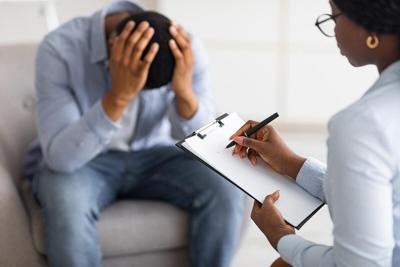
Talk therapy can effectively help stroke survivors with depression or anxiety
About half of stroke patients recovered from their mood disorder following talk therapy
For example, 7 in 10 experienced significant improvements
WEDNESDAY, June 18, 2025 (HealthDay News) — Talk therapy can help stroke survivors who are in the throes of depression or anxiety, a new study says.
About half of patients (49%) fully recovered from a post-stroke mood disorder after participating in talk psychotherapy, researchers reported recently in the journal Nature Mental Health.
Overall, 71% of stroke survivors experienced a significant improvement in symptoms of depression or anxiety through talk therapy, results show.
“We also found that the sooner stroke survivors begin talking therapy, the better the outcomes,” lead author Jae Won Suh, a mental health research fellow with University College London in the U.K., said in a news release.
“It is essential for general practitioners and other clinicians working with stroke survivors to screen for depression and anxiety symptoms and refer patients for psychological therapy as early as possible,” she added.
It’s estimated that depression affects 1 in 3 stroke survivors, and anxiety more than 1 in 4, researchers said in background notes. Survivors have a doubled risk of depression and a quadrupled risk of anxiety in the first year after their stroke.
For the new study, researchers tracked data from all 1.9 million patients who attended NHS Talking Therapies for Anxiety and Depression services in England between 2012 and 2019, including nearly 7,600 stroke survivors.
The free National Health Service program offers cognitive-behavioral therapy and counseling for U.K. residents with mood disorders, delivered either face-to-face or online in groups or one-on-one.






The participants’ symptoms of depression and anxiety were tracked using validated psychiatric questionnaires.
On average, stroke patients who received talk therapy experienced a large reduction in anxiety symptoms, as well as a moderate reduction in depression and symptoms of functional impairment — an inability to work, manage a home, maintain social connections or partake in leisure activities.
Results also showed that patients who started talk therapy a year or more after their stroke were less likely to recover than those who started within six months of a stroke.
“The worse outcomes for stroke survivors compared to those who had not had a stroke suggest the importance of mental health clinicians receiving more training on treating people with long term conditions, including those with cognitive impairments, sensory loss and complex physical health issues,” senior researcher Joshua Stott, a professor of aging and clinical psychology at University College London, said in a news release.
“Investing in such training will improve both mental and physical health outcomes for thousands of patients,” Stott added.
More information
The American Stroke Association has more on the emotional and behavioral effects of stroke.
SOURCES: University College London, news release, June 5, 2025; Nature Mental Health, June 5, 2025
What This Means For You
People who’ve had a stroke should consider talk therapy as soon as possible if they show signs of depression or anxiety.
(0) comments
Welcome to the discussion.
Log In
Keep it Clean. Please avoid obscene, vulgar, lewd, racist or sexually-oriented language.
PLEASE TURN OFF YOUR CAPS LOCK.
Don't Threaten. Threats of harming another person will not be tolerated.
Be Truthful. Don't knowingly lie about anyone or anything.
Be Nice. No racism, sexism or any sort of -ism that is degrading to another person.
Be Proactive. Use the 'Report' link on each comment to let us know of abusive posts.
Share with Us. We'd love to hear eyewitness accounts, the history behind an article.