WASHINGTON — Alabama farming leaders are praising the new Farm Bill, which the U.S. House Agriculture Committee will begin considering this week.
The 800-plus page legislation outlining farming and nutrition policy for the next several years has been highly anticipated, as Congress has not passed a long-term bill since 2018.
“It’s really the American consumer that’s reaping the rewards of the Farm Bill, because we still have the safest, most abundant food supply in the world and the most affordable,” Mitt Walker with Alabama Farmers Federation told Alabama Daily News. “So the Farm Bill policies allow for that to happen, and allow us to be able to feed and clothe and fuel ourselves as a country.”
The Republican-led Farm Bill, which was released earlier this month, builds on the farming provisions, such as raising reference prices, included in the One Big Beautiful Bill Act. President Donald Trump signed the law in July. But lawmakers have yet to tackle many of the other priorities typically included in a full farming measure. That’s where the new Farm Bill comes in.
“There is a lot left to do,” Walker told ADN.
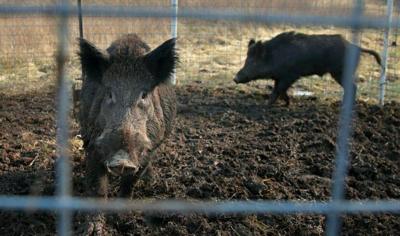
For Alabama, the legislation makes the feral swine eradication and control program permanent, which Walker said is a “big deal” for the state that is reeling from swine damage.
The Farm Bill provides support and funding for research at land-grant institutions, which in Alabama includes Auburn University, Tuskegee University and Alabama A&M.
It also increases funding for research on the mechanization and automation of specialty crop production, which could help streamline the process when fewer workers are available.
“This is kind of taking a look at the lack of the labor force out there and doing more to mechanize and automate specialty crop production, fruits and vegetables,” Walker said. “That’s a positive thing.”
Under the new measure, funding for the Foreign Market Development Program, which helps promote U.S. agricultural products overseas, is doubled, Walker said. Those partnerships can help create new markets for farmers.
“Having increased funding and interest in getting new trade deals established, I think it will be helpful for us as well,” Walker told ADN.
Alabama Agriculture Commissioner Rick Pate said he would have liked to see year-round E15 sales included in the measure.
“We didn’t get…any mention of the E15, (which is) the biodiesel fuel that’s got more corn in it. And so we were expecting to see that… just to help our corn farmers,” Pate told ADN.






Pate added that the Farm Bill also does not restart the Local Food Purchase Assistance Cooperative Agreement Program, which provided fresh, locally grown food to organizations in the state, such as food banks. The Trump administration cancelled the program last year. Alabama had previously received about $15 million over three years.
Additionally, the legislation expands the Senior Farmers’ Market Nutrition Program to include pecans, which will boost Alabama’s pecan farmers, Pate said.
But the Farm Bill also includes more controversial provisions that could make it difficult for the legislation to gain support from both sides of the aisle and pass the House and Senate.
The top Democrat on the House Agriculture Committee, Rep. Angie Craig, D-MN, already said she was opposed to the current measure, because it included “poison pills” that fail “to meet the moment.”
Tucked into the Farm Bill is a repeal of Proposition 12, a 2018 California mandate that dictates strict space requirements for breeding pigs, veal calves and egg-laying hens. The rule applies to any producer who wants to sell their products in California. The provision in the proposed legislation would restrict the mandate to livestock producers specifically located in a state or local jurisdiction that has a mandate.
“I think it’s an important provision, even though right now it applies to veal and pork and things like that,” Walker told ADN. “If something like that ever passed, dealing with the broiler industry, for example, that would be a huge deal for Alabama.”
But the effort to overturn Prop 12 has drawn the ire of animal rights groups. Animal Wellness Action called the Farm Bill “not a serious legislative proposal” that would overturn the will of California voters, who approved the “measures to halt the use of immobilizing crates for pigs.”
The bill would also give the Environmental Protection Agency sole authority to regulate pesticide labeling, restricting states’ abilities to alter or create their own labeling standards.
The Secretary of Agriculture would be added to the Committee on Foreign Investment in the United States as part of the bill. The committee oversees the national security impacts of foreign investment in the country.
House Republicans also added provisions in the legislation to increase support for new and young farmers by updating loan limits.
Overall, Walker and Mitt said the Farm Bill provides a sense of stability for farmers over the next few years, which is hard to find in an otherwise unpredictable industry shaped by factors like weather, pests and foreign markets.
“As (farmers) go into (their) third year of planting a crop with no idea of what a Farm Bill may or may not look like, that’s nerve-racking,” Walker said. “These farmers depend on the programs in the Farm Bill.”



(0) comments
Welcome to the discussion.
Log In
Keep it Clean. Please avoid obscene, vulgar, lewd, racist or sexually-oriented language.
PLEASE TURN OFF YOUR CAPS LOCK.
Don't Threaten. Threats of harming another person will not be tolerated.
Be Truthful. Don't knowingly lie about anyone or anything.
Be Nice. No racism, sexism or any sort of -ism that is degrading to another person.
Be Proactive. Use the 'Report' link on each comment to let us know of abusive posts.
Share with Us. We'd love to hear eyewitness accounts, the history behind an article.