On a cool Friday evening, Jan. 31, 2025, a disagreement among a group of young men inside the Selma Walmart spilled out into the parking lot. The shots that followed didn't just damage vehicles; they took the life of Marcus Martin, 40, a gifted musician and a cornerstone of his church.
Martin was an innocent bystander, waiting for his mother to finish her errands. In the aftermath, then-Mayor James Perkins Jr. shared the community's sorrow over a life so needlessly lost.
Martin was an adult, but his death points to a larger danger closing in on Selma's younger residents. The community is too often forced to mourn teenagers lost to the streets — among them 16-year-old Au'Terrious "Bug" Walter, whose life ended near Citizens Parkway on a Wednesday night, Aug. 14, 2024, and a 15-year-old boy also killed that summer on Race Street.
At the funerals, the distinction between a target and a bystander loses its meaning; the grief is identical and absolute. These are not lives that should have ended, but sons and daughters — many only recently old enough to drive — caught in the dangerous gap between the afternoon school bell and the growing fear that the town they love lacks the spaces to keep them safe.
Today, Selma faces a fresh set of challenges. Data from the Annie E. Casey Foundation KIDS COUNT Data Center indicates that Alabama's juvenile violent crime court petition rate stood at 3.7 per 1,000 youth aged 10-17 in 2024. Statistics from VOICES for Alabama's Children, featured on the KIDS COUNT platform, report a total of 1,939 juvenile violent crime court petitions across the state that same year.
Figures specific to Dallas County underscore the severity of the local dilemma. In 2023, the county documented 20 juvenile violent crime offenses, a rate of 4.89 per 1,000 youth. That metric escalated notably in 2024 to 26 incidents — or 6.60 per 1,000 youth — pointing to a troubling rise in regional instability.
This raises a critical question: how many young lives has violence claimed in Selma recently? A definitive figure remains elusive — not due to an absence of loss, but because the record-keeping infrastructure is fundamentally compromised. Cases remain classified as unsolved, witnesses hesitate to come forward and county-level records frequently fail to reach state databases.
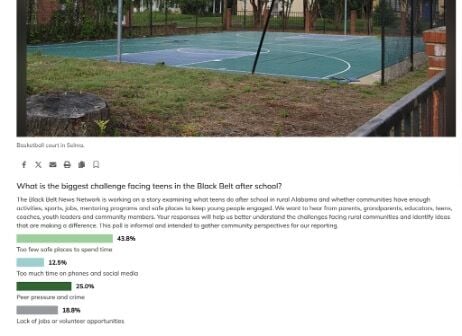
Data gathered by Black Belt News Network reveals a troubling landscape for local teenagers once the school day ends. In a recent survey asking parents to name their biggest concern for their children's future, nearly 44% pointed to a lack of safe places. A quarter highlighted the dangers of peer influence and local crime, while 19% named the shortage of jobs and service roles. Another 13% pointed to social media and phones. Combined, the two groups most worried about safe spaces and structured opportunities make up more than 60 percent of respondents — all crying out for the same thing: somewhere productive and safe for their youth to be.
Guardians of Local Legacy
Among the dedicated figures steering the community is Angela Benjamin, a former member of the Selma City Council and a prominent leader within Foot Soldiers Park. The park is one of several organizations striving to provide meaningful engagement for the town's youth, working to fill the empty time of the after-school hours. That impact was on display firsthand when Benjamin introduced me to a group of local teenagers focused on their futures. Their dreams were diverse, ranging from becoming lawyers and politicians to pursuing careers in the trades. One young man has started his own business to solve a problem he had identified and began reinvesting in his community.
Jaden Kim, 15, part of the Hatcher family that runs the well-known Lannie's Bar-B-Que in Selma, said residents need help with poverty and with reshaping the image that Selma is dangerous, or bad, or has "nothing but guns."
"I just wish people here could see that there is a light at the end of the tunnel, even if you can't see it. People are distracted by the shadow over Selma so much right now. We need to pull out the sun for a minute and we can turn it around. We need to pour more into the community, not take from it."
Kim said this while attending a summer academic camp through Foot Soldiers Park.
For many students here, high school sports provide an afternoon sanctuary. These programs offer more than just a game; they provide dedicated coaches who teach respect, responsibility and the reality that hard work pays off. Yet sports are not a fit for every child. This is precisely why academic camps and after-school enrichment programs are so vital: They ensure that all students, regardless of their interests, have a structured and productive path forward.
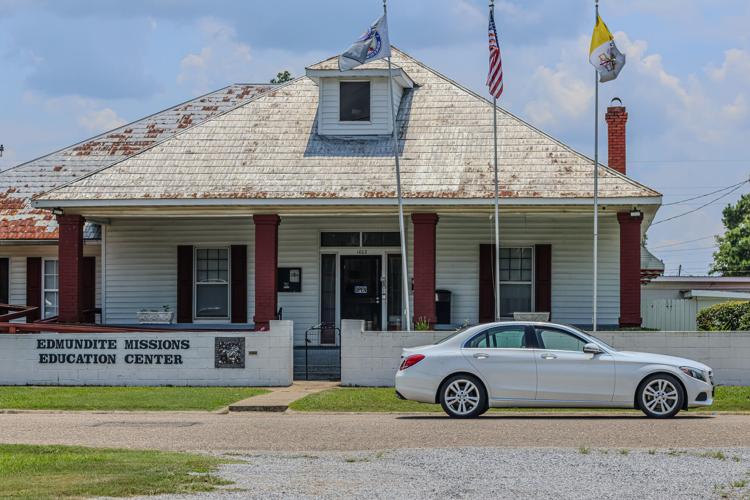
This mission forms the bridge connecting the historic march of 1965 to the modern crises facing Selma's teenagers in 2026. The same community that birthed the foot soldiers now struggles to sustain a simple band program for their descendants — a reality Benjamin witnesses with sad understanding. While she acknowledges the presence of available resources like the Edmundite Missions center, the local YMCA and the programs offered by her own organization, she said she is acutely aware of the barriers that prevent many students from reaching them. Often the obstacle is as simple as a lack of transportation because a parent is stuck attending other obligations.
"Many schools are cutting programs like art, choir and band," Benjamin noted, identifying the very sanctuaries that offer restless youth a sense of belonging and a reason to remain anchored to something positive.
Inside the room where it's working
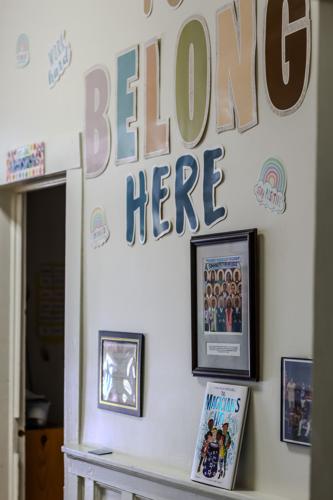
The Edmundite Missions Community Learning Center is home to the New Possibilities Youth Program, where staff offer local students homework help, hot meals, life-skills classes and paid internships.
The program is far more than an academic bridge; it is a safe place where students get homework help along with real life skills and a stake in their community. Accountability and belonging are built through shared family meals and events. Classes run from cooking and math to history and reading.
Beyond the classroom, students tend a community garden and take regular trips, including weekly library visits where every student can check out two books of their choosing.
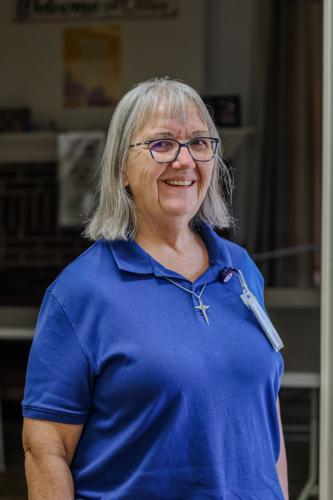
"We provide a warm, nutritious meal every single day," she explained.
She called the service a lifeline in a city where, by her account, nearly half the families they serve live in poverty and many more face daily food insecurity. Census figures put Selma's overall poverty rate at 30.8%, roughly double the national average. The need she describes is not abstract. This commitment to basic nutrition, she said, is as vital today as it was when the program began in 1937.
Every instructor at the center makes a deliberate effort to build strong bonds with their students. They use simple board games to teach problem-solving and offer a compassionate ear to those going through something hard at home. A professional artist visits twice a week to get the students making things. As Sister Mary noted, while many other local options function merely as supervision to keep teenagers off the streets, the Edmundite Missions invests in the teenagers themselves.
Asked what real difference the work makes, Sister Mary pointed to the previous year's graduating class as proof. Among the top 20 students at Selma High School, she said, nearly everyone had at some point taken a course within their organization.Those young men and women are now headed to four-year universities on full scholarships earned through their own work.
Notably, both the valedictorian and salutatorian emerged from the very halls of this program.
The landscape in Selma is beginning to transform as more parents actively seek out these sources of local support. That shift is evident in the growing reach of the Edmundite Missions, which has already opened its doors to more than 25 new students since the start of the year.
Operating as a nonprofit Catholic charity, the Edmundite Missions provides these essential youth programs at no cost to the families of Selma and the surrounding Black Belt region. Their work remains an act of community kindness, sustained entirely by the generosity of donors who recognize the profound needs of this community.
Challenges and struggles
Even as the local academic framework fights to remain viable, a few devoted programs continue to bridge the divide, relying on the town's involvement and ongoing assistance. One notable example was the Best Buy Teen Tech Center at Wallace Community College in Selma, which was forced to permanently shut down on April 30, 2026, once its financial backing expired. Beneath these structural hurdles, however, lies a deeper, more unsettling question. During a recent conversation near the intersection of Water Avenue and Broad Street, Mayor Johnny Moss III reflected on that very challenge.
"Years ago, the local skate park was a central hub where kids and adults gathered together. Yet, after multiple altercations broke out between teens over petty disputes, the business owner felt compelled to shut it down to protect the youth of our community."
The mayor's account highlights a complex predicament: who bears the responsibility when conflict erupts inside a space intended as a safe haven? It is easy to write off these clashes as a failing on the part of the youth — a narrative of young people squandering their opportunities. But broader studies into juvenile altercations point to a very different root cause. Rather than reflecting an inherent flaw in the teenagers, these incidents signal an unmet fundamental need.
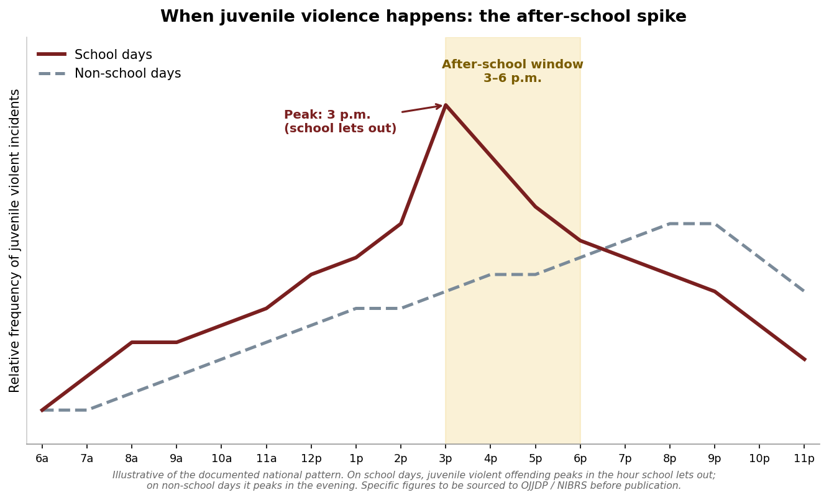
National data highlights a consistent and clear pattern. Outbreaks of youth violence are far from random across the day; instead, they cluster heavily during the vulnerable window right after school dismisses and before working parents return home. On school days, these incidents peak at dismissal and stay elevated into the early evening. On weekends and holidays, that afternoon surge disappears, with incidents shifting into the late evening. The disparity underscores that the underlying driver is not the teens themselves, but the lack of structured supervision during those pivotal hours from 3 to 6 p.m.






Consider the skating rink within this context. It provided a space for a crowd of teenagers in the late afternoon, but lacked the necessary structure or adult presence. Essentially, it concentrated a group of young people into the exact conditions and timeframe that data identifies as highest-risk.
Those fights were not proof of a unique aggression within Selma's youth, but a validation of what sociologists have long understood: merely offering a gathering space, without intentional engagement, does not stop conflict. Often it makes it worse.
That lack of structure is the defining difference between programs that fail and those that truly empower. Researchers advocate for the "SAFE" standard — programming that is sequenced, active, focused and explicit. Success is found where mentors know every child's name and where there is a clear purpose beyond merely passing time.
When those elements are present, the results are life-changing. Chicago's Becoming a Man initiative, which connects young men with dedicated mentors during these hours, reduced participants' violent-crime involvement by nearly 50 percent. Los Angeles' LA's BEST program has kept more than 90 percent of its most active participants clear of the juvenile justice system.
However, addressing the immediate after-school hours only tackles a symptom of a far more deeply rooted challenge. Ultimately, what holds Selma back is the pervasive, chronic poverty entrenched throughout the entire community. Selma sits on the precarious edge of a severe economic crisis.
According to a 2025 study released by The University of Alabama's Education Policy Center, 33.2 percent of Black residents in the state's historic Black Belt region live below the federal poverty line. In stark contrast, only 12 percent of white residents in the same region face similar economic hardship. What makes the disparity even more alarming is the trajectory. While Alabama's statewide poverty rate has steadily fallen following the pandemic, the poverty rate across the Black Belt has actually climbed during the same period.
Tuskegee University sociologist Dr. Andrew Zekeri believes he understands the mechanics driving that divergence. Dr. Zekeri has long argued that economic distress of this scale is fundamentally structural — built into the systemic wiring of depressed rural job markets, rather than stemming from any flaw in the character, motivation or values of the individuals living within them. Consequently, community initiatives or policy efforts that attempt to fix poverty by focusing solely on altering the personal habits, behaviors, or mindsets of low-income residents are bound to fail. As Dr. Zekeri writes, real and lasting transformation is impossible without first committing to deep, structural revision of the surrounding economic infrastructure.
A town that refuses to fold
And yet, knowing all of that, the people of Selma have refused to stop building.
That refusal is the truest thing about this town. Where budgets ran dry, individuals reached into their own pockets. Selma Police Officer Louis Adkins spent years processing teenagers at the Dallas County Jail, and in his free time he began asking them the same question over and over: why are you here? "The response was consistent," he recalled. "It was, 'I didn't have anything else to do.'" So he bought the old Candy Factory building and set out to build the Laser Dungeon Youth Center — laser tag, go-karts, and a space where officers and teenagers could know each other as something other than adversaries. Then the January 2023 tornado tore the building apart. Adkins secured a federal disaster loan to try and keep going.
Just like Sister Mary and the Edmundite staff, serving a hot meal to teenagers who might not get another meal that day. Or Angela Benjamin, fighting to point the next generation of lawyers and leaders toward something bigger than the shadow over their town. Parents working themselves to exhaustion, then doing their own research to find a program worth driving their child to. This is a community that has been handed every reason to give up and has declined, over and over, to take it.
What it would take
None of them can carry it alone, and they shouldn't have to.
The path forward isn't a mystery, and it doesn't begin with a miracle. It begins with a decision — by the people of Alabama and the leaders who represent them — to treat Selma's teenagers as an investment instead of a headline.
That means reinvesting in the local economy so the paychecks come back and the tax base can hold a program open past the end of a grant. It means rebuilding the infrastructure that disinvestment stripped away and closing the transportation gap that keeps a willing student from ever reaching an open door.
And most immediately, it means pouring real support into the organizations already doing the work — the Edmundite Missions, Foot Soldiers Park, the coaches, camps and mentors who run entirely on donated dollars and borrowed time.
These programs survive on donations and volunteers. They need mentors who will learn a teenager's name, professionals who will show a young person what a career actually looks like and neighbors willing to give a few hours to the after-school window where everything is decided. The difference between a locked door and an open one is often just one more adult willing to stand in it.
Pull out the sun
Which brings it back to a 15-year-old at a local summer youth program, already building a business to reinvest in a town most people only encounter in warnings. Who said, "People are distracted by the shadow over Selma right now. We need to pull out the sun for a minute and show them the light. We need to pour more into the community, not take from it."
He is right, and he is not asking for pity. He is asking for the same thing the foot soldiers asked for on that bridge 61 years ago — not to be saved, but to be given a fair chance to save themselves. Selma's teenagers were never the problem to be solved. They are, and have always been, the reason to do the work.
Whether they find a locked door or an open one is not up to fate.
It's up to us.
Nick Allen is a journalism student at Auburn University working as an intern with the Selma Sun/Black Belt News Network.
Editing assistance provided by Joan Harrell, lecturer in Auburn University's School of Communication and Journalism, Director of Strategic Initiatives and Programs in the College of Liberal Arts Dean's Office and core affiliate faculty in African American and Africana Studies.
(0) comments
Welcome to the discussion.
Log In
Keep it Clean. Please avoid obscene, vulgar, lewd, racist or sexually-oriented language.
PLEASE TURN OFF YOUR CAPS LOCK.
Don't Threaten. Threats of harming another person will not be tolerated.
Be Truthful. Don't knowingly lie about anyone or anything.
Be Nice. No racism, sexism or any sort of -ism that is degrading to another person.
Be Proactive. Use the 'Report' link on each comment to let us know of abusive posts.
Share with Us. We'd love to hear eyewitness accounts, the history behind an article.