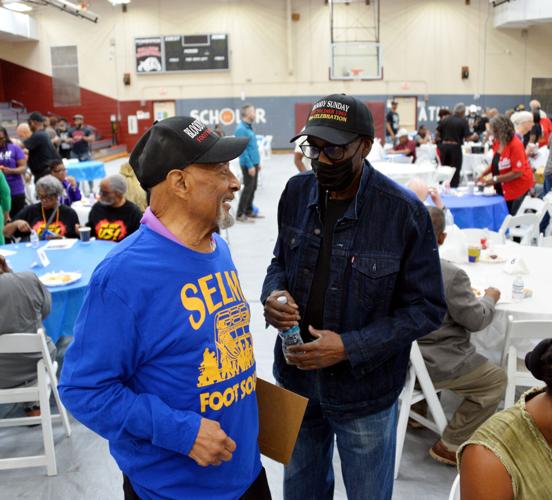
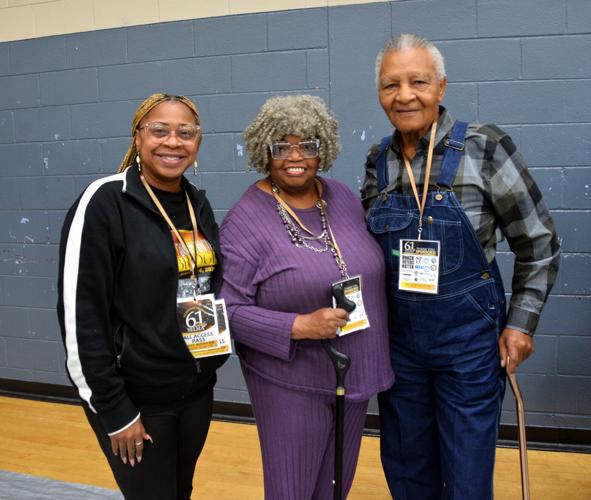
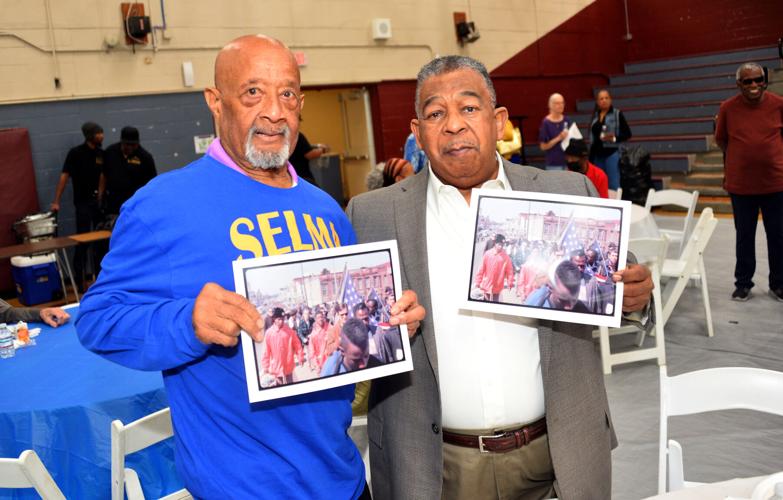
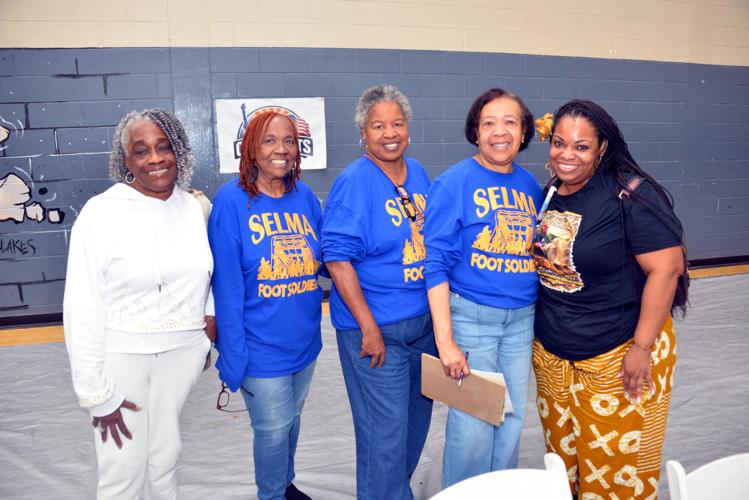

The annual Foot Soldiers Breakfast on Saturday – a reunion for alumni of the Selma civil rights movement – had a new location and new leadership this year.
Foot soldiers gathered at RB Hudson this year, which is now a middle school, but in 1965 it was the segregated Black high school in Selma. It was also where where many teen protesters first heard about and joined the movement, many recruited by Bernard LaFayette who passed away on Thursday.
The breakfast also included honoring 10 original foot soldiers and giving special awards to three others.
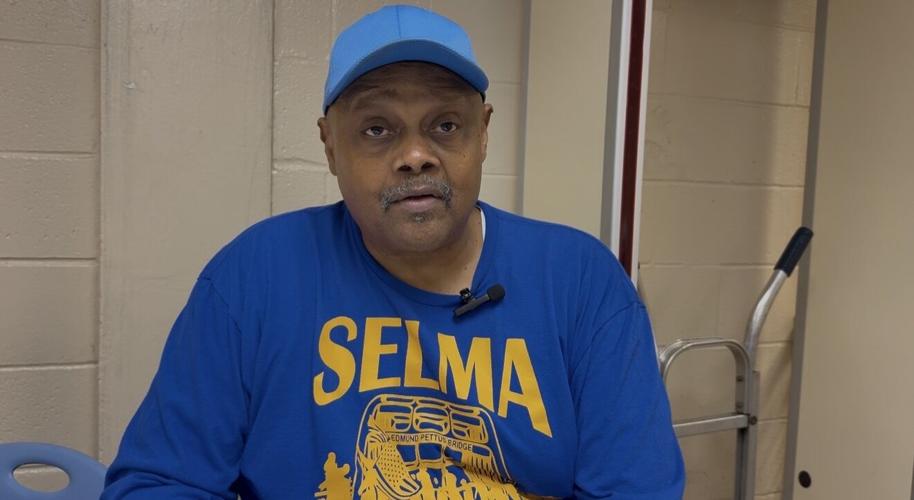
Charles Mauldin, civil rights leader who founded the Foot Soldiers Breakfast 21 years ago in conjunction with the Selma Bridge Crossing Jubilee, handed the job over to a “younger” foot soldier, Kirk Carrington, who was in seventh grade when he marched on Bloody Sunday in 1965.
Carrington, who is now 75, said it is key to have the event at RB Hudson because it is ground zero for the youth protest movement.
“This is where we started, when we started our marching during the Civil Rights era,” Carrington said, waving his hand from the hallway to the gymnasium. “This is the school where it belongs.
Mauldin now lives in Birmingham and said it was better to have a Selma resident in charge. But he added the breakfast needs to continue as a connection for Selma natives who put their lives in danger 61 years ago to fight for equal voting rights. Also because many protesters are aging and passing away, with several key civil rights leaders dying since December, including Selma’s Joanne Bland who launched Foot Soldiers Park at the spot where protesters lined up by Brown Chapel and GWC Homes before Bloody Sunday. The site is designed to be an education center.
Besides LaFayette and Bland, the movement lost Bland’s sister, Lynda Lowery in December and Rev. Jesse Jackson two days after Bland.
“We're kind of losing a bit of our foot soldiers, so this is important to have an event like this,” Mauldin said. “Jesse went, Joanne went, Bernard went, all very close to each other. They’re traumatic losses, but like we'll continue.”
Mauldin added, “We’ll always memorialize them. … They'll never be forgotten.”
Foot soldiers were recognized on Saturday, including Chapman Smith, Averette Woodson, George James, Dianne Harris, Doris T. Cox, Roosevelt Goldsby, Bernard LaFayette Jr., Tommy Jones, Reginald E. Moore and Call to Men Inc.
The Bridge of Hope award, which is a Selma ambassador inaugural award went to Bloody Sunday foot soldiers Ruth Anthony Brown and Kirk Carrington and Shelby County Commissioner Henri E. Brooks, a Memphis sanitation strike foot soldier.
Carrington says RB Hudson has historical meaning since the student body played a powerful role in the Civil Rights Movement.
“We had over 800-900 students here,” he said. “And every one of them was involved — the whole school.”
Carrington was just a seventh grader when he joined the youth movement that helped fuel Selma’s demonstrations. The youth movement gained momentum after LaFayette arrived in Selma in 1963 to help organize nonviolent protests. Carrington said local students quickly embraced the effort.
“He’s the one who brought it to us,” Carrington said. “We just took his lead and followed him.”
By March 7, 1965 — the day known as Bloody Sunday — hundreds of students were part of the crowd marching toward the Edmund Pettus Bridge.




Carrington was among them, walking in a line of demonstrators that stretched nearly back to Brown Chapel AME Church.
“There were about 600 students out there,” he recalled. “We were lined up two by two.”
He never made it onto the bridge that day, but he and others close behind could see what was happening.
“We could see the smoke and what they were doing,” Carrington said. “We thought they were killing them on the bridge. But we found out later it was tear gas.”
Even witnessing the violence didn’t deter the young protesters.
“They beat us up, but they didn’t tell us to run,” Carrington said. “All they did was slow us down.”
Carrington later joined the successful Selma-to-Montgomery march weeks later, walking as far as he could along the route.
“I went about 20 miles,” he said. “That’s as far as I could go.”
Rain and worn-out shoes eventually forced the 14-year-old marcher to stop.
Unlike some young protesters whose parents feared retaliation from employers, Carrington said his family stood firmly behind the movement.
“My parents were very supportive,” he said. “I had two older brothers marching too. We were all in it together.”
Many adults initially hesitated to join demonstrations because they feared losing their jobs, Carrington said. But by 1965, the movement had grown so strong that parents, teachers and other community members joined students in the streets.
Today, Carrington worries about the passing of those who lived through those historic moments.
“We’re starting to fade away,” he said. “We’re losing them.”
That’s why he believes events like the Foot Soldiers Breakfast matter now more than ever.
By gathering each year to share memories and honor those who marched, Carrington hopes the legacy of Selma’s young activists will continue to inspire future generations.
“We’ll be right back here next year,” he said. “And it’s going to be a good reunion — a big reunion for all of us.”



(0) comments
Welcome to the discussion.
Log In
Keep it Clean. Please avoid obscene, vulgar, lewd, racist or sexually-oriented language.
PLEASE TURN OFF YOUR CAPS LOCK.
Don't Threaten. Threats of harming another person will not be tolerated.
Be Truthful. Don't knowingly lie about anyone or anything.
Be Nice. No racism, sexism or any sort of -ism that is degrading to another person.
Be Proactive. Use the 'Report' link on each comment to let us know of abusive posts.
Share with Us. We'd love to hear eyewitness accounts, the history behind an article.