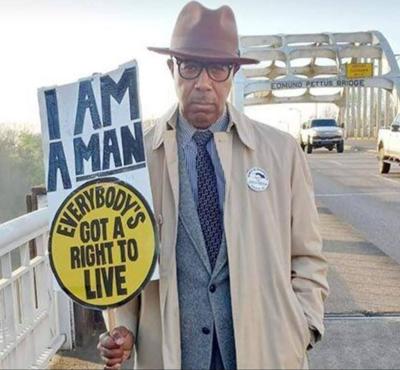

The second annual Stones-in-Selma awards ceremony will bring a two-day slate of tributes, history and calls to renewed action to Selma this week as part of the 61st Bridge Crossing Jubilee.
Organized by the MA’&9 MustardSeeds Foundation and Memphis “Foot” Man, whose real name is Stanley Campbell. The event is designed to honor Civil Rights foot soldiers while launching a broader movement focused on unity, economic empowerment and what organizers describe as “rebooting Black Wall Street across America.”
The celebration begins Friday evening, March 6 at 6 p.m. at the MK 87 Venue on Broad Street. The black-tie gala will feature the Preliminary Stone Awards 31 Ceremony and the inaugural Bridge of Hope Ambassador Inductee Ceremony. Selma Mayor Johnny Moss and City Councilman Michael Johnson are welcoming honorees and guests to the city as Selma becomes the center of a multicity remembrance stretching from Memphis to Tulsa.
A major focus of the weekend is the recognition of 11 original Bloody Sunday foot soldiers whose courage on March 7, 1965, helped push the nation toward the Voting Rights Act. Honorees include Chapman Smith, Averette Woodson, George James, Dianne Harris, Doris T. Cox, Roosevelt Goldsby, Bernard Lafayette Jr., Tommy Jones, Reginald E. Moore, Charles E. Mauldin and the organization Call to Men Inc., recognized for the John B. Smith Legacy.
Three additional honorees will receive the Bridge of Hope Ambassador Award: Ruth Anthony Brown, Kirk Carrington and Shelby County Commissioner Henri E. Brooks, whose activism spans both Selma and the Memphis sanitation strike. The ceremony will also honor three late Civil Rights pioneers: John Pearlie Pettaway, Claudette Colvin and Margaret Jones Moore.






Organizers say the event is not only a tribute but a call to action. The MA’&9 Foundation describes Stones-in-Selma as a movement rooted in remembrance but aimed at rebuilding. The mission emphasizes returning to the “Bridge of Hope” to plant new seeds of empowerment and to inspire a national effort to strengthen Black economic infrastructure. The foundation draws a direct line from the Greenwood District of Tulsa, once known as Black Wall Street, to Selma and Memphis, calling the three cities “sacred sites of greatness, sacrifice and resistance.”
Saturday’s program continues at noon at Brown Chapel AME Church, where Memphis “Foot” Man is calling mayors, legislators, clergy, activists and what he describes as “300 moral leaders” to gather for a moment of honoring, prayer, and a reenactment photo session. The gathering is intended to symbolize unity across generations and across cities that shaped the Civil Rights Movement.
The event materials highlight the historical ties between Selma’s 1965 voting rights march, Tulsa’s Greenwood District and Memphis’ 1968 sanitation strike. Organizers say these connections underscore a shared legacy of struggle and a shared responsibility to build forward. They describe the weekend as a chance to honor those who risked everything for freedom while recommitting to economic justice and community rebuilding.
The Stones-in-Selma weekend is open to residents, visitors, activists, students and anyone who wishes to honor the legacy of the foot soldiers.



(0) comments
Welcome to the discussion.
Log In
Keep it Clean. Please avoid obscene, vulgar, lewd, racist or sexually-oriented language.
PLEASE TURN OFF YOUR CAPS LOCK.
Don't Threaten. Threats of harming another person will not be tolerated.
Be Truthful. Don't knowingly lie about anyone or anything.
Be Nice. No racism, sexism or any sort of -ism that is degrading to another person.
Be Proactive. Use the 'Report' link on each comment to let us know of abusive posts.
Share with Us. We'd love to hear eyewitness accounts, the history behind an article.