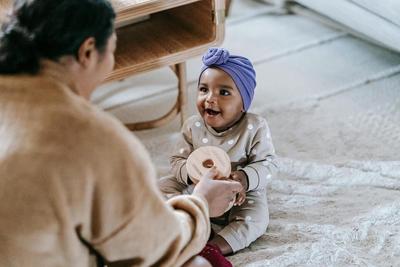

Statistically, a Black baby is almost three times more likely to die in Alabama than a white baby, according to an Alabama Department of Public Health report.
The ADPH reports statistics relating to infant mortality and maternity care every year. At the heart of the report is the infant mortality rate. The rate is the number of deaths per 1,000 live births, a statistic that helps experts compare outcomes in large and small communities.
For Black babies in Alabama in 2020, 12 babies in their first year of life per 1,000 births. For white babies, the rate was 4.3 deaths per 1,000 births.
The infant mortality rate for white and Black infants combined in Alabama is 6.7 deaths per 1,000 births for 2022 and 7.1 over 2020,2021 and 2022. There were 1,238 infant deaths over those three years.
That trend carries over at the countylevel. In Dallas County, the rate over three years (2020 through 2022, the last year figures are available) for all babies delivered in the county was 5.3 deaths per 1,000 births. Seven babies died in their first year of life in Dallas County over three years.
None of the babies who died were white, so the infant mortality rate for whites in Dallas County is zero over those three years. For Blacks, who represent more than 80% of the county’s population, the infant mortality rate is 6.7 deaths per 1,000 births.
Here are the infant mortality figures for some other Black Belt counties:
Perry County, overall rate of 25.3 (two deaths) for 2022 and 16.8 over three years (four deaths).All of the deaths were to Black infants.






Marengo County, overall rate of 9.2 (two deaths) for 2022 and 7.3 over three years (five deaths). Four of the five deaths were Black infants.
Wilcox County, overall rate of 8.8 (one death) for 2022 and 5.6 over three years (two deaths).
Lowndes County, overall rate of zero for 2022 and 14.1 over three years (five deaths). Three of the five deaths were white infants.
Access to medical care in the Black Belt continues to be an issue. From Montgomery County west, only Montgomery and Dallas counties have hospitals that deliver babies. The March of Dimes lists Wilcox, Sumter, Perry,Lowndes and Hale counties as “maternity care deserts,” which means the county is without a hospital that delivers babies. Bibb County is listed as having “low access” to maternity care.
The Alabama Department of Public Health report says that almost 54% of the women who gave birth in rural counties had no prenatal care, compared to about 46% of the mothers in urban areas. Access to care for expectant mothers improved in urban areas since 2020 but remains unchanged in rural areas like the Black Belt.
For good news, fewer new mothers report they smoked during pregnancy. Almost 11% said they smoked during pregnancy in 2013. Fewer than 5% said they smoked in 2022.
Fewer teenagers are giving birth. Teenagers accounted for 9.3% of the state’s births in 2012 compared to 6% in 2022.
The leading causes of infant deaths in 2022 were congenital malformations, deformations and chromosomal abnormalities; sudden infant death syndrome; and short gestation and low birth weight. These three causes accounted for 39% of infant deaths in 2022.


(0) comments
Welcome to the discussion.
Log In
Keep it Clean. Please avoid obscene, vulgar, lewd, racist or sexually-oriented language.
PLEASE TURN OFF YOUR CAPS LOCK.
Don't Threaten. Threats of harming another person will not be tolerated.
Be Truthful. Don't knowingly lie about anyone or anything.
Be Nice. No racism, sexism or any sort of -ism that is degrading to another person.
Be Proactive. Use the 'Report' link on each comment to let us know of abusive posts.
Share with Us. We'd love to hear eyewitness accounts, the history behind an article.