


Image Credit: Deposit Photos.
A passport can take travelers to some remarkably remote corners of the planet, but it cannot open every door. Around the world, islands, caves, military installations, Indigenous territories, religious sites and underground vaults remain closed to ordinary visitors.
The reasons vary. Some restrictions protect people who have chosen to remain isolated from the outside world. Others safeguard fragile ecosystems or ancient art, preserve sacred traditions, or keep valuable assets and national security operations away from public view.
In a few cases, travelers can get surprisingly close. You can drive the Nevada highway near Area 51, tour a meticulous recreation of France’s Lascaux cave or stand outside Norway’s famous seed vault. Crossing that final boundary is another matter.
Here are 15 fascinating places around the world that tourists cannot simply walk into, along with what travelers can see instead.
1. Area 51, Nevada
Few restricted places have inspired as much speculation as Area 51, the secretive military installation at Groom Lake in the Nevada desert.
For decades, UFO sightings and conspiracy theories helped turn the site into a fixture of American pop culture. The CIA has since confirmed a less extraterrestrial but still remarkable history. Groom Lake was selected in the 1950s as a secret testing site for the U-2 reconnaissance aircraft and later the A-12 OXCART, one of the fastest aircraft ever built. The CIA has also said high-altitude U-2 and OXCART flights accounted for many UFO reports during the 1950s and 1960s.
The installation itself remains strictly restricted, but the mystery has become part of Nevada tourism. State Route 375 has been officially nicknamed the Extraterrestrial Highway, and travelers can stop in the tiny community of Rachel before exploring the surrounding desert roads. Just do not ignore the warning signs near the military boundary.
2. Ilha da Queimada Grande, Brazil
Its nickname, Snake Island, is enough to keep many travelers away. Brazil’s Ilha da Queimada Grande sits off the coast of São Paulo state and is the only place in the world where the golden lancehead viper lives in the wild.
The island has inspired sensational claims online, including stories about thousands of snakes covering every square foot and venom capable of killing humans almost instantly. Researchers at Brazil’s Instituto Butantan say much of that mythology is exaggerated. The golden lancehead is venomous, but its venom is not dramatically more powerful than that of its mainland relative.
That does not make Queimada Grande a vacation destination. The island is not open to the general public, both because of the danger posed by the snakes and because the species itself requires protection. Scientists conduct carefully controlled research there.
Travelers heading along the São Paulo coast will have to admire this particular island from a considerable distance.
3. Qin Shi Huang’s Burial Chamber, China
Millions of travelers go to Xi’an to see the Terracotta Army, but the person those thousands of clay soldiers were created to protect remains hidden underground.
Qin Shi Huang became the first emperor of a unified China in 221 BCE. His enormous mausoleum complex covers dozens of square kilometers and contains hundreds of archaeological sites, including the famous pits filled with life-size warriors, horses and chariots. UNESCO says the complex was designed as a subterranean version of the emperor’s capital.
The emperor’s central burial chamber beneath the mound has never been excavated. Archaeologists have left it undisturbed in large part because exposing its contents could cause irreversible damage before preservation technology can protect what lies inside.
Visitors are hardly shortchanged. The Emperor Qinshihuang’s Mausoleum Site Museum includes the Terracotta Warriors pits and the archaeological park surrounding the emperor’s tomb. The sealed chamber beneath the mound, however, remains beyond reach.
4. The Original Lascaux Cave, France
The prehistoric animals painted across the walls of Lascaux have survived for thousands of years. Modern tourism nearly changed that.
The cave in southwestern France contains extraordinary Paleolithic paintings of horses, deer, cattle and other animals. After its discovery in 1940, Lascaux quickly became a popular attraction. The influx of visitors altered the cave’s delicate environment, contributing to the deterioration of the artwork.
France closed the original cave permanently to the public in 1963.
Travelers can still see what made Lascaux famous. Lascaux IV, the International rCenter for Cave Art near Montignac, includes a detailed reproduction of the original cave, allowing visitors to experience the paintings without endangering them.
It is one of the rare cases in which the inaccessible original and the visitor experience are only a short distance apart.

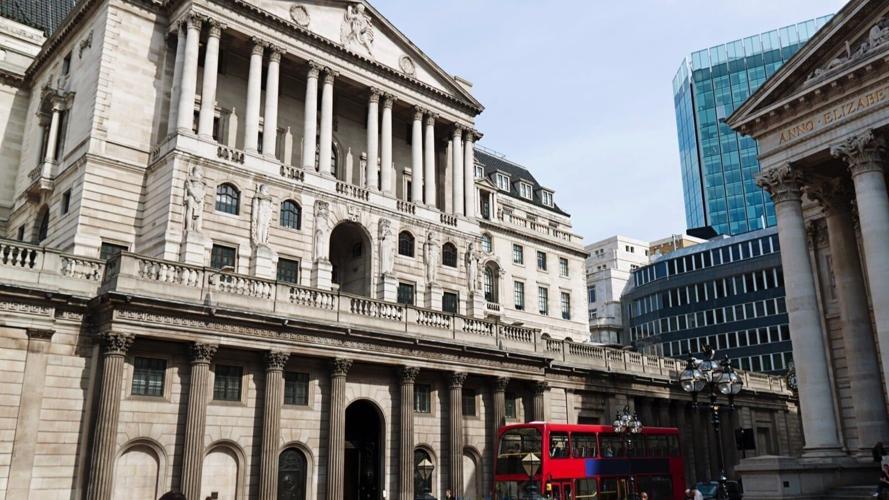
Bank of London. Image Credit: Deposit Photos.
5. The Bank of England Gold Vaults, London
Beneath the Bank of England sits an amount of gold difficult to picture until you see the numbers.
The bank says roughly 400,000 gold bars are stored in its underground vaults on behalf of the British government, foreign governments, central banks and financial institutions. A standard London Good Delivery bar weighs roughly 400 troy ounces, or about 13 kilograms.
Ordinary tourists will not be walking among them. Security around the vaults is understandably formidable.
There is, however, a far easier way to get your hands on some gold. The free Bank of England Museum allows visitors to try lifting a genuine gold bar secured inside a display case.
It is a clever compromise: you cannot enter one of London’s most closely guarded rooms, but you can find out exactly how heavy its contents are.
6. Vale do Javari, Brazil
Some places on this list are restricted to protect what is inside. In Brazil’s Vale do Javari, that protection is about people.
The Indigenous territory covers roughly 8.5 million hectares in the western Amazon near Brazil’s border with Peru. FUNAI, Brazil’s National Foundation of Indigenous Peoples, describes it as the country’s second-largest Indigenous territory and says it has one of the world’s greatest concentrations of Indigenous peoples living in voluntary isolation.
The region is home to several Indigenous peoples, including the Marubo, Matis, Kanamari, Kulina, and Matsés, as well as groups that have had little or no contact with wider society.
This is not simply a remote destination where tourists are discouraged from venturing. Parts of the territory require strict protection against unauthorized entry, illegal fishing, logging, mining and other outside pressures.
Brazil has begun supporting some Indigenous-led community tourism in appropriate areas, but current agreements specifically call for avoiding areas inhabited by isolated peoples.
7. North Sentinel Island, India
North Sentinel Island sits in the Bay of Bengal as part of India’s Andaman and Nicobar Islands. Its Indigenous inhabitants, the Sentinelese, have resisted sustained contact with outsiders for generations.
India’s policy is not to turn that isolation into a tourist attraction.
The entire island, along with the sea extending five kilometers from its high-water mark, has been designated a tribal reserve. The Indian government has described its approach as “eyes-on and hands-off,” intended to respect the Sentinelese way of life and protect the community from outside interference.
The restriction protects both visitors and the Sentinelese, who could be particularly vulnerable to diseases introduced from outside.
Travelers can visit other parts of the Andaman Islands, where beaches, rainforests and marine life have made the archipelago a popular destination. North Sentinel is not one of them, and that is precisely the point.
8. Surtsey, Iceland
Surtsey did not exist before 1963.
A volcanic eruption beneath the sea south of Iceland sent lava and ash above the water, creating a new island. Scientists immediately recognized a rare opportunity: here was a piece of land where they could watch plants, birds and other forms of life arrive with remarkably little human interference.
More than six decades later, access remains tightly controlled.
UNESCO says landing on Surtsey or diving near the island is prohibited except for approved research. Visitors cannot introduce plants, animals, seeds, soil or other organisms that could interfere with the natural colonization scientists have been documenting since the island appeared.






Surtsey is changing even without tourists. Coastal erosion has already reduced its original land area by about half, and UNESCO expects the process to continue.
Few places show quite so clearly why sometimes the best thing travelers can do is stay away.
9. The Chapel of the Ark of the Covenant, Ethiopia
Aksum is one of Ethiopia’s most important historic and religious cities, but its most famous treasure cannot be viewed by tourists.
Ethiopian Orthodox tradition holds that the biblical Ark of the Covenant is kept within the Chapel of the Tablet beside the Church of St. Mary of Zion. The claim has never been independently verified, and the Ark itself is not placed on public display. Ethiopia’s official tourism site describes the chapel as the place where tradition says the Ark now resides.
The relic is guarded according to a centuries-old religious tradition, with access restricted to its guardian.
There is plenty for travelers to see elsewhere in Aksum. The UNESCO World Heritage site contains monumental stelae, royal tombs, archaeological remains and churches dating to the era when the Aksumite Empire was one of the great powers of the ancient world.
Its most famous object, however, remains unseen.
10. The Vatican Apostolic Archive, Vatican City
The name alone once encouraged conspiracy theories. Until 2019, the Vatican Apostolic Archive was commonly known as the Vatican Secret Archive, although the Latin word secretum referred to something private or reserved rather than hidden in the modern sense.
Its scale is impressive. The Vatican says the archive’s collections span roughly 12 centuries, encompass more than 600 archival collections and occupy more than 85 kilometers of shelving. Some of those records are stored inside a two-story underground bunker beneath the Vatican Museums.
Tourists cannot add the archive to an afternoon itinerary after visiting the Sistine Chapel.
Access is reserved for qualified scholars conducting research. Applicants generally need at least a master’s degree or equivalent academic qualification and a letter of introduction from an accredited research institution or recognized scholar.
For everyone else, the Vatican Museums will have to suffice.
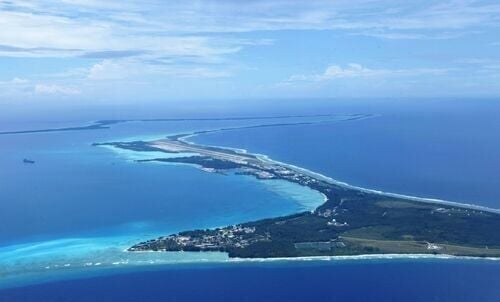
Aerial photo of Diego Garcia. Image Credit: Shutterstock/Kev1ar82
11. Diego Garcia, British Indian Ocean Territory
From the air, Diego Garcia looks like the sort of Indian Ocean atoll travelers might expect to find in a resort brochure. In reality, ordinary tourism is not allowed.
Diego Garcia is the largest island in the Chagos Archipelago and has long housed a strategically important joint British-American military facility.
Its history is also inseparable from the forced displacement of the Chagossian population from the archipelago during the 1960s and 1970s as the military facility was established.
The British Indian Ocean Territory Administration states plainly that the territory is not a tourist destination. Access requires advance permission; there are no commercial flights; and Diego Garcia itself is limited to people connected to the military facility or the territorial administration.
The restrictions became even tighter in 2026. As of March 31, the administration paused substantive consideration of most new entry-permit applications for the wider territory amid ongoing litigation, except in exceptional circumstances and for official access to Diego Garcia.
12. North Brother Island, New York City
You do not have to travel to a remote ocean to find an island closed to tourists. One sits in New York City’s East River.
North Brother Island has served several purposes since the 19th century, most famously as the site of Riverside Hospital, where patients with contagious diseases were isolated from the rest of the city. Mary Mallon, better known as Typhoid Mary, spent years confined there.
The hospital eventually closed, and vegetation reclaimed the abandoned buildings.
Today, North Brother and neighboring South Brother Island are managed as protected natural areas. New York City Parks lists both as not generally accessible to the public.
That leaves millions of New Yorkers remarkably close to an abandoned island they cannot simply visit. Researchers and other authorized visitors may occasionally receive permission, but there are no public ferries, admission tickets or sightseeing tours that put travelers ashore.
13. The Inner Sanctuary of Ise Jingu, Japan
Travelers are welcome at Ise Jingu. They simply cannot go all the way in.
The shrine complex in Japan’s Mie Prefecture consists of 125 shrines, with Naiku, the Inner Shrine, considered the most sacred site. It is dedicated to Amaterasu Omikami, the sun deity central to Shinto tradition.
Visitors cross the Uji Bridge and can walk deep into the shrine grounds, but the innermost portion of the main palace remains inaccessible. Ise Jingu states that visitors are not permitted to enter the courtyard of the Shogu, or main palace. Worshippers stop outside its inner barriers.
Even the view is deliberately limited. Japan’s national tourism organization notes that a curtain obscures much of the main structure and ordinary visitors are not meant to gaze directly inside.
The restriction does not diminish a visit. Exploring the surrounding shrine complex and nearby Oharaimachi district remains one of Japan’s most significant cultural experiences.
14. Fort Knox, Kentucky
There are gold vaults, and then there is Fort Knox.
The United States Bullion Depository in Kentucky received its first shipment of gold in 1937 and remains one of the world’s most famous secure facilities. According to the U.S. Mint, it currently holds more than 147 million fine troy ounces of gold, roughly half of the Treasury’s stored gold reserves.
The visitor policy could hardly be clearer.
“No visitors are permitted at the bullion depository,” the U.S. Mint states.
The vault has been opened to outsiders on exceptionally rare occasions. A group of journalists and members of Congress entered in 1974, and another official delegation visited in 2017. Those events were historical exceptions, not the beginning of a tour program.
Travelers interested in the U.S. Mint have an easier alternative: both the Philadelphia and Denver facilities conduct public tours.
Fort Knox keeps its gold, and its mystique, behind closed doors.
15. Svalbard Global Seed Vault, Norway
Carved into a mountainside above Longyearbyen in the Norwegian Arctic, the Svalbard Global Seed Vault was built as a safeguard for the world’s agricultural biodiversity.
The numbers are far larger than the “thousands of seeds” often cited in older descriptions. As of 2026, the vault holds 1,385,898 seed samples representing 6,536 species from 132 depositors.
The seeds are duplicates of collections held by gene banks around the world, creating a backup that could help restore important crop varieties if collections elsewhere are lost to war, natural disasters, equipment failures or other crises.
Only authorized personnel may enter the vault.
This is one restricted site where travelers can still get remarkably close. Guided tours from Longyearbyen stop outside its distinctive illuminated entrance, and Visit Svalbard lists tours operating throughout 2026. Visitors can take photographs and hear how the vault works, but the mountain doors stay closed.
For one of the world’s most inaccessible rooms, the view from outside is surprisingly easy to add to an Arctic vacation.



(0) comments
Welcome to the discussion.
Log In
Keep it Clean. Please avoid obscene, vulgar, lewd, racist or sexually-oriented language.
PLEASE TURN OFF YOUR CAPS LOCK.
Don't Threaten. Threats of harming another person will not be tolerated.
Be Truthful. Don't knowingly lie about anyone or anything.
Be Nice. No racism, sexism or any sort of -ism that is degrading to another person.
Be Proactive. Use the 'Report' link on each comment to let us know of abusive posts.
Share with Us. We'd love to hear eyewitness accounts, the history behind an article.