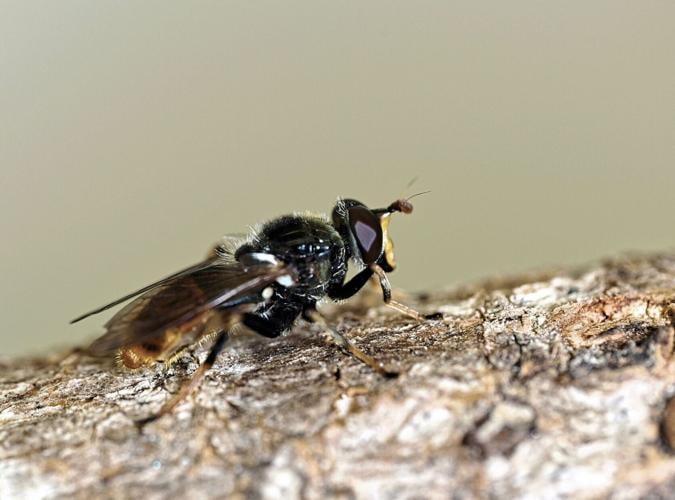
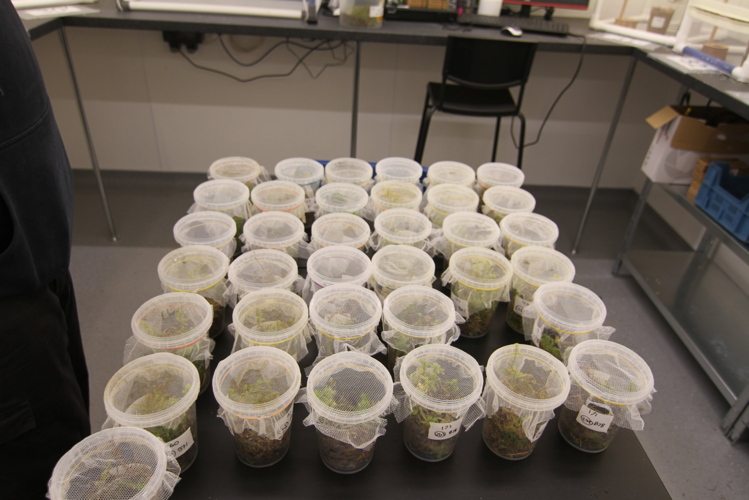

Tens of thousands of rare flies have been released into a national park in the Scottish Highlands. (Royal Zoological Society of Scotland via SWNS)
By Elizabeth Hunter
More than 30,000 of one of Britain’s rarest insects have been released into a national park.
The bugs have been put into the Cairngorms Wildlife Park by conservationists from the Royal Zoological Society of Scotland.
The pine hoverfly is one of Britain’s rarest insects and is Critically Endangered in Scotland - with one spotted in the wild in 2022 for the first time in a decade.
It depends on complex woodland habitats, which were once widespread in the UK but are now restricted to a few sites within the Cairngorms.'
The team braved high winds and hail for the landmark release, undertaken as part of the Rare Invertebrates in the Cairngorms (RIC) project and in collaboration with the Pine Hoverfly Steering Group.

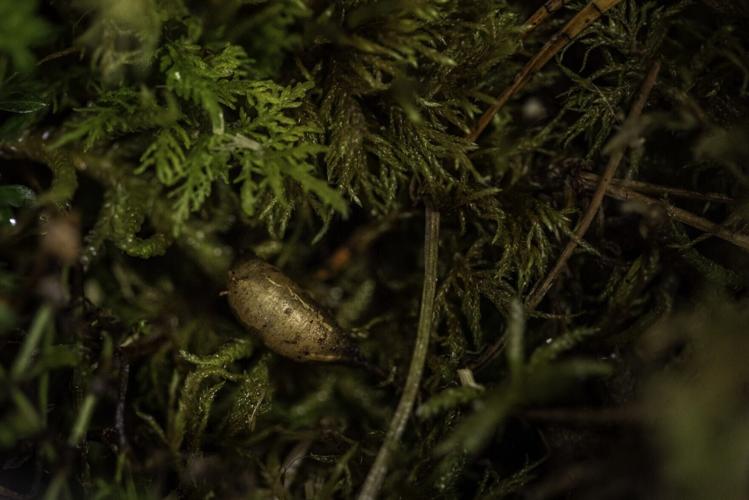
The release was part of a breeding program for pine hoverflies. (Royal Zoological Society of Scotland via SWNS)






RZSS field conservation manager Georgina Lindsay said: “The scale of our achievement really only struck me when we found out that 18,000 people live in the Cairngorms and we’ve now released almost twice as many flies!
“The reintroduction project is hugely important for the species, which is one of Britain’s rarest insects.
"This milestone is emblematic of so much hard work and dedication, and a tribute to collaborative work between organisations with a shared mission.”

(Royal Zoological Society of Scotland via SWNS)
Releases were conducted on land managed by the RSPB Scotland, Forestry and Land Scotland and Anagach Woods Trust.
RIC Project Officer Gen Tompkins said: “It’s fantastic to be celebrating this massive milestone.
"Alongside the large number of hoverflies released, it’s exciting that we are now starting to record more wild bred individuals at release sites and in new areas too.
“This would not be possible without a lot of hard work from project partners, volunteers and land managers restoring diverse and dynamic pine forests that include flowering trees and shrubs that pine hoverflies and other wildlife depend on.”

(0) comments
Welcome to the discussion.
Log In
Keep it Clean. Please avoid obscene, vulgar, lewd, racist or sexually-oriented language.
PLEASE TURN OFF YOUR CAPS LOCK.
Don't Threaten. Threats of harming another person will not be tolerated.
Be Truthful. Don't knowingly lie about anyone or anything.
Be Nice. No racism, sexism or any sort of -ism that is degrading to another person.
Be Proactive. Use the 'Report' link on each comment to let us know of abusive posts.
Share with Us. We'd love to hear eyewitness accounts, the history behind an article.