Tourists are increasingly looking for destinations that are sustainable and nature-based. Rustic Pathways predicts that eco-friendliness will be a top priority in the travel industry in 2025, with concerns for the environment high among travelers.
Travel writers at The Facts Institute deduced Namibia as the underrated spot travelers are looking for. On the southwest coast of Africa, this country is sparsely populated, with about 10 people per square mile. Yet, the country's 317,874 square miles of terrain is a haven for adventure and activity, with rolling hills, rocky plains, mighty sand dunes, and diamond-rich coastal deserts.
A Recognized Leader in Environmental Protection
The World Wide Fund of Nature (WWF) shared in a 2011 article that Namibia was “a conservation success story.” Namibia was the first country in the world to incorporate environmental protection into its constitution after gaining independence from South Africa in 1990. This gave rural communities the right to manage and sustainably utilize the land’s natural resources to their benefit.
Since establishing the National Community-Based Natural Resource Management (CBNRM) Programme in 1998, the initiative has expanded from just four conservancies to 86 conservancies and two resident associations by 2022. These programs have also enhanced governance and management across 46 community forests and 20 fishery reserves, benefiting local communities economically while preserving biodiversity.
State-protected areas have since grown to include about 17% of the land surface, as reported by Namibia’s Ministry of Environment Forestry and Tourism.
Tourism and Conservation: A Symbiotic Relationship
Tourism plays a crucial role in sustaining Namibia’s conservation efforts. Revenue generated from visitors is funneled back into local communities and environmental protection initiatives.
However, the fragility of this model became evident during the COVID-19 pandemic, when tourism came to a standstill. With a prolonged drought gripping the nation, rural communities lost about 90% of their income and faced economic hardship and food insecurity.
In response, the Conservation Relief, Recovery, and Resilience Facility (CRRRF), launched in May 2020 by the Ministry of Environment, Forestry, and Tourism (MEFT), provided critical support to ensure conservation work continued. The recovery trajectory appears promising, with tourist statistical reports showing that international tourist arrivals increased from 461,027 in 2022 to 863,872 in 2023.
Excluding neighboring African countries, American tourists ranked as its third-largest tourist market after Germany and the United Kingdom. Among U.S. visitors, game hunters represent a key segment of the market.
Unmissable Attractions in Namibia
Namibia's protected areas offer visitors a range of experiences that provide local immersion and outdoor exploration; key 2025 travel trends as emphasized in the Rustic Pathways report.
The Namib Desert Adventure Tours
Widely considered the oldest desert in the world, the Namib Desert is a favorite tourist destination. Namibia offers adventure opportunities for thrill-seekers, including quad biking, mountain biking, skydiving, and sandboarding across its stunning landscapes.
Skeleton Coast






Known for its eerie beauty, the Skeleton Coast gets its forbidding name from the shipwrecks and animal carcasses. The Atlantic Ocean and Benguela Current call for treacherous waters, and dense fog frequently shrouds the area. It’s home to many desert-adapted wildlife, including elephants, lions, and Cape fur seals.
Sossusvlei
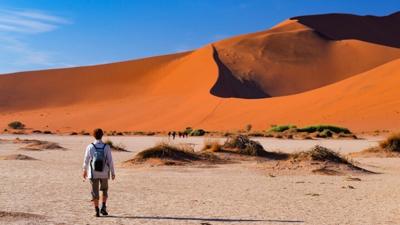
Home to the world-famous red sand dunes, Sossusvlei is a paradise for photographers and adventurers alike. Trekking towering dunes such as “Big Daddy” can take an hour, but the summit offers breathtaking views of the surrounding desert.
Fish River Canyon
The second-largest canyon in the world after the Grand Canyon, the Fish River Canyon is a marvel of rugged cliffs and meandering rivers, perfect for hiking and photography. Steep cracks in the rock, called faults, allow groundwater to rise to the surface, creating natural hot springs. The most famous of these is Ai-Ais, where the water reaches a steamy 140 degrees Fahrenheit.
Etosha National Park
One of Africa's largest game reserves, Etosha National Park offers world-class safaris with luxurious lodging. Visitors can spot iconic African wildlife around its sprawling salt pans and waterholes, such as zebra, wildebeest, rhino, cheetah, and giraffe.
Cultural Exploration
For those interested in cultural immersion, Namibia’s diverse ethnic groups, such as the San, Herero, Himba, and Oshiwambo people, provide a chance to learn about local traditions. Visitors can engage in meaningful cultural exchanges, gaining insights into the country's rich heritage.
Voluntourism
Namibia also caters to travelers seeking to make a positive impact. Through voluntourism, visitors can participate in conservation projects, community development initiatives, or social programs such as teaching, healthcare, or wildlife conservation. This enables tourists to gain some practical insights and understanding into the life of the people and make a positive contribution.
Green Accommodations Leading the Way
Namibia has embraced eco-friendly accommodations, with many lodges and resorts minimizing their environmental footprint. Properties adhering to ecotourism principles can earn an eco “flower” certification, signifying their commitment to sustainability. These lodges often feature solar power, water recycling systems, and locally sourced materials, offering travelers guilt-free luxury in harmony with nature.
Ambitions for a Sustainable Future
Namibia has an ambitious plan to reduce greenhouse gas (GHG) emissions by 91% by 2030 compared to a business-as-usual baseline over the 2015-2030 period. With one of the world’s highest potentials to harvest renewable energy, Namibia hopes to become Africa's sustainable energy capital. It is estimated that in 2030, the low-cost production of green hydrogen in Namibia will be economically competitive, only second to that of Chile.
Namibia is poised for growth. With expanding infrastructure, a strong commitment to sustainable tourism, and diverse attractions, the country offers a unique blend of eco-consciousness and adventure. As both its wildlife and communities flourish, Namibia has all the makings of a prime destination for environmentally minded travelers.
(0) comments
Welcome to the discussion.
Log In
Keep it Clean. Please avoid obscene, vulgar, lewd, racist or sexually-oriented language.
PLEASE TURN OFF YOUR CAPS LOCK.
Don't Threaten. Threats of harming another person will not be tolerated.
Be Truthful. Don't knowingly lie about anyone or anything.
Be Nice. No racism, sexism or any sort of -ism that is degrading to another person.
Be Proactive. Use the 'Report' link on each comment to let us know of abusive posts.
Share with Us. We'd love to hear eyewitness accounts, the history behind an article.