America’s fall color season begins in the mountains and northern states in September, then rolls south and downhill through October and into early November. The window at any single destination runs about one week, long enough to plan for and short enough to miss entirely if the timing is off. The 2026 forecast puts most destinations near their historical averages, giving travelers a reliable starting point for planning.
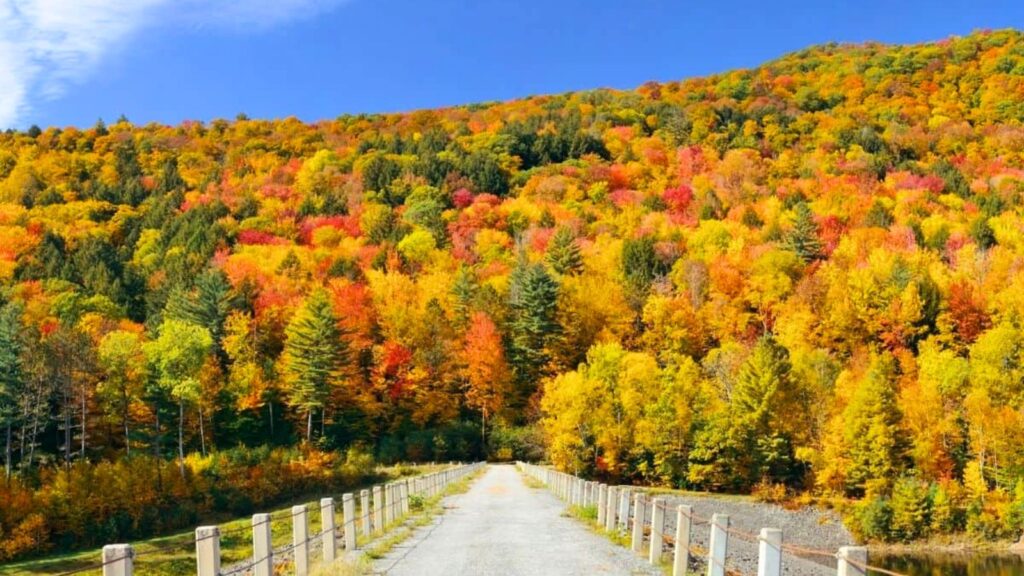
Fall color season progresses across the country from mid-September in the West and higher elevations through October and into early November. The wave begins in the far north and at high elevation, where shorter days and cooler temperatures trigger the change first, then moves steadily south and downhill.
A traveler in Vermont’s Northeast Kingdom and a traveler in the Great Smoky Mountains foothills may be working with very different calendars. Travelers who know where they fall in the wave turn the season from a guessing game into something they can actually plan around.
The Old Farmer’s Almanac’s 2026 fall foliage forecast projects most destinations will see peak color close to historical averages. The season opens in northern states and higher elevations in late September, then moves south through October and into early November.
One number worth building a trip around is that peak color at any single location typically lasts about one week. Temperature, rainfall and early frost can all change that period by several days in either direction, which is why timing a visit to the right week matters as much as choosing the right region.
The West starts first
Colorado’s high-country aspens begin turning in mid-September at the highest elevations, with the color cascading down through mid-October. Maroon Bells and the Million Dollar Highway are among the state’s most storied fall destinations. They earn that reputation early in the season, with the highest elevations changing first.
Utah follows a similar arc, with high-elevation routes including Logan Canyon, Mirror Lake Highway and the Mount Nebo Loop known for golden aspens and colorful maples. The highest routes tend to peak in mid-September, while lower elevations continue into October.
Oregon’s fall color season is centered on October, with mid-October often bringing the brightest displays. Washington develops color through September and October, with higher-elevation species changing first and lower-elevation maples reaching their best color later in the season. Elevation has more influence on fall color timing in the West than almost anywhere else in the country, and nearby destinations can reach peak color weeks apart.
New England’s northern window opens in late September
New England follows the wave from north to south within its own borders. Maine’s northern interior reaches peak in late September, followed by the central and western mountains in the first week of October and coastal and southern Maine by mid- to late October.
New Hampshire’s Great North Woods and White Mountains peak from late September through mid-October, with the Kancamagus Highway one of the country’s best-known fall foliage drives. Vermont’s Northeast Kingdom and higher elevations turn in late September before color spreads through central Vermont and the Champlain Valley into early to mid-October.
The late-September period in northern New England is also short. Peak color in this corridor lasts about one week, and the timing closes fast, so a warm stretch or heavy rain can shorten it before most people have booked their drive.






Great Lakes and Midwest turn through October
The Upper Peninsula of Michigan and Wisconsin’s Northwoods reach peak in late September, arriving just as early as northern New England. They have some of the most dramatic early-season color in the eastern half of the country. Minnesota’s North Shore along Lake Superior is another early mover, with color working south through the state across October.
Michigan’s color then sweeps through the northern Lower Peninsula in early October before reaching southern Michigan by late October. Wisconsin follows a similar north-to-south progression, with Door County and the Northwoods among the state’s most popular fall destinations. The wave continues into Ohio’s Cuyahoga Valley National Park and Hocking Hills before reaching Missouri’s Ozark Mountains in late October and into early November.
Mid-Atlantic peaks mid to late October
New York’s Adirondacks are the first to turn in the Mid-Atlantic, with color appearing in late September at higher elevations before gradually working south through October. Fall color often lingers into November in New York City and on Long Island. Pennsylvania’s peak starts in the northern forests and at higher elevations in late September before spreading across the state, with Allegheny National Forest and the Pennsylvania Grand Canyon among the signature fall destinations.
Virginia’s season gets underway in the Blue Ridge Mountains in mid-October and extends eastward through the end of the month. Shenandoah National Park typically reaches its brightest color around mid-October, though the park’s size, elevation range and weather make an exact peak date difficult to predict.
Southern Appalachians run longest
The Southern Appalachians hold one of the longest fall color seasons in the country, and elevation is the reason. The highest peaks of the Great Smoky Mountains begin turning in early October, with color descending to lower elevations through late October and into November. The Blue Ridge Parkway, Asheville and Grandfather Mountain in North Carolina all see color arrive from the high country and work its way down through the foothills across several weeks.
In the Southern Appalachians, elevation determines fall color timing more reliably than any calendar date. Higher peaks go first, valleys follow and the gap between them can run weeks.
Weather is the variable no forecast controls
Weather sits outside any forecast’s control, and it’s what separates a good fall trip from a genuinely memorable one. Sunny days and cool nights produce the most vivid color. Adequate rainfall can help maintain foliage quality, while drought, heavy rain and early frost can shorten the season or reduce color intensity. Strong winds can strip leaves before a destination reaches its full peak. An early frost can push timing earlier and shorten the viewing window.
The smarter move is to treat the regional forecast as a starting framework and confirm conditions in the final week before a trip. Local foliage reports supply the week-level picture, showing whether a destination is building toward peak, sitting at peak or already past it. The Almanac’s interactive fall foliage map lets travelers track the expected progression week by week through the season. The wave provides the window; the map shows where to be inside it.
Mandy is a luxury travel, fine dining and bucket-list-adventure journalist with expert insight from 47 countries. She uncovers unforgettable experiences around the world and brings them to life through immersive storytelling that blends indulgence, culture and discovery, and shares them with a global audience as co-founder of Food Drink Life. Her articles appear on MSN and through the Associated Press wire in major U.S. outlets, including NBC, the Daily News, Boston Herald, the Chicago Sun-Times and many more.
The post America’s fall color wave is already rolling south, and the clock is ticking appeared first on Food Drink Life.
(0) comments
Welcome to the discussion.
Log In
Keep it Clean. Please avoid obscene, vulgar, lewd, racist or sexually-oriented language.
PLEASE TURN OFF YOUR CAPS LOCK.
Don't Threaten. Threats of harming another person will not be tolerated.
Be Truthful. Don't knowingly lie about anyone or anything.
Be Nice. No racism, sexism or any sort of -ism that is degrading to another person.
Be Proactive. Use the 'Report' link on each comment to let us know of abusive posts.
Share with Us. We'd love to hear eyewitness accounts, the history behind an article.