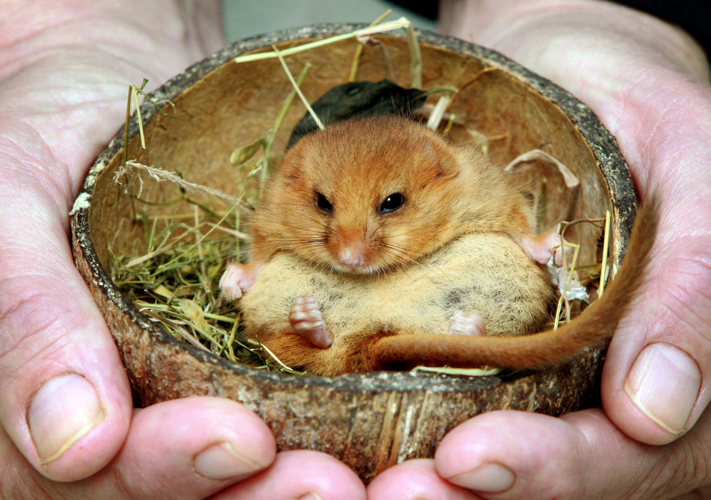
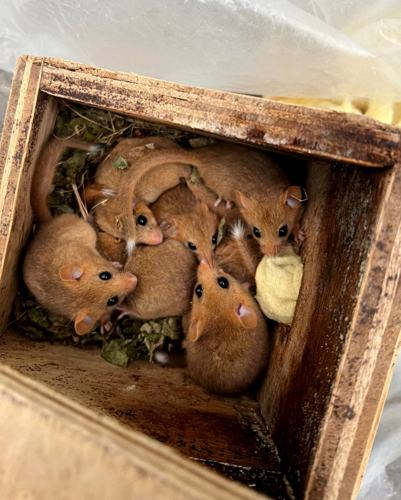
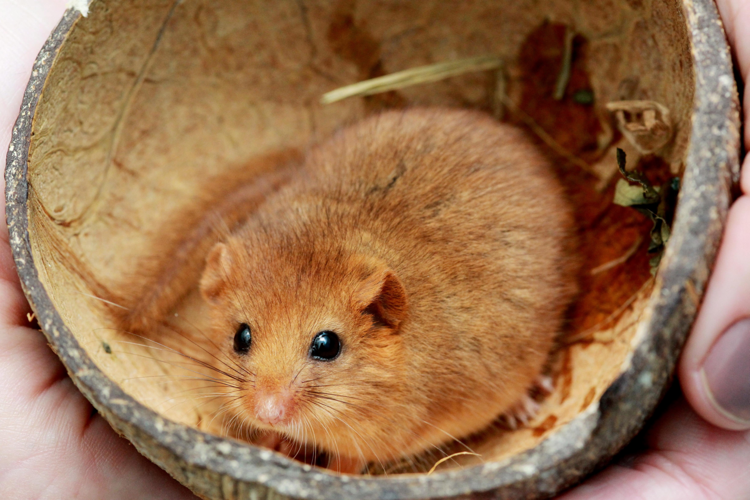

(Wildwood Trust via SWNS)
By Isobel Williams
Conservationists have set up a dating agency for dormice to try and help the vulnerable species survive.
The U.K.-based Wildwood Trust is gearing up to send 37 of the rodents back into the wild after a successful breeding season.
Conservation officer Suzanne Kynaston says she and her colleagues used a unique tactic to ensure the mating mice were a good match — a "dating agency."
Known as the studbook, the records list all of the animals currently in captivity along with information such as where they were born, when and what their genetic line is.
Trust staff then work out the best pairs to get "genetic diversity" — meaning they stand a greater chance of surviving once released.
Kynaston, 55, said: “I run what is called a studbook of the dormice which is essentially a record of all the dormice that are currently in captivity.
“We look at that and pair the dormice that are the most unrelated because we want genetic diversity.

(Wildwood Trust via SWNS)
“That’s why I say it is like a dating agency because we are working out who the best pairs are to get together to get the most robust genetics essentially.
“We want the animal to be as adaptable as possible and resilient as possible when they get released into the woodlands.”
The trust said dormice have declined nationally by 70% since 2000 and are categorized as ‘vulnerable’ on the IUCN Red List for Britain’s Mammals.



They say reasons for decline include loss of habitat — woodland, hedgerows and scrubland — and climate change.
Dormice only have one or two litters of, on average, four young per year and so it takes their populations a long time to recover.
Wildlife Trust have now stepped in to save the species, using their license from Natural England to collect wild dormice from well-populated areas to help the breeding.
Last year was a bumper year for breeding across their locations in Kent and Devon and one pair produced three litters of young.

(Wildwood Trust via SWNS)
During the process, each of them are given a nest box to sleep in during the day as Kynaston says it is crucial to have their own space.
A healthy diet is another key part, including wild fruits, flowers, and insects, with the dormice being given less sugar during breeding.
Kynaston, who has worked at the trust for 26 years, added: “The dormice are part of restoring the natural balance. They are a flagship species which means they can champion a particular area or habitat.
“Because dormice are so cute and people will want to save them, if we have released them into a woodland which is under threat then they will help to protect that woodland.
“They are an animal that has always been here and they are a native species and they are declining because of human activity.”
Thirty-seven out of 51 dormice to be released this year have been bred at Wildwood, all of whom were born last summer and have hibernated at the trust over winter.
They will be reintroduced into a secret woodland location in the north of England in June or July this year.
Wildwood Trust also recently wrote a dormouse husbandry guide to help other zoos, which has been published online.

(0) comments
Welcome to the discussion.
Log In
Keep it Clean. Please avoid obscene, vulgar, lewd, racist or sexually-oriented language.
PLEASE TURN OFF YOUR CAPS LOCK.
Don't Threaten. Threats of harming another person will not be tolerated.
Be Truthful. Don't knowingly lie about anyone or anything.
Be Nice. No racism, sexism or any sort of -ism that is degrading to another person.
Be Proactive. Use the 'Report' link on each comment to let us know of abusive posts.
Share with Us. We'd love to hear eyewitness accounts, the history behind an article.