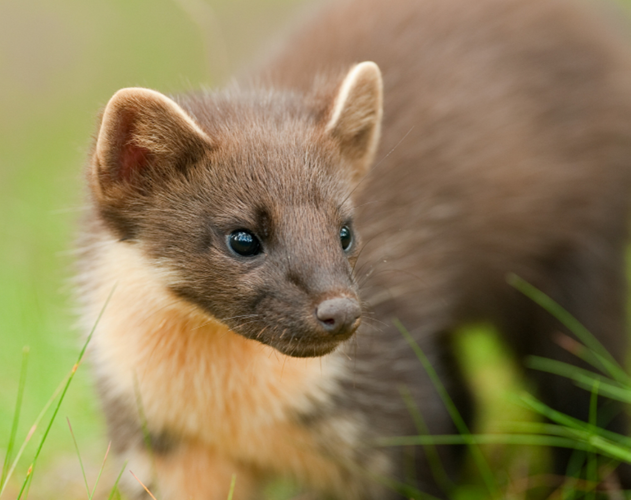
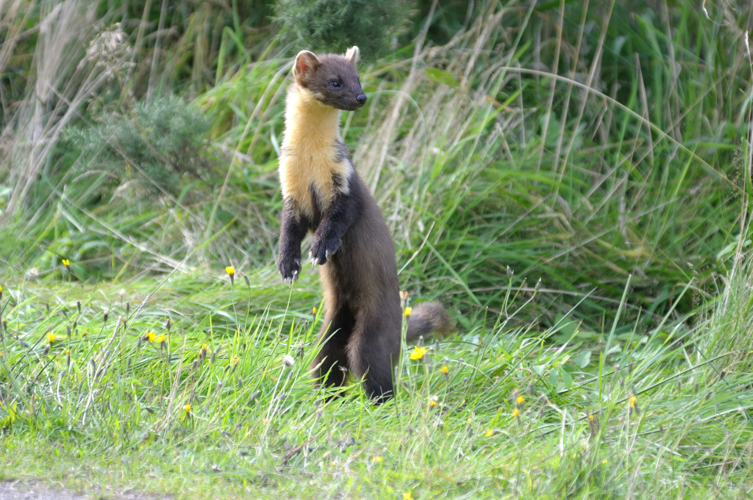

(Terry Whittaker 2020Vision via SWNS)
By Lauren Beavis
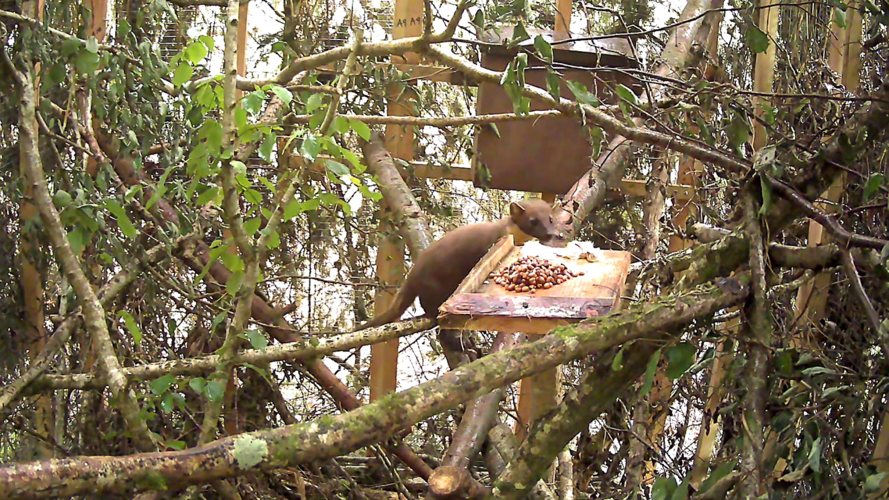
Footage shows the first pine martens to be born to a pair that were reintroduced to part of England after 100 years.
Conservationists are celebrating the arrival of the kits, which follow a "pioneering" reintroduction project.
It saw the release of 15 pine martens, eight females and seven males, at undisclosed Dartmoor in Devon locations back in autumn 2024.
Now camera trap footage has revealed the first glimpses of kits, recorded at a secret site in June this year.
Devon Wildlife Trust’s Tracey Hamston, who leads the Two Moors Pine Marten Project, described the news as a "historic moment" and admitted the team were "ecstatic" when they saw the footage.
She said: “When our volunteers discovered the footage of pine marten kits on one of our trail cameras we were ecstatic.
"This is a historic moment for the return of a native animal and for the future of the South West’s woodlands.
"To have breeding pine martens back after a century’s absence signals a positive step in nature’s recovery.
"It’s also testament to the many hours work undertaken by the project partnership and dozens of local volunteers.”
Two videos show the adorable youngsters exploring their new home, and in one clip we see three kits in a Dartmoor woodland chasing each other through foliage and up a bank, before disappearing from sight.
Another film shows the same mother with two kits as they scamper along a fallen tree close to a fast-running Dartmoor stream.

(Terry Whittaker 2020Vision via SWNS)
The kits are among the first to be born wild in Devon for more than a century.
The small cat-sized animals were once common in the South West but fell victim to the loss of their favored woodland habitat and to human persecution.
Evidence that the Dartmoor-released pine martens are now breeding has been deemed "a significant milestone" for nature - and follows months of hard work by the Two Moors Pine Marten Project partnership and its dedicated local volunteers.
Since the animals' release in September 2024, the team has spent hundreds of hours tracking the movements of the 15 pine martens, installing den boxes for them, and checking camera traps to learn more about their whereabouts and behavior.
Jack Hunt, Woodland Trust Assistant Site Manager at Devon said: “Staff and volunteers have been checking camera traps for several months and over the past few weeks have been eagerly anticipating seeing kits.




"This sighting is wonderful news.
"The work over many years to restore and improve the condition of our woodlands, to support other landowners to do the same and work in partnership on this project has culminated in the return of the pine marten born in its natural environment in Dartmoor, the first of many and the beginning of the return of this missing species.”
Female pine martens usually give birth to two or three kits in spring.
Youngsters spend their first seven to eight weeks hidden in their dens before emerging in early summer, they then stay with their mothers through autumn and into winter, before becoming fully independent the following spring.
The animals have been brought back to the region thanks to the work of the Two Moors Pine Marten Project: a partnership of seven organizations including Dartmoor National Park Authority, Devon Wildlife Trust, Exmoor National Park Authority, Forestry England, National Trust, Somerset Wildlife Trust and Woodland Trust.
The project has been made possible with the support of The National Lottery Heritage Fund thanks to National Lottery players, and with the expert help of the Vincent Wildlife Trust.

(Terry Whittaker 2020Vision via SWNS)
The project’s experts anticipate that the South West’s population should now grow gradually over the coming years.
Pine martens live at low density and avoid human contact.
Their nocturnal habits and elusive nature mean sightings are likely to be rare.
The project is now preparing for a further release of animals in autumn 2025.
The pine martens are to be sourced under license from NatureScot from healthy wild populations in Scotland.
After rigorous health checks by vets, the animals (likely to number around 20 in total) will be released with landowner permissions at secret locations on Exmoor.
In recent months the project team has been holding a series of face-to-face and public meetings with dozens of local stakeholders, explaining about the releases and the part the native species will play in healthy woodlands.
Two Moors Pine Marten Project Lead, Tracey Hamston, added: “We’re looking to build on the success of last year’s releases of pine martens on Dartmoor.
"Exmoor’s woodlands are well-suited to the animals.
"Their arrival in early autumn will coincide with the local natural harvest of wild berries – food which pine martens love.
"In a year’s time we would hope to see the first kits appearing on Exmoor.”
The Two Moors Pine Marten Project is keen to hear from anyone who does come across one of the beautiful animals in Devon; people can get in touch with their sightings on: www.twomoorspinemartens.org
(0) comments
Welcome to the discussion.
Log In
Keep it Clean. Please avoid obscene, vulgar, lewd, racist or sexually-oriented language.
PLEASE TURN OFF YOUR CAPS LOCK.
Don't Threaten. Threats of harming another person will not be tolerated.
Be Truthful. Don't knowingly lie about anyone or anything.
Be Nice. No racism, sexism or any sort of -ism that is degrading to another person.
Be Proactive. Use the 'Report' link on each comment to let us know of abusive posts.
Share with Us. We'd love to hear eyewitness accounts, the history behind an article.