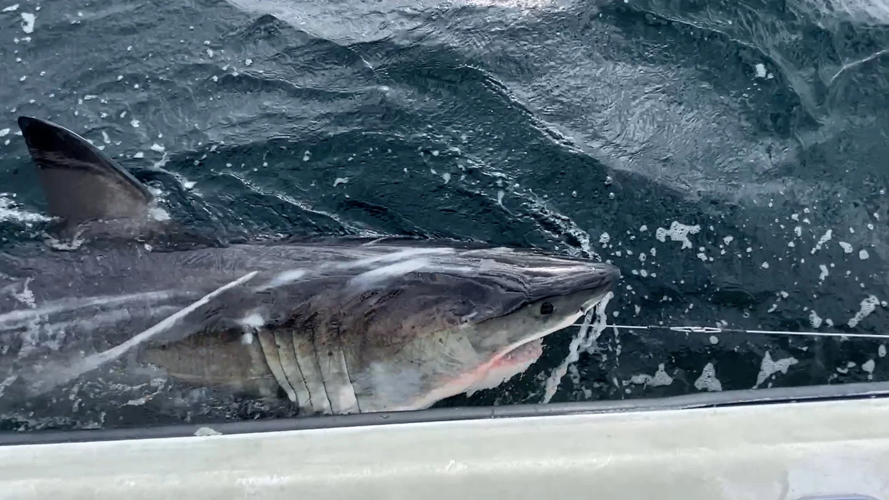
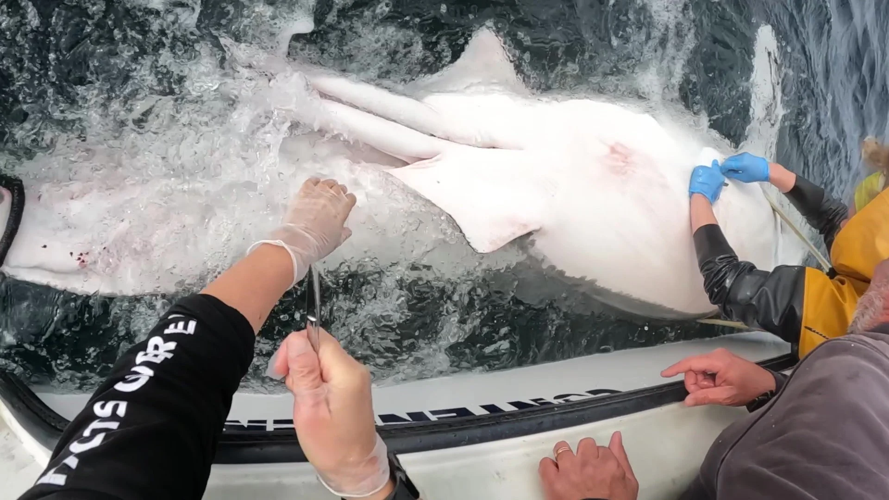
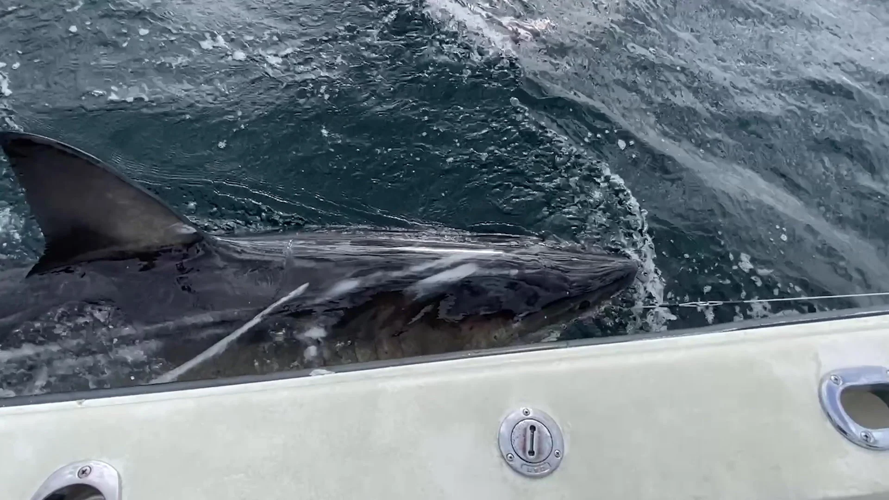

(OCEARCH via SWNS)
By Michael Lee Simpson
An 11.5-foot, nearly 800-pound great white shark named Ripple is breaking new ground by venturing deep into the Gulf of Mexico.
His movements mark some of the first documented tagged white sharks to travel this far into Gulf waters, experts say.
Tracking data shows Ripple visiting Pulley Ridge, offshore Tampa, and a growing hotspot near Cape San Blas.
Researchers say his journey confirms long-term data predictions and could help guide future conservation efforts.
Chris Fischer, founder and expedition leader of OCEARCH, says Ripple has become something of a trailblazer, charting a course that's providing valuable insights into white shark behavior patterns along Florida's coast.
"Ripple has really been our mover south this year early," he said.
"He's kind of almost pioneering the way along with Ernst down around through the Florida Keys and up into the Gulf."

(OCEARCH via SWNS)
This migration pattern represents some of the first documented movements of tagged sharks into Gulf waters, making Ripple's journey particularly significant for marine science.
The shark's path has taken him through some of Florida's most pristine marine environments.
After pausing at Pulley Ridge, where another tagged shark named Ernst had spent considerable time, Ripple moved offshore of Tampa before settling into what researchers are discovering to be a hotspot for white shark activity.
"This Panama City region, Cape San Blas area, is kind of shaping up to be an area that white sharks like to visit frequently, and more than one likes to visit it," Fischer said.
The discovery comes from extensive collaboration with research partners across the Florida Panhandle, who have been collecting crucial acoustic data to complement satellite-tracking information.
The convergence of multiple data sources is painting a clearer picture of white shark behavior in the Gulf.






Working closely with data scientist John Kaminski, the research team has been analyzing both real-time satellite data and acoustic information gathered from collaborators across the region.
This comprehensive approach is revealing previously unknown patterns.
What makes Ripple's journey particularly exciting for researchers is how it validates their scientific predictions.

(OCEARCH via SWNS)
"Ripple's kind of reaffirming the data that John Kaminski was relaying to me that he expected to see white sharks in this region due to our data sets from the previous several years," Fischer said.
This alignment between prediction and observation represents a significant milestone in understanding white shark ecology.
The implications extend far beyond academic curiosity.
When field observations match scientific models, it strengthens the foundation for evidence-based conservation policies.
"It's always good to see when a shark does something, and your scientists already know that they should be doing that," Fischer said.
"That means you're kind of on the pulse of what's happening both in real time, and the data is all lining up."
This synchronization between practical observation and data analysis creates a powerful tool for marine conservation efforts.
The research team's ability to predict shark movements and observe those predictions play out in real time demonstrates the maturity of their tracking and analysis systems.
As winter approaches, researchers will continue monitoring the Cape San Blas area, expecting to see more white sharks following Ripple's pioneering route into Gulf waters.
The ongoing study represents a crucial step forward in understanding how these apex predators use coastal ecosystems and how human activities might impact their behavior.
The success of tracking sharks like Ripple illustrates the importance of long-term research commitments and collaborative data sharing.
Fischer said: "It's always great when the practical and anecdotal align with the data being leveraged for policy issues."


(0) comments
Welcome to the discussion.
Log In
Keep it Clean. Please avoid obscene, vulgar, lewd, racist or sexually-oriented language.
PLEASE TURN OFF YOUR CAPS LOCK.
Don't Threaten. Threats of harming another person will not be tolerated.
Be Truthful. Don't knowingly lie about anyone or anything.
Be Nice. No racism, sexism or any sort of -ism that is degrading to another person.
Be Proactive. Use the 'Report' link on each comment to let us know of abusive posts.
Share with Us. We'd love to hear eyewitness accounts, the history behind an article.