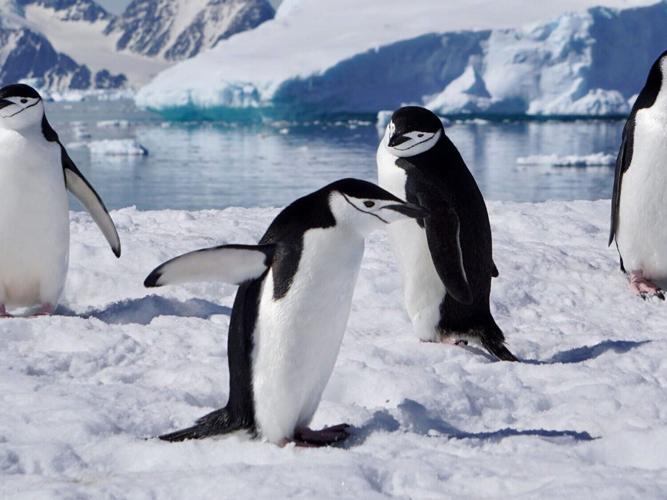

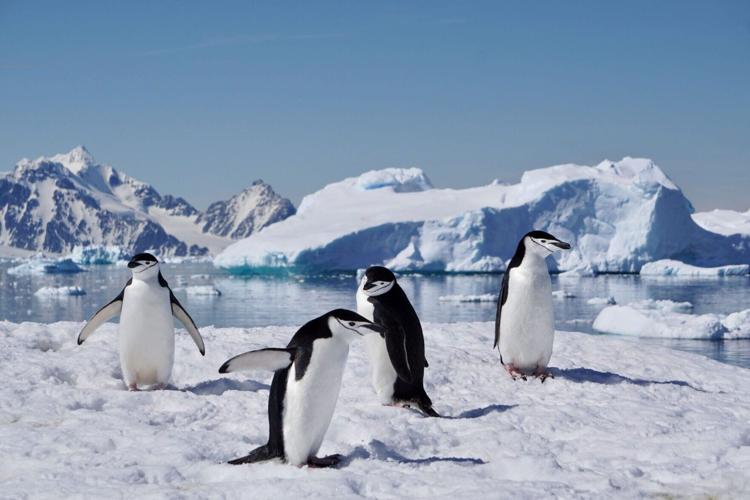
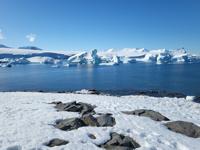
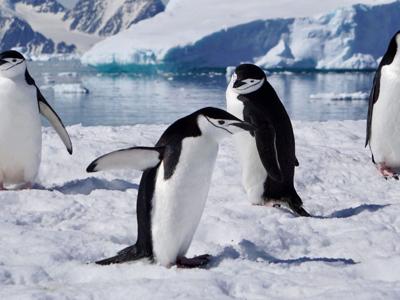

Penguins in Antarctica. (Alison Banwell via SWNS)
By Lauren Wilkin
New findings show Greenland and Antarctica have lost 11.3 billion metric tons of ice since the 1970s, raising global sea levels by more than 3 centimeters.
An international team of polar scientists has produced the most complete picture of ice loss from Greenland and Antarctica to date.
Andrew Shepherd, head of the School of Geography and Natural Science at Northumbria University, who led the team, said: “Three centimeters of sea level rise may sound small, but that puts another six to nine million people at risk of coastal flooding and erosion.
“With the ice sheets set to lose much more ice in the decades ahead, global assessments like IMBIE are vital to protecting communities impacted by climate change.”
The team combined 42 independent satellite surveys, drawing on 27 satellite missions and reaching back to 1972 for Greenland and 1979 for Antarctica using the early Landsat archive.

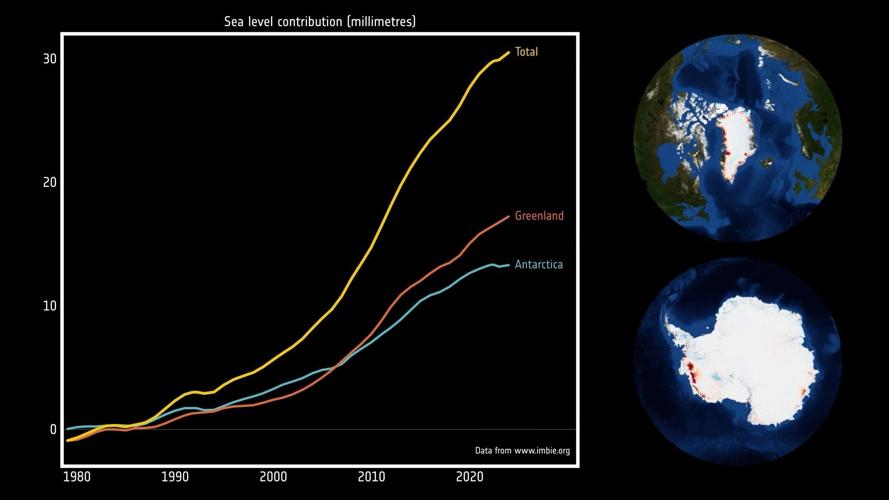
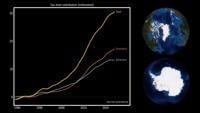
A graph shows Seal level contribution (millimetres) over several decades. (ESA / NASA IMBIE Initiative via SWNS)
The findings show the two ice sheets lost 11,309 billion metric tons of ice between 1979 and 2023, pushing global sea levels up by 31.4 millimeters.
Greenland accounts for the larger share and Antarctica contributed 13.3 millimeters.
Some 84% of the loss was driven by glaciers speeding up and pouring more ice into the ocean, rather than surface melting — which accounted for just 16% of the loss.
The polar ice sheets are now responsible for around a quarter of all global sea level rise.
The assessment, supported by NASA, was led by Ines Otosaka and Shepherd at Northumbria University, and Tyler Sutterley of the University of Washington Applied Physics Laboratory.






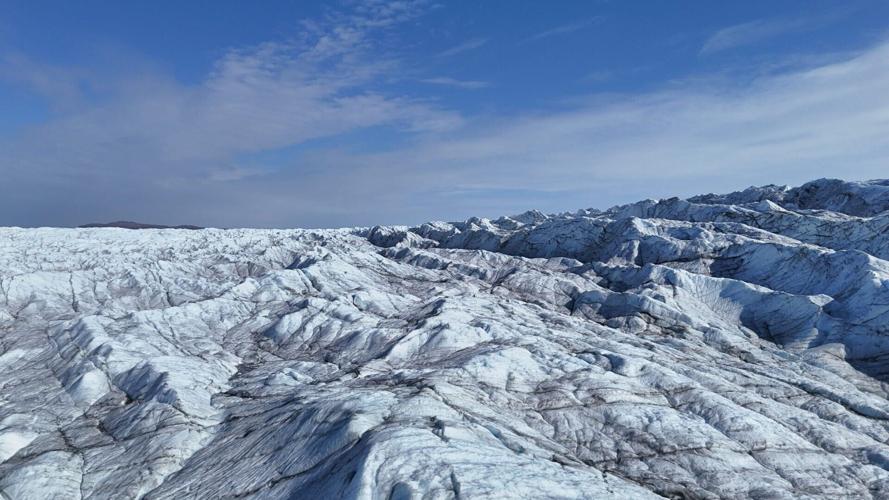
The icy landscape of Greenland. (Sammie Buzzard via SWNS)
Otosaka, said: “By reaching back to the 1970s, we can now see how the ice sheets have changed across half a century.
“More than four-fifths of the ice lost was discharged into the ocean by faster-flowing glaciers, rather than melted at the surface – which tells us the long-term trend is being driven by the dynamic response of the ice sheets to a warming ocean.”
The record shows ice losses climbing steeply from the 1990s onward.
Greenland saw its rate of loss rise from around 60 billion metric tons a year in the 1980s to 264 billion in the 2010s, a decade marked by repeated extreme summer melt events.
Antarctica’s rate rose from around 48 billion metric tons a year in the 1980s to 202 billion in the 2010s.
The most recent years (2020-2023) brought a temporary slowdown in ice loss.
Record snowfall over East Antarctica have offset some of the continent’s glacier losses elsewhere, while a run of milder Greenland summers roughly halved its surface melting.

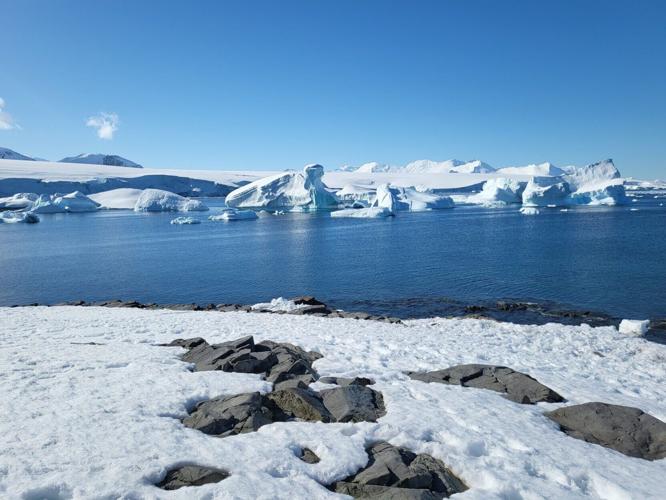
Frigid water and icy features of Antarctica. (Andrew Shepherd via SWNS)
Scientists caution these are short-term fluctuations against a clear long-term trend, not a reversal of ice loss.
The researchers say that this continuous, half-century record of how the ice sheets are behaving in response to a warming climate is vital to anticipating the risks facing the hundreds of millions of people who live in low-lying coastal areas.
Sutterley, a co-lead on the study, said: “The added length of the record, the larger pool of participating teams and our improved ability to assess uncertainties make this the most robust assessment of ice sheet mass balance produced so far.
“Satellites give us continent-wide, year-on-year evidence of what is happening now, and that is exactly what we need to test models and narrow the uncertainties in projections of future sea level rise.”
(0) comments
Welcome to the discussion.
Log In
Keep it Clean. Please avoid obscene, vulgar, lewd, racist or sexually-oriented language.
PLEASE TURN OFF YOUR CAPS LOCK.
Don't Threaten. Threats of harming another person will not be tolerated.
Be Truthful. Don't knowingly lie about anyone or anything.
Be Nice. No racism, sexism or any sort of -ism that is degrading to another person.
Be Proactive. Use the 'Report' link on each comment to let us know of abusive posts.
Share with Us. We'd love to hear eyewitness accounts, the history behind an article.